More ‘deadly’ heat is on the way: Can Europe’s waterways cool us down and replace air con?
More deadly heat is on the way: More ‘Deadly’ Heat on the Horizon: Can Europe’s Waterways Replace Air Conditioning?

More ‘Deadly’ Heat on the Horizon: Can Europe’s Waterways Replace Air Conditioning?
Poinews.com – A fresh wave of extreme heat is sweeping across Europe, with the World Health Organization (WHO) forecasting that intense heatwaves may persist. As temperatures climb, Spain’s meteorological agency has activated a high-level heat alert in eastern regions, anticipating readings of up to 42°C this week. Aragon, Catalonia, and Valencia are expected to bear the brunt, while Portugal and France also face prolonged periods of temperatures exceeding 40°C.
Wildfires are intensifying across the continent, displacing thousands and disrupting events like the Tour de France. With climate change intensifying, the demand for cooling systems is rising. The UK’s Climate Change Committee recently advised that 22% of buildings will require active cooling in a 2°C warming scenario, a shift from its historically mild weather patterns.
While air conditioning has proven effective in mitigating heat-related risks, the EU warns it isn’t sustainable. These systems consume vast energy, straining power grids and boosting carbon emissions. They also exacerbate the urban heat island effect, where trapped heat in concrete and asphalt raises city temperatures further.
Waterways as a Sustainable Cooling Alternative
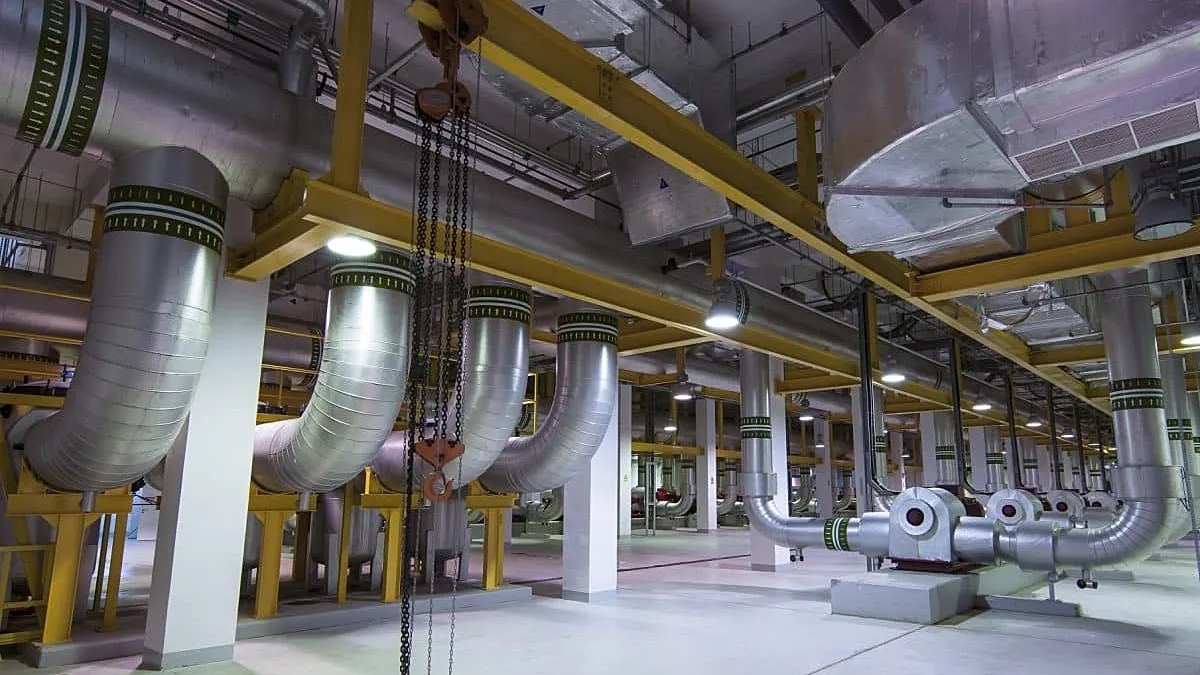
Europe is exploring a greener solution: channeling waterways to provide city-wide cooling. The EU’s ‘Cities Refresh’ initiative promotes district cooling, where centralized plants generate chilled water for distribution via underground networks. This method reduces individual air con use and leverages low-carbon sources like river water, geothermal energy, or waste heat.
“District cooling offers clear benefits for cities aiming to safeguard public health and cut emissions,” the European Commission states. “It provides efficient cooling for all building types, uses less energy than individual air conditioning, and can be powered by local, low-carbon sources such as seawater, river water, geothermal energy or waste heat.”
Under the Energy Efficiency Directive, cities with over 45,000 residents are mandated to create local heating and cooling plans. This has spurred a 3% increase in district cooling infrastructure in 2023. Marseille, for instance, is utilizing the Mediterranean Sea to supply thermal energy, with two networks—Massileo and Thassalia—employing 4.4 km of pipes to connect seawater to urban heat pumps. These systems cut CO₂ emissions in energy production by 80% compared to fossil fuels.
In colder months, Marseille is also investigating how waste heat from AI data centers could be repurposed for residential heating. Meanwhile, the Fraîcheur de Paris network, one of Europe’s largest, distributes cold water from the Seine to cool 850 buildings, including the Louvre. Buildings use heat exchangers to transfer internal warmth to the network’s water, which is then rechilled at a specialized plant.
According to the bloc, this system achieves over 100% energy efficiency, reduces electricity consumption by 35%, cuts refrigerant emissions by 90%, lowers chemical use by 80%, and decreases CO₂ emissions by 50%.
Spain has already implemented a network of climate shelters, using public buildings like libraries and museums to offer free water and shared cooling during heatwaves. These facilities reduce reliance on individual air con units and protect vulnerable groups from dangerously high temperatures.