Counting is underway in Armenia’s pivotal vote for the South Caucasus future
vote Counting is underway in Armenia s pivotal - As the final ballots are being tallied, the election results in Armenia have sparked intense speculation

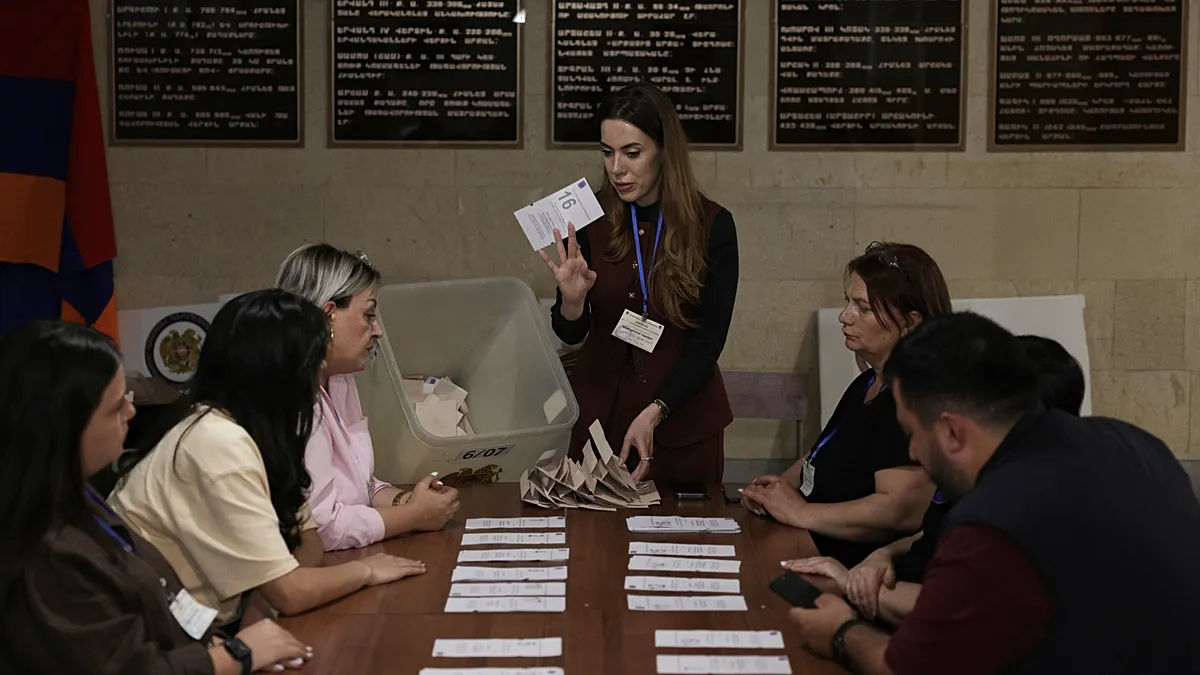
Table of Contents
Counting is underway in Armenia’s pivotal vote
Poinews.com – As the final ballots are being tallied, the election results in Armenia have sparked intense speculation about the future of the South Caucasus region. The counting process, which began shortly after polls closed on Sunday, is a critical moment for the nation, where voters have cast their decisions in a contest that could reshape political alliances and foreign relations. With the focus keyword Counting is underway in Armenia at the forefront, the race for parliament has drawn global attention, particularly from Western powers and Russia, both of whom view the outcome as a barometer for Armenia’s shifting geopolitical priorities. The event marks a significant juncture for the country, as it balances its longstanding ties to Russia with growing aspirations for closer integration with the European Union and the United States.
The Electoral Landscape and Voter Participation
Armenia’s parliamentary elections, held on Sunday, have been a defining moment for the nation’s democratic process. The country’s voter turnout, reported at approximately 63%, reflects a mixed response to the political climate. While this is slightly lower than the 65% recorded in 2021, it surpasses the 57% seen in 2012 and 2017, indicating a resilient electorate despite the challenges of the pandemic and economic uncertainty. The poll results, which are being scrutinized in real time, highlight the tight race between the pro-Western Civil Contract party, led by Prime Minister Nikol Pashinyan, and the pro-Russian opposition, which has been leveraging social media to project its lead. As Counting is underway in Armenia, the pace of the vote tally has raised questions about the accuracy of initial exit polls and the potential for last-minute surges in support for either side.
The Political Stakes for Armenia and the South Caucasus
Armenia’s election is not just a national affair—it has broader implications for the entire South Caucasus region. The outcome could determine whether the country continues its pro-Western trajectory or reverts to closer alignment with Russia, which has long been a dominant influence in the region. The Civil Contract party, which has been in power since 2018, faces its most formidable challenge yet, with the opposition capitalizing on public dissatisfaction with economic reforms and the ongoing Nagorno-Karabakh conflict. Analysts suggest that the results may also influence Armenia’s relationship with Azerbaijan, which recently secured a historic peace agreement with its neighbors. As Counting is underway in Armenia, the international community watches closely, with the EU and the US eager to see continued support for Pashinyan’s reformist agenda.
International Influence and Regional Dynamics
Regional tensions have heightened the stakes of Armenia’s election. Russia, which has maintained a strategic presence in the country, has issued warnings about a potential “Ukraine scenario” should the opposition gain a decisive victory. This concern stems from fears that a pro-Western government might accelerate its integration into NATO or the European Union, potentially straining relations with Moscow. Conversely, the EU and the US have expressed solidarity with Pashinyan, emphasizing their commitment to supporting Armenia’s democratic institutions and its efforts to diversify its foreign partnerships. The international actors’ involvement underscores the election’s importance, not only for Armenia’s domestic stability but also for the broader geopolitical balance in the South Caucasus. As Counting is underway in Armenia, these external pressures are likely to influence the final outcome and the direction of the country’s future.
The Candidates and Campaign Strategies
Prime Minister Nikol Pashinyan, the central figure of the Civil Contract party, has been a symbol of Armenia’s political transformation since taking office in 2018. His government has prioritized economic reforms, improved transparency, and reconciliation with Azerbaijan, efforts that have earned him both praise and criticism. However, the opposition, led by Narek Karapetyan—a prominent figure in the Strong Armenia party—has accused Pashinyan of backtracking on key issues, including the Nagorno-Karabakh conflict and the country’s energy dependencies. Karapetyan’s party, which has been under house arrest for some of its leaders, has used social media to amplify its claims of victory, asserting that the “historically high turnout” signifies growing disillusionment with the ruling coalition. As Counting is underway in Armenia, the narrative around each candidate’s policies and leadership style will play a crucial role in shaping public perception and the final result.
Implications of the Election for Regional Stability
The results of Armenia’s election are expected to have a ripple effect across the South Caucasus. A win for Pashinyan’s party could solidify Armenia’s commitment to a pro-Western alliance, potentially strengthening its ties with the EU and the US while maintaining a pragmatic relationship with Russia. On the other hand, a victory for the opposition might signal a shift toward closer alignment with Moscow, raising concerns about the potential for renewed tensions with Azerbaijan and other regional actors. The election’s outcome will also influence Armenia’s stance on issues such as energy security, trade agreements, and military cooperation. As Counting is underway in Armenia, the nation’s citizens, many of whom have been deeply affected by the ongoing conflict and economic challenges, will be watching with anticipation to see whether their hopes for a more stable and independent future are realized or tempered by the dominance of pro-Russian forces.
With the final count still pending, the race remains highly competitive, and the results could determine the trajectory of Armenia’s political and economic landscape for years to come. The Counting is underway in Armenia has already revealed early signs of a close contest, with both sides vying for the support of a divided electorate. As the tally progresses, the focus will shift from the immediate outcome to the long-term consequences of the vote, which may see a realignment of power in the region and a redefinition of Armenia’s role in global affairs. The election not only reflects the country’s internal dynamics but also serves as a litmus test for the South Caucasus’ ability to navigate complex geopolitical relationships in an increasingly uncertain world.