‘Maldives of the Middle East’: Saudi Arabia’s Red Sea project takes shape
di Arabia's Red Sea project takes shape Maldives of the Middle East - The image of a luxury coastal retreat often conjures thoughts of the Maldives: vibrant

‘Maldives of the Middle East’: Saudi Arabia’s Red Sea project takes shape
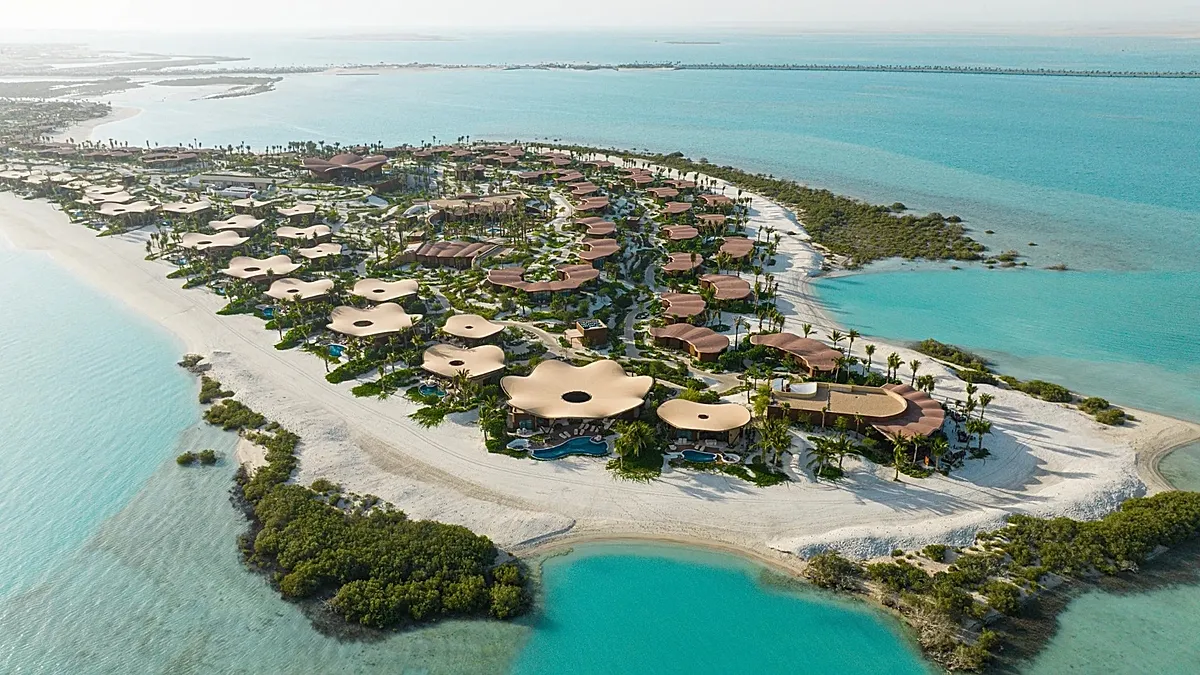
Poinews.com – The image of a luxury coastal retreat often conjures thoughts of the Maldives: vibrant waters, sandy shores, and ocean-view villas. Saudi Arabia aims to evoke that vision while redefining it. Along its western coastline, a groundbreaking tourism initiative is emerging: The Red Sea, a sprawling ultra-luxury development designed to set a new global standard. Spanning 28,000 square kilometers, the project includes over 90 pristine islands, though only 22 will host developments to safeguard the region’s natural integrity and maintain exclusivity.
A New Era of Luxury Travel
Stephen Cheesebrough, Red Sea Global’s Head of Development, acknowledges comparisons to the Maldives. “The islands may evoke familiar imagery with their clear waters and soft sands,” he says. “But the similarities stop there.” The project promises a blend of unique environments—mountains, volcanoes, deserts, and untouched coastlines—that allow visitors to transition from underwater exploration to desert adventures or mountain dining in a single day. This diversity is central to Saudi Arabia’s strategy to differentiate itself from traditional luxury spots in the Indian Ocean or Caribbean.
“Our landscapes are far more diverse. In addition to the islands, we have mountains, volcanoes, deserts and kilometres of virtually untouched coastline. A visitor can spend the morning scuba diving among coral reefs and that same afternoon head into the desert or dine in the mountains. Very few destinations in the world offer such a variety of experiences in such a compact area.”
Beyond the Beaches: Expanding the Experience
The Red Sea project isn’t confined to islands. It includes adventure hubs like scuba diving, sailing, hiking, and water sports, alongside the ADRENA district—a space housing over 20 activities, including the nation’s largest saltwater surf pool. But the vision extends beyond its resorts. “Many guests use The Red Sea as a gateway to explore other parts of Saudi Arabia,” Cheesebrough explains. “They visit AlUla, Jeddah, or other regions, treating the project as a launchpad for broader experiences.”
With 1,800 kilometers of pristine coastline, nearly untouched reefs, and critical marine ecosystems, the Red Sea coast is positioning itself as a year-round destination. The aim is to operate 12 months a year, appealing to travelers seeking both luxury and authenticity. “We don’t want to be a seasonal spot,” Cheesebrough emphasizes. “The key is to attract those who value exceptional experiences, whether in nature, the sea, or cultural exploration.”
Sustainable Innovation
Regenerative tourism is a cornerstone of the project. “Today, sustainability alone isn’t enough,” Cheesebrough states. “The real challenge is to enhance the environment.” The development prioritizes renewable energy, water recycling systems, and waste-free operations, reflecting a shift in luxury travel preferences. “Post-pandemic, travelers demand more than extraordinary settings—they want destinations that actively contribute to planetary well-being,” he adds.
As of early 2026, the Red Sea International Airport has welcomed over 78,000 passengers, including 11,000 international visitors. Connecting to cities like Riyadh, Jeddah, Dubai, Doha, and Milan, the airport underscores the project’s growing accessibility. Shura Island, the project’s core, will soon host international hotels, dining venues, shops, a marina, and an 18-hole golf course, solidifying its role as the heart of this ambitious vision.