Georgia left off NATO summit partner list as critics decry isolation
Georgia Excluded from NATO Summit as Concerns Over Isolation Grow Georgia left off NATO summit partner - Georgia’s omission from the NATO summit partner list

Georgia Excluded from NATO Summit as Concerns Over Isolation Grow
Poinews.com – Georgia’s omission from the NATO summit partner list has sparked significant debate, with critics arguing that the country is being sidelined in international diplomacy. The summit, hosted in Ankara, Turkey, drew key allies such as Qatar, the United Arab Emirates, Japan, South Korea, New Zealand, and Australia. However, Georgia was notably absent from the official agenda and partner forums, marking its first exclusion from a NATO summit in recent history. This decision has raised questions about the nation’s strategic importance and the priorities of the alliance’s leaders in the current geopolitical landscape.
Political Tensions and Strategic Shifts
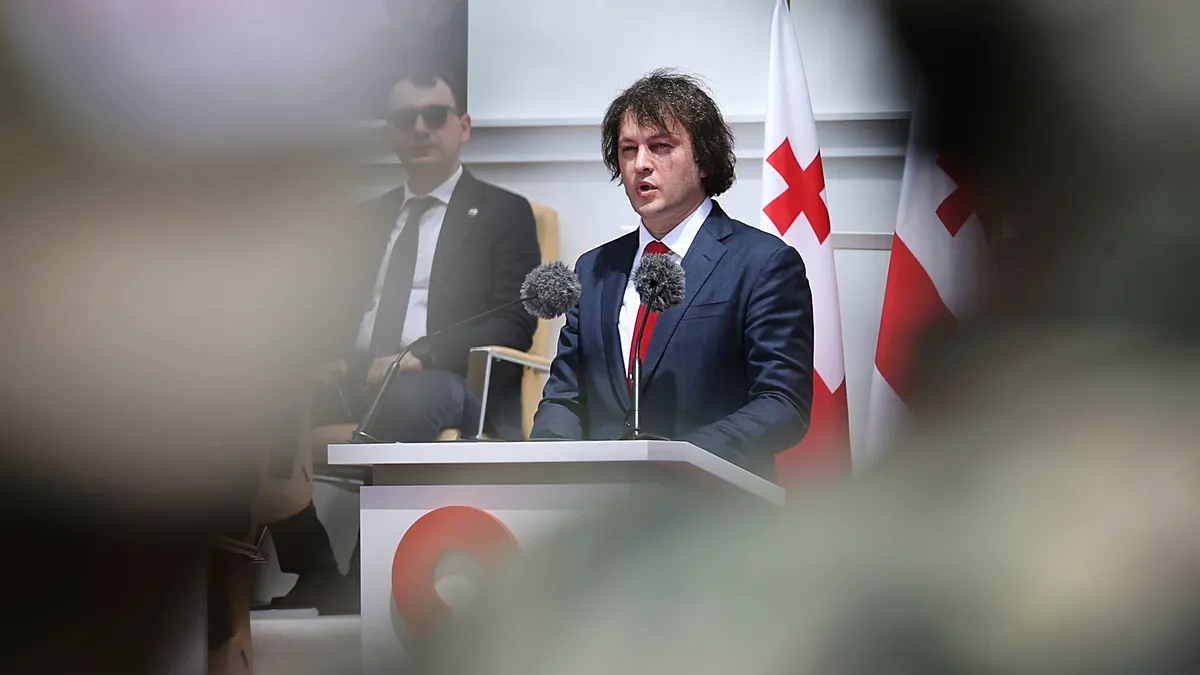
Georgia has long been a pivotal player in the South Caucasus, maintaining strong ties with both the European Union and NATO. Despite this, the exclusion from the Ankara summit has reignited concerns about its political standing. The ruling Georgian Dream party has maintained that the decision was not intentional, but opposition voices have criticized the lack of representation. MP Irakli Kirtskhalia, a vocal critic, pointed to the absence as a sign of Georgia’s growing isolation, stating, “We have no issue attending the summit—ask the organizers why Georgia isn’t represented.” His remarks highlight a divide between the government’s stance and the public’s perception of its foreign policy.
“We have no problem attending the summit, ask the organizers why we are not represented.”
The Foreign Ministry clarified that Minister Maka Bochorishvili would attend a separate event in Turkey titled “Allies in Ankara,” which was linked to the Munich Security Conference. While this event provided an opportunity for Georgia to engage with allies, critics argued that it was not a substitute for direct participation in the NATO summit. They emphasized that the exclusion from the main summit itself was a major setback, undermining Georgia’s role as a key security partner in the region.
Regional Impact and Diplomatic Repercussions
Georgian President Mikheil Kavelashvili’s recent diplomatic trip to Tehran for the funeral of Ayatollah Ali Khamenei underscored the nation’s evolving relationships. This move has been interpreted as a shift toward closer ties with Iran, which could influence its position within NATO’s broader strategy. Political analyst Paata Zakareishvili noted that Georgia’s absence from NATO discussions has created a perception of distrust among its partners. “Georgia is being ignored,” he said. “There is a view that it is better not to maintain relations with it because no one knows what information Georgia might pass on to Russia.”
“Georgia is being ignored. There is a view that it is better not to maintain relations with it because no one knows what information Georgia might pass on to Russia.”
Zakareishvili’s comments reflect growing skepticism about Georgia’s alignment with Western interests, particularly in light of its domestic policies. The nation’s strategic importance in the Black Sea and Caucasus regions has not gone unnoticed, yet its exclusion from the summit has raised alarms about the alliance’s willingness to engage with it. Analysts suggest this decision may signal a shift in priorities, with NATO focusing more on immediate security threats in Europe rather than long-term partnerships in the East.
EU Relations and Future Prospects
While Georgia’s exclusion from the NATO summit is a major development, its relationship with the European Union remains critical. The country has been actively pursuing EU membership, but recent actions have complicated this path. Prime Minister Irakli Kobakhidze reaffirmed Georgia’s commitment to joining the EU by 2030, calling it a “steady and irreversible” goal. However, the EU’s pause on membership talks has created uncertainty, with some members expressing doubts about Georgia’s reliability as a partner. This hesitation is partly linked to the country’s passage of a “foreign influence” law, which critics argue aligns more closely with Russian interests.
“Georgia is now effectively in confrontation with its former strategic partners which is clearly affecting the country’s relations with NATO and the EU.”
The law, enacted amid widespread anti-government protests in Tbilisi, has been seen as a move to curb perceived Russian influence. While supporters argue it strengthens national sovereignty, opponents claim it risks alienating Western allies. As Georgia continues its dual pursuit of NATO and EU integration, the challenge lies in balancing its relationships without sacrificing its regional influence. The summit’s exclusion may serve as a test of its diplomatic resilience, but the long-term implications remain unclear.
International Reactions and Regional Implications
Reactions from international observers have been mixed. Some analysts believe Georgia’s absence reflects a broader realignment of NATO priorities, with leaders focusing on immediate threats such as the conflict in Ukraine and the situation in the Eastern Mediterranean. Others, however, view the decision as a symbolic rejection of Georgia’s aspirations, which have been central to its foreign policy for years. The absence may also weaken Georgia’s position as a regional security player, as it struggles to maintain momentum in its efforts to join the alliance.
“The exclusion of Georgia from the NATO summit highlights a growing disconnect between the alliance’s strategic goals and its engagement with Eastern European nations.”
This disconnect has sparked concerns about the future of Georgia’s integration into Western institutions. Despite the setback, the country remains determined to advance its agenda, with its government emphasizing the importance of maintaining dialogue with NATO. The challenge now is to demonstrate its commitment to the alliance while addressing the criticisms that have led to its exclusion. As the geopolitical landscape continues to shift, Georgia’s place in the international community will be a key topic of discussion in the coming months.