Breaking news. Iran launches major missile attacks across the Gulf
news Iran launches major missile attacks: aunches major missile attacks, Iran has launched a series of coordinated missile and drone strikes across the Gulf

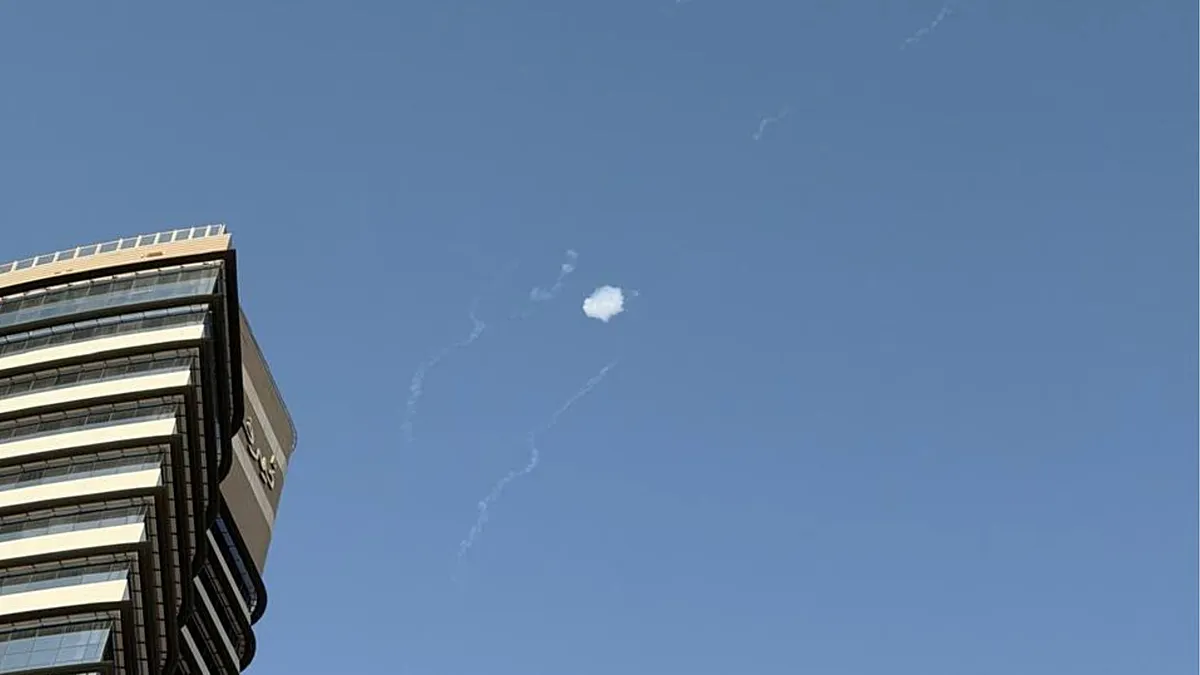
Iran’s Major Missile Attacks Across the Gulf
Poinews.com – news Iran launches major missile attacks, Iran has launched a series of coordinated missile and drone strikes across the Gulf region, targeting multiple Arab nations including Qatar, the UAE, Bahrain, and Kuwait. The attacks, which occurred following a recent round of US airstrikes in southern Iran, were aimed at retaliating against the American military’s actions after an Iranian attack on a Cyprus-flagged container ship in the Strait of Hormuz on Saturday night. The strikes, reported to have taken place in two waves, caused significant disruption and raised concerns about regional security as countries in the Gulf prepared for potential escalation.
Escalation of Attacks in the Gulf
Qatar’s capital, Doha, was hit by multiple Iranian ballistic missiles during the early hours of Sunday, according to Euronews reporters on the ground. The country’s air defense systems intercepted several incoming projectiles, but the explosions generated shockwaves across the city, prompting national emergency alerts. Residents were advised to take shelter and avoid windows, as the security threat level was raised to high. Meanwhile, the UAE and Kuwait confirmed that their air defense forces were actively engaging Iranian missiles and drones, underscoring the widespread nature of the assault.
Bahrain also activated its air defenses in response to the attacks, with officials emphasizing the need for vigilance. Iran’s Revolutionary Guard (IRGC) claimed responsibility for targeting US facilities, including the Al-Udeid airbase in Qatar, and asserted that it destroyed a command center and aircraft maintenance units. The group also alleged attacks on Jordan’s Prince Hassan airbase and Oman’s Duqm port, which serves as a key hub for the US Navy. These strikes were part of a broader pattern of Iranian retaliation, as Tehran warned that further US strikes would trigger a proportional response.
US Strikes in Southern Iran
Before the Iranian offensive, the US military had conducted airstrikes in southern Iran as a direct response to an earlier Iranian attack on a container ship in the Strait of Hormuz. The incident, which occurred on Saturday night, left the vessel ablaze and forced its crew to evacuate. According to CENTCOM, the strikes targeted over 140 Iranian assets, aiming to disrupt their ability to attack civilian and commercial vessels in the strategic waterway. US Defense Secretary Pete Hegseth tweeted shortly before the strikes, stating, “Iran made a poor choice. Now they pay.”
The US-Iran framework deal, which was designed to de-escalate tensions and ensure safe passage for ships in the Strait of Hormuz, appears to be under strain. Iran’s top negotiator, Mohammad Bagher Ghalibaf, warned in a post on X that “the era of one-sided deals is OVER. We told you: keep your word or pay the price.” This statement followed Iran’s claim of sovereignty over the strait, suggesting that the attacks were a demonstration of its resolve to defend its interests. The strikes in southern Iran were intended to deter Iranian aggression, but instead, they may have accelerated the current wave of retaliation.
The scale of the Iranian attacks mirrored the initial stages of the conflict, indicating a possible shift in the strategic balance. Qatar, UAE, and other Gulf states have been hit with simultaneous strikes, showcasing Iran’s coordination and capability to strike multiple targets at once. Despite the intensity of the attacks, the Gulf nations have managed to intercept a significant portion of the missiles, though the damage and psychological impact remain substantial. Analysts suggest that the attacks are not only a military response but also a political move to assert Iran’s influence and challenge Western dominance in the region.
The geopolitical implications of these strikes are far-reaching. The Gulf countries, which have long been allies of the US, are now facing direct threats from Iran, raising questions about the sustainability of their partnerships. Iran’s actions have also prompted discussions about the potential for a wider regional conflict, with neighboring states like Jordan and Oman caught in the crossfire. The timing of the attacks—following the US strikes—suggests a calculated effort by Iran to provoke a response and test the resilience of its adversaries.
“This is a clear message from Iran to the West: we will not tolerate aggression without a strong countermeasure,” said a senior Iranian official, commenting on the coordinated strikes. The statement highlights the growing tension between Iran and its regional rivals, as well as the broader implications for international relations in the Middle East.
As the situation continues to unfold, the focus remains on the potential for further escalation. With Iran claiming success in its attacks and the US vowing to retaliate if necessary, the Gulf region is at the center of a new phase in the ongoing conflict. The combination of military action and diplomatic posturing suggests that the situation could evolve rapidly. For now, the nations involved are working to assess the damage and reinforce their defenses, as the world watches for signs of a larger confrontation.