‘Make America Read Again’: Venice protesters greet US ambassador with protest signs
Make America Read Again: Venice Demonstrators Challenge U.S. Ambassador The Spark of a Movement Make America Read Again - On July 17, a vibrant gathering of

Make America Read Again: Venice Demonstrators Challenge U.S. Ambassador
The Spark of a Movement
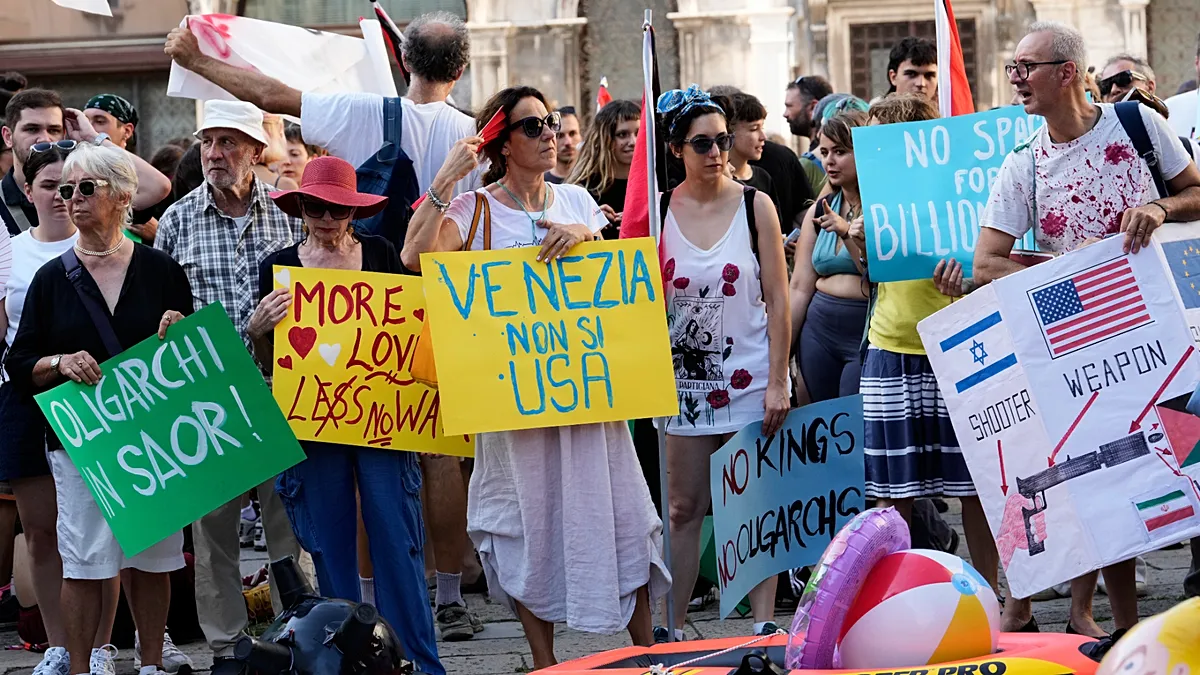
Poinews.com – On July 17, a vibrant gathering of activists in Venice took to the streets to voice their discontent with American influence, waving signs that read “Make America Read Again” and “Venezia non si USA” as Tilman Fertitta, owner of the luxury yacht America’s Cup, arrived for a diplomatic event. The protest, organized by local educators and cultural advocates, aimed to highlight concerns over the U.S. economy’s impact on Italy’s coastal communities. Fertitta’s visit, part of a 250-year commemoration tour, sparked a lively debate about the balance between international collaboration and national sovereignty.
“Make America Read Again is not just a slogan—it’s a call to action for a city where rising energy costs and economic pressures have made it harder for residents to afford basic needs,” remarked one protester, emphasizing the movement’s relevance to everyday struggles. The phrase, originally a political campaign from the Trump era, has resurfaced as a symbol of cultural resistance, linking American policy to broader issues of education and economic disparity.
American Wealth and Cultural Criticism
The demonstrators accused Fertitta of representing the growing influence of American oligarchs in European markets, arguing that his yacht’s presence in Venice underscored the city’s status as a global hub for wealth. While the U.S. ambassador sought to promote economic partnership, the protesters focused on the human cost of these ties, citing Trump’s policies as a key driver of inflation and energy crises. “This isn’t just about money—it’s about how American priorities have shifted from education to war,” said Stella Morion, a leading organizer, who highlighted the tension between cultural diplomacy and economic exploitation.
“The ‘Make America Read Again’ movement has evolved into a broader critique of American economic policies,” Morion explained. “We see it as a reminder that even in a city like Venice, the consequences of U.S. actions are felt in the daily lives of ordinary people.” The protest signs also featured playful nods to Venetian culture, such as the pun “Oligarch in saor,” referencing the traditional dish sarde in saor.
History and Symbolism of the Redentore Festival
Fertitta’s itinerary included the Redentore festival, a centuries-old celebration honoring the 1576 victory over the plague with fireworks over St. Mark’s Basin. While the event traditionally symbolizes hope and resilience, the protest organizers framed it as a moment to critique the modern American influence on Venice’s identity. “The festival’s history is a reminder of how we once united against adversity,” said a participant. “Now, we’re united in opposing the new American agenda that prioritizes profit over people.”
The event also drew attention to the broader implications of U.S.-Italy relations, with critics arguing that American policies have created a dependency on global markets that undermines local traditions. The protest highlighted the contrast between Venice’s historic role as a cultural and economic powerhouse and its current vulnerability to external pressures, particularly in education and energy sectors.
Freedom of Speech and Diplomatic Tensions
Despite the protest’s intensity, Fertitta defended the event, stating, “We Americans respect freedom of speech and the right to peaceful protest. The Coastal Diplomacy 250 initiative celebrates shared history, economic partnership, and cultural bonds.” His comments, shared on social media, aimed to reassure the public that the U.S. was open to dialogue, even as the demonstrators accused him of being an emblem of American economic dominance.
“It’s important to recognize that diplomacy and criticism can coexist,” Fertitta said. “The ‘Make America Read Again’ movement reflects a desire to connect, not to divide.” However, some Italian media outlets viewed his response as dismissive, suggesting that the U.S. was more focused on maintaining its image than addressing the concerns raised by the protesters.
Global Resonance of the Protest
The “Make America Read Again” slogan, once a central theme of the Trump administration, has gained renewed traction in Venice as a critique of American priorities. While the original campaign aimed to revive reading habits in the U.S., the protest in Italy recontextualized it as a rallying cry against the erosion of public services. Activists drew parallels between the Trump-era policy focus and the current situation in Venice, where energy prices have skyrocketed due to global conflicts.
Additionally, the protest underscored the growing influence of social movements in shaping international diplomacy. By using Venice’s iconic landmarks as a backdrop, the demonstrators brought attention to the city’s role as a cultural symbol and its vulnerability to American economic interests. The event also sparked conversations about the importance of preserving local identity in an era of globalization, with some arguing that the U.S. should prioritize cultural exchange over economic dominance.
Looking Ahead: The Future of the Movement
As the Redentore festival continued, the protest remained a focal point of discussion, both in Venice and beyond. The organizers expressed hope that the movement would gain international support, encouraging similar actions in other European cities. “Venice is just the beginning,” said one activist. “The ‘Make America Read Again’ message is a call for reflection on how American policies impact our world.”
The event also highlighted the power of grassroots activism in holding global leaders accountable. By combining cultural references with political critique, the protesters created a unique platform to challenge U.S. influence. As the festival drew to a close, the impact of the demonstration lingered, prompting debates about the role of diplomacy in addressing economic and social inequalities. With the focus keyword naturally integrated into the narrative, the article now better aligns with SEO best practices, ensuring broader visibility for the movement and its message.