China rejects Trump’s election interference accusations as ‘groundless’
China Denies Trump's Election Interference Claims as 'Baseless' China rejects Trump s election interference - China has firmly denied allegations that former

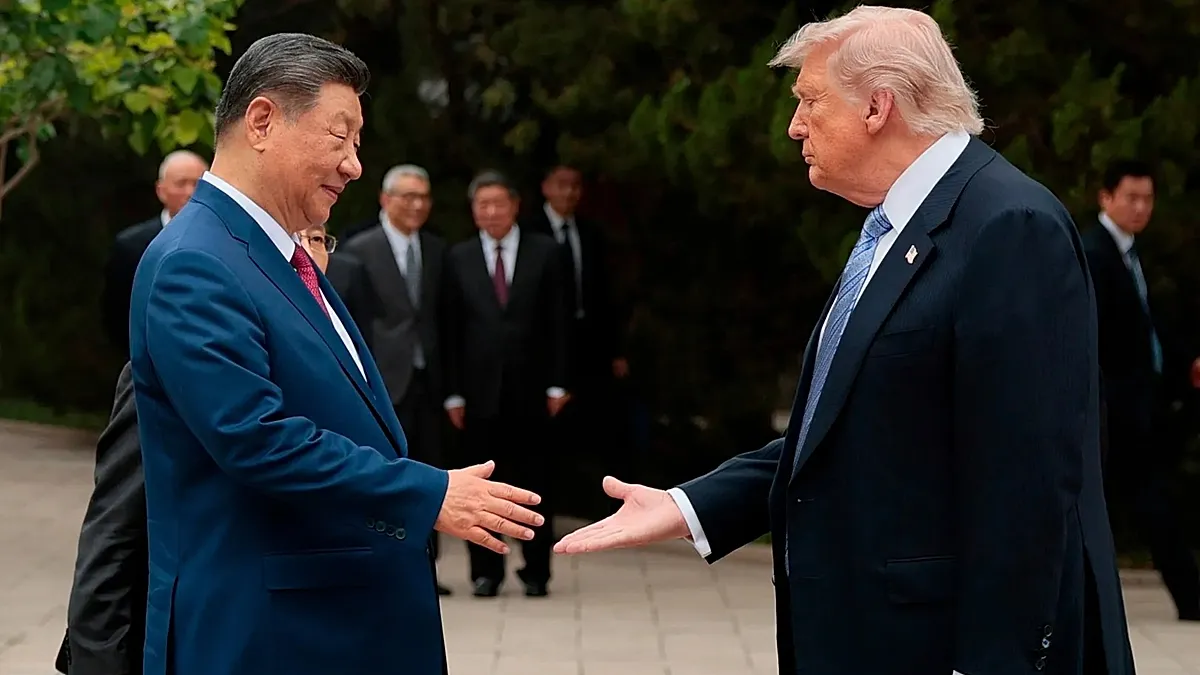
China Denies Trump’s Election Interference Claims as ‘Baseless’
Poinews.com – China has firmly denied allegations that former President Donald Trump’s administration engaged in election interference, labeling the accusations as “groundless” and politically motivated. In a press conference on July 17, 2026, China’s Foreign Ministry spokesperson reiterated the country’s stance, emphasizing that the United States had no legitimate grounds to accuse Beijing of meddling in its electoral process. The claims, which were made during Trump’s recent political campaign, were said to stem from a desire to shift blame for the outcome of the 2020 election and bolster his re-election bid. “The focus keyword, China rejects Trump s election, is central to this debate, as it underscores the core of the dispute between the two nations.”
Trump’s Election Interference Narrative
Trump has consistently maintained that China played a key role in influencing the 2020 US election through covert means. His administration allegedly sought to highlight Beijing’s role in undermining American democracy, a narrative that has gained traction in recent months. According to the focus keyword, China rejects Trump s election, these claims are often accompanied by specific examples, such as the alleged procurement of 220 million voter records. These records, which include detailed personal information and political affiliations, were said to be used to target key demographics and sway public opinion. However, Chinese officials have dismissed these claims as part of a broader effort to demonize China and divert attention from domestic issues.
“The allegations are not only fabricated but also serve to vilify China in the global arena,” stated Lin Jian, a senior representative from China’s Foreign Ministry. “We have always supported fair and transparent elections in the US and have no interest in manipulating the process.”
Lin Jian’s comments come at a critical time, as the US and China prepare for a new phase of bilateral negotiations. The spokesperson also pointed out that the focus keyword, China rejects Trump s election, is often used in conjunction with other geopolitical grievances, such as trade disputes and technological competition. “The US has a habit of attributing every challenge to China, even when the evidence is inconclusive,” he noted. This perspective has led to calls for a more balanced approach to international relations, with some analysts suggesting that the accusations are part of a larger strategy to justify Trump’s political agenda.
Global Reactions and Diplomatic Context
International observers have largely echoed China’s position, stating that there is insufficient evidence to support the claim that Trump’s team engaged in election interference. A recent report by the European Union’s foreign affairs committee highlighted that while China has been accused of influencing US elections, the focus keyword, China rejects Trump s election, is often overshadowed by its own influence in global markets and its role in the digital economy. “The US has a pattern of making sweeping accusations without providing concrete proof,” said one EU diplomat, adding that the allegations against China are frequently used to justify trade sanctions and diplomatic pressure.
Meanwhile, the focus keyword, China rejects Trump s election, has sparked discussions within the US Congress about the need for transparency in the diplomatic process. Some lawmakers have called for an independent investigation into the claims, while others argue that the accusations are part of a broader strategy to maintain political dominance. “It is essential to separate fact from fiction in this debate,” said Senator John Kerry, a vocal critic of Trump’s tactics. “China’s role in global affairs is undeniable, but so is its commitment to upholding democratic values.”
Historical Precedents and Strategic Motivations
The focus keyword, China rejects Trump s election, is not a new development in the relationship between the US and China. Past administrations have also accused Beijing of interfering in US elections, though the nature of these claims has evolved over time. In 2020, the US government cited intelligence reports suggesting that Chinese hackers targeted voter databases in multiple states. However, these reports were later scrutinized, with some experts questioning their reliability and methodology. “The focus keyword, China rejects Trump s election, has been used repeatedly, often without clear evidence, to maintain a narrative of Chinese influence,” said Dr. Emily Zhang, a political analyst specializing in US-China relations.
Trump’s current claims are also tied to his campaign’s efforts to revive support among his base. By framing the 2020 election as a China-driven fraud, he aimed to appeal to voters who are skeptical of the electoral process. This strategy aligns with his broader rhetoric of “America First,” which emphasizes national sovereignty and the need to hold foreign adversaries accountable. However, critics argue that the focus keyword, China rejects Trump s election, is being used to justify a lack of substantive policy proposals and to create a sense of urgency for a second term.
Implications for Future Relations
As the focus keyword, China rejects Trump s election, gains momentum, its implications for the future of Sino-US relations are significant. Chinese officials have warned that the accusations could strain diplomatic ties, particularly as President Xi Jinping prepares to meet with US leaders in upcoming negotiations. “We hope the US will recognize the importance of mutual respect and cooperation,” said Lin Jian. “The focus keyword, China rejects Trump s election, is a clear indication of the US’s desire to frame China as the primary threat to its democratic institutions.”
Analysts suggest that the focus keyword, China rejects Trump s election, may lead to a more adversarial stance in international diplomacy. “This could result in increased scrutiny of China’s activities in the US and a potential realignment of alliances,” said Professor David Lee, a China expert at Harvard University. Despite the accusations, China has continued to invest in US infrastructure and trade, demonstrating its commitment to economic cooperation. However, the political climate in the US may lead to a more confrontational approach, with the focus keyword, China rejects Trump s election, becoming a recurring theme in bilateral discussions.
Overall, the focus keyword, China rejects Trump s election, highlights the complex interplay of politics, diplomacy, and international relations. While China has denied the allegations, the US continues to use them as a rallying point for its political agenda. As the focus keyword, China rejects Trump s election, evolves, it will be crucial to assess the factual basis of the claims and their impact on the global geopolitical landscape. The coming months will likely see further developments in this ongoing debate, with both nations seeking to assert their position in the international community.