Shipwreck found in Lake Constance: what surprised the underwater archaeologists
Shipwreck Discovered in Lake Constance: What Surprised the Underwater Archaeologists Shipwreck found in Lake Constance - During a routine diving expedition

Shipwreck Discovered in Lake Constance: What Surprised the Underwater Archaeologists
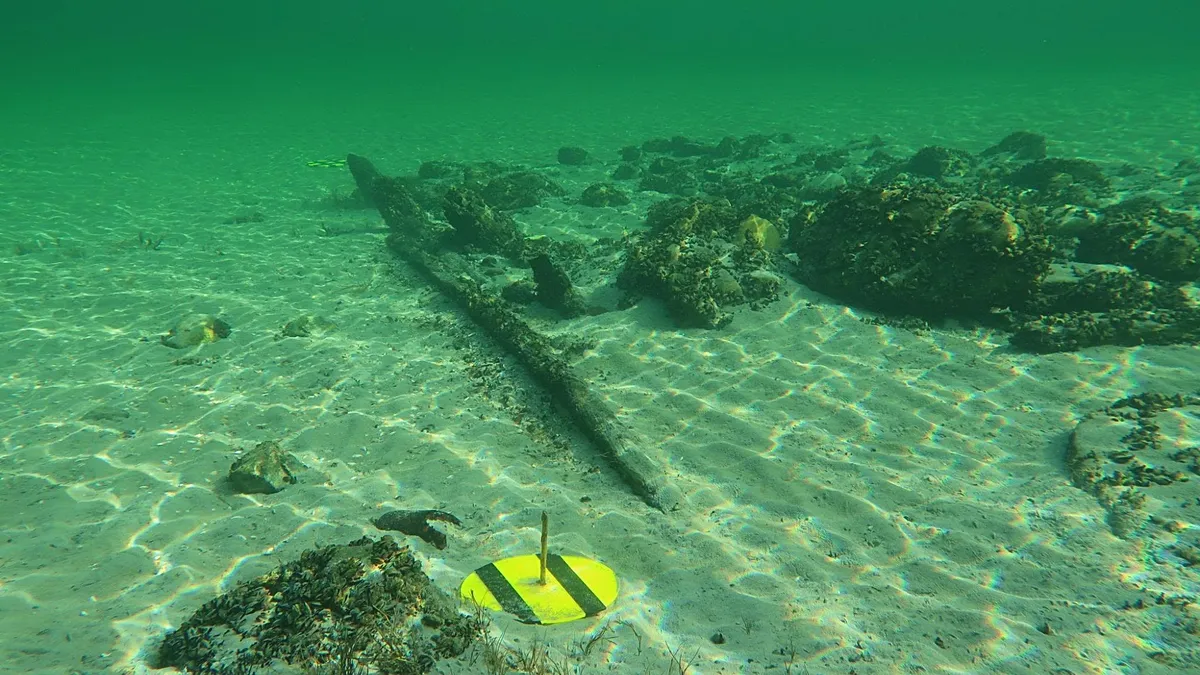
Poinews.com – During a routine diving expedition near Lindau, a remarkable shipwreck was found in Lake Constance, prompting astonishment among underwater archaeologists. The discovery, made by a local recreational diver with deep knowledge of the area, has rewritten historical assumptions about the lake’s maritime history. According to Prof. Dr. Tobias Pflederer, an archaeological research diver and cardiologist from Kaufbeuren, the find was entirely unexpected. This accidental discovery not only highlights the potential for hidden treasures in seemingly well-explored waters but also underscores the significance of continued exploration in the region.
Unearthing a Medieval Mystery
Initially, the team believed the wreck might be a more recent vessel, but the presence of distinct structural elements quickly changed their perspective. Pflederer, who is also a professor at the University of Erlangen and honorary president of the Bavarian Society for Underwater Archaeology (BGfU), emphasized the shock of the discovery. “The find was intriguing because we initially thought it might be a more recent wreck,” he said, speaking to Euronews. The identification of the ship’s remains came after several key features were uncovered, confirming its historical value. This shipwreck, potentially dating back centuries, now stands as a pivotal piece in understanding the region’s past.
Ancient Vessels and Previous Discoveries
Before this recent find, the Bavarian Society for Underwater Archaeology had already made significant contributions to the study of Lake Constance’s underwater history, including the discovery of multiple dugout canoes in both Lake Constance and Lake Chiemsee. These earlier finds, which are on display at the Deutsches Museum in Munich, offer a glimpse into ancient watercraft but are considerably older and heavier than the newly found shipwreck. This medieval vessel, estimated to be between eight and twelve metres in length with a beam of approximately three metres, presents a unique opportunity to explore a different era of shipbuilding and trade.
Located off the shores of Lindau, the shipwreck’s discovery is particularly noteworthy as the area lies near the Austrian border and is shared by Germany and Switzerland. The low water levels, even prior to recent heatwaves, have created ideal conditions for uncovering submerged artifacts. Pflederer explained, “We had anticipated a more recent date, but the results suggest the wreck dates back to the 15th century AD.” This revelation challenges existing timelines and opens new avenues for research into the region’s medieval past.
Analysis and Historical Context
Further analysis of the shipwreck, conducted in collaboration with the Bavarian State Office for Monument Preservation, has provided critical insights into its age and origin. A small wood sample from the vessel’s remains was subjected to radiocarbon dating, confirming its medieval status. The Schwäbische Zeitung reported these findings, which have sparked renewed interest in the lake’s historical narrative. Pflederer noted that the initial efforts were modest, involving just two dives with limited tools like orthophotography and sample extraction. The results, however, have proven to be monumental, offering a tangible link to the late Middle Ages.
The significance of the shipwreck extends beyond its physical remains. It provides archaeologists with a rare opportunity to study late medieval shipbuilding techniques and trade routes that may have utilized Lake Constance as a vital transportation network. While the exact purpose of the vessel remains under investigation, its discovery could help fill gaps in understanding how waterborne commerce functioned in the region during this period. Pflederer remarked, “The interpretation quickly became clear once several frames were visible. This wreck could fill gaps in our understanding of late Middle Ages shipbuilding on Lake Constance.”
Conservation and Future Exploration
Unlike the Roman-era cargo found in Lake Neuchâtel, which required immediate recovery due to its fragility, the Lake Constance shipwreck appears to be in a more stable state. Pflederer explained, “Salvaging a wreck involves costly conservation work. Leaving it underwater, especially under sediment, offers the best protection.” This approach allows the natural environment to preserve the vessel’s structure over time. However, a small-scale excavation is being planned to study the ship’s design in greater detail and to extract additional samples for further analysis.
The Bavarian Society for Underwater Archaeology (BGfU) plays a central role in managing such projects, with approximately 100 members dedicated to uncovering historical artifacts across multiple lakes. Volunteers and professionals collaborate to document and study these finds, which contribute to broader knowledge about ancient navigation and shipbuilding practices. Pflederer highlighted the importance of such efforts, stating, “Each discovery adds a new layer to our understanding of how people lived and traveled in the past.” The shipwreck in Lake Constance is a testament to the enduring value of underwater archaeology in revealing forgotten chapters of history.