You can visit every bridge on the back of euro banknotes – and they’re all in one town
You can visit every bridge depicted on euro banknotes without leaving a single Dutch municipality. This remarkable fact has captured the imagination of

You Can Visit Every Bridge on Euro Banknotes in One Dutch Town
Poinews.com – You can visit every bridge depicted on euro banknotes without leaving a single Dutch municipality. This remarkable fact has captured the imagination of travelers and currency enthusiasts alike. The announcement of new eurozone banknote designs has sparked renewed interest in the original currency, prompting people to examine these familiar pieces of paper with fresh eyes. While most individuals have handled euro notes countless times throughout their lives, very few have actually studied the intricate details printed on them.
The European Union maintains a unified approach to paper currency that sets it apart from coinage systems. Unlike euro coins, which showcase varying designs based on their country of origin, the paper banknotes remain consistent across all member states. Each denomination features a window or doorway on its obverse side, representing what the European Central Bank characterizes as “the European spirit of openness and cooperation.” The reverse side prominently displays bridges, which “symbolise communication between the people of Europe and between Europe and the rest of the world.”
The Architectural Vision Behind the Currency
Originally, these banknotes were conceived to represent historical architectural periods rather than specific physical structures. The €10 denomination, for example, features Romanesque styling, while other denominations showcase Gothic, Renaissance, and modern architectural elements. However, one Dutch municipality transformed this abstract concept into tangible reality through an ambitious urban planning project.
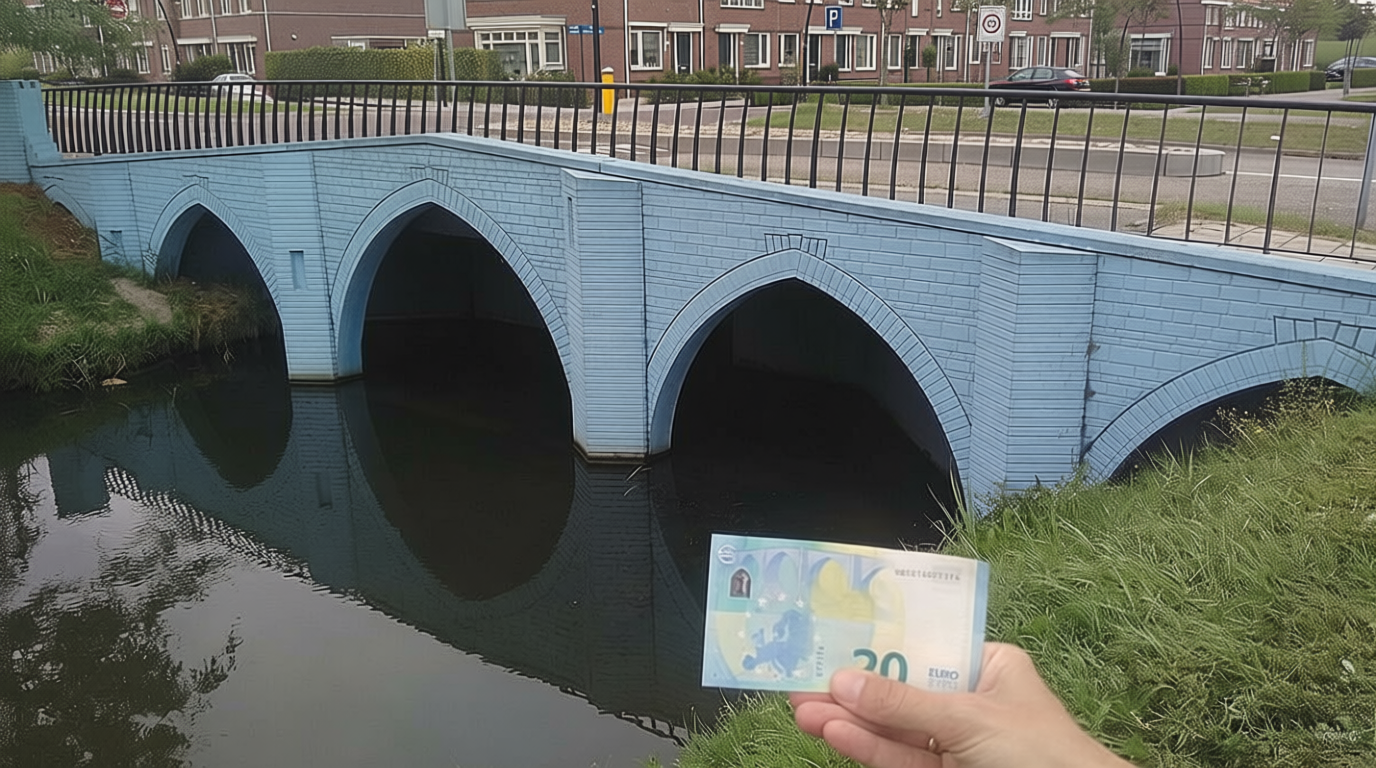
The town of Spijkenisse in the Netherlands became the unlikely home to actual bridges matching those depicted on euro notes. Dutch designer Robin Stam conceived this extraordinary project in 2011, collaborating with local authorities to implement it within a developing residential area. As documented by Dezeen magazine, Stam’s vision was to create a living connection between the currency and the built environment, allowing residents and visitors to literally walk across the bridges featured on their money.
Between 2011 and 2013, seven distinct bridges were unveiled to the public in Spijkenisse. Remarkably, all of them sit within easy walking distance of one another, making it possible to visit every banknote bridge in a single day. This accessibility is what makes the town such a unique destination for architecture enthusiasts and curious travelers.
Reaching Spijkenisse is straightforward for visitors from anywhere in the Netherlands. The town is conveniently served by the Rotterdam metro system, specifically lines C and D, which provide direct access to this architectural treasure trove. The journey from central Rotterdam takes approximately thirty minutes, making it an ideal day trip for those exploring the region.
Exploring the Bridges: A Walking Tour Experience
Each bridge in Spijkenisse corresponds to a specific euro banknote denomination, creating an interactive experience for visitors. The bridges vary in design and style, reflecting the architectural periods represented on the currency. Walking from one bridge to another allows visitors to appreciate both the individual structures and their collective significance as a unified architectural statement.
The project has proven so successful that it has become a point of local pride for Spijkenisse residents. The bridges serve not only as functional crossings over the town’s waterways but also as educational landmarks that connect everyday life with European identity. Many visitors find themselves photographing each bridge alongside the corresponding banknote, creating a personal record of their journey through this unique architectural landscape.
For those planning to visit, the best time to explore the bridges is during spring and summer months when the weather is pleasant for walking. The town offers various amenities including cafes and restaurants near the bridge district, making it easy to spend several hours exploring without feeling rushed. Local tourism information centers provide maps and guides that help visitors navigate the bridge route efficiently.
The success of the Spijkenisse project has inspired similar initiatives in other European towns, though none have achieved the same level of completeness. The fact that you can visit every bridge on euro banknotes in one location remains a unique selling point for the town. As tourism continues to grow, Spijkenisse has positioned itself as an essential destination for anyone interested in European architecture, currency, or simply seeking an unusual travel experience that combines education with exploration.