Southern Europe is dealing with fewer blazes but ‘greater’ wildfire risk. Is there a solution?
```html

Europe Faces Heightened Wildfire Threat Despite Fewer Fires
Poinews.com – Recent scientific findings reveal that southern Europe is experiencing a significant escalation in fire-favorable atmospheric conditions, even as the total number of blazes declines. According to research published in Scientific Reports, the continent is witnessing what experts describe as a “major intensification” of weather patterns that encourage wildfires.
Record-Breaking Evacuations and Devastation
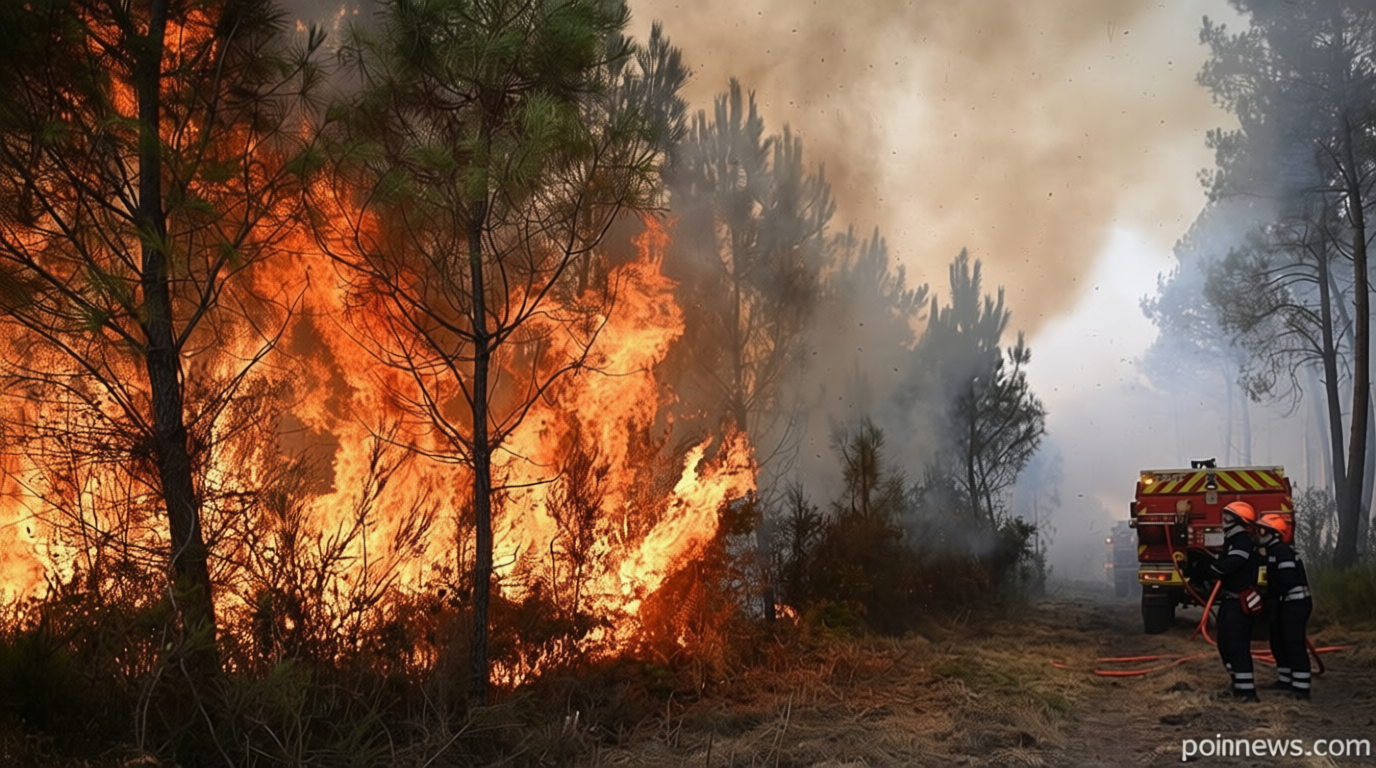
Uncontrolled flames have recently ravaged extensive territories across Spain and France. These conflagrations have consumed over 120,000 hectares of land and compelled more than 300,000 residents to flee their dwellings. This represents the largest displacement operation since the conclusion of World War II, positioning the European Union for its most severe wildfire season in documented history.
While emergency services have managed to contain portions of the destruction, new threats continue to emerge. Yesterday, July 29, a fire in southwest France—measuring four times the area of Paris—threatened to reignite. Simultaneously, tragedy struck the Greek island of Crete, where three firefighters lost their lives.
Climate Patterns Driving Increased Risk
The study examined national wildfire documentation from Portugal, Spain, France, Italy, and Greece, correlating these records with meteorological information spanning from 1981 through 2025. Scientists discovered that regions within France and Spain experienced fire-promoting weather—characterized by heat, aridity, and wind—intensifying by as much as 50 percent between 2016 and 2025 relative to the 1981-2010 baseline.
Furthermore, the frequency of days featuring “highly fire-promoting conditions” surged from fewer than ten during the earlier period to approximately twenty-five over the past decade in the analyzed nations.
“Smaller air-pressure differences across the North Atlantic coincided with an increase in fire-promoting weather in parts of Greece, Italy, Corsica and Spain,” the report states.
“Sea-surface-temperature anomalies in the tropical Pacific, associated with El Niño, preceded fire-promoting weather in parts of northwestern Iberia, in Sicily, and southern Greece.”
The researchers note that this weather pattern correlates with warm, dry days and connects to broader climate phenomena such as El Niño. Most El Niño occurrences temporarily elevate worldwide average temperatures by roughly 0.2°C. While this figure appears modest compared to the 1.3 to 1.5°C increase driven by human fossil fuel consumption since pre-industrial times, it remains significant.
Europe’s Rapid Warming Trajectory
The EU’s Copernicus Climate Change Service identifies Europe as the continent warming most rapidly, with temperature increases occurring at more than double the global rate. Additionally, World Weather Attribution’s analysis revealed that Europe’s recent June heatwave—which brought temperatures to 40°C in multiple nations—would have been “virtually impossible” as recently as 1976.
Management Strategies Show Promise
Despite escalating risks, the annual wildfire count over the previous decade dropped by roughly 40 percent compared to the 1981-2010 timeframe across the five studied countries. This decline suggests that enhanced firefighting training and public education initiatives are yielding positive results.
Looking forward, experts emphasize that addressing climate change through fossil fuel reduction and clean energy adoption remains essential. Meanwhile, various management techniques offer immediate benefits. “Prescribed burns,” which involve deliberately igniting controlled areas under favorable weather conditions, help eliminate dead vegetation and small trees that could fuel larger summer fires.
A 2025 Stanford University investigation demonstrated that prescribed burns decrease subsequent wildfire severity by an average of 16 percent while reducing net smoke pollution by 14 percent. The World Wildlife Foundation additionally advocates for “sustainable land use management” to mitigate disaster potential.
“It is important to regulate land-use change and update zoning guidance to ensure that development does not exacerbate fire risk,” the organisation states.
The organization further warns that fire consequences extend beyond the flames themselves, affecting communities long after suppression efforts conclude.