Arctic on foot: Meet the British artist turning a 600km climate journey into theatre
Arctic on Foot: British Artist’s 600km Climate Journey as Theatre Arctic on foot is the central theme of a groundbreaking project by British theatre artist

Arctic on Foot: British Artist’s 600km Climate Journey as Theatre
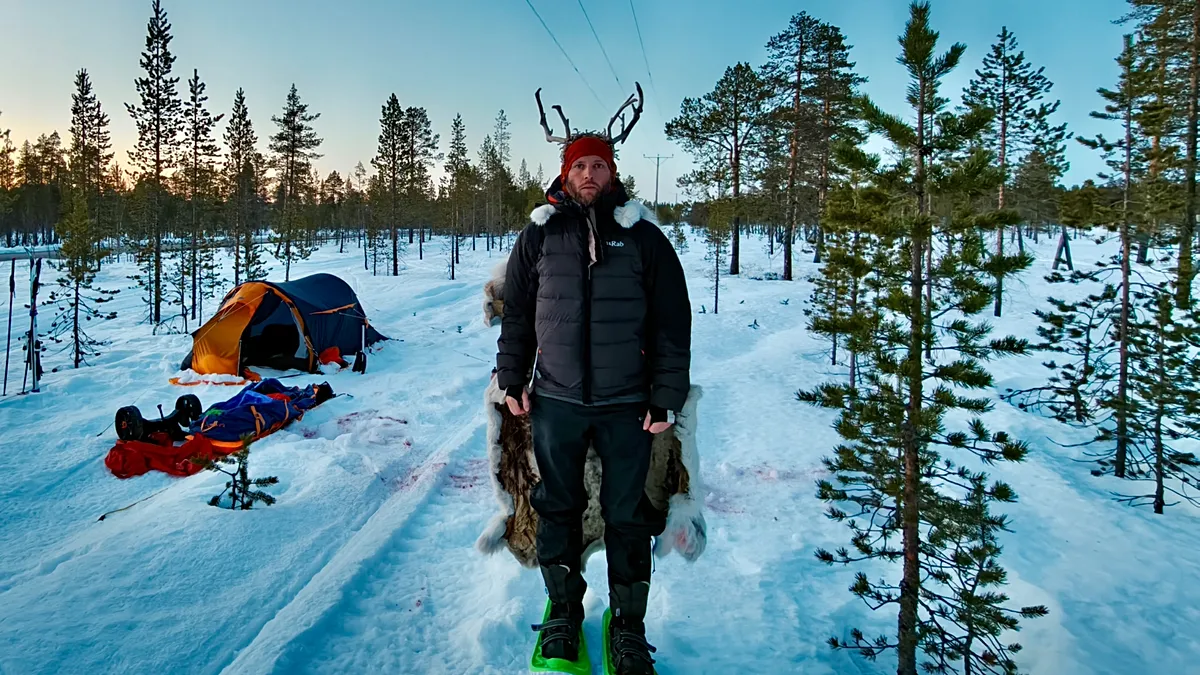
Poinews.com – Arctic on foot is the central theme of a groundbreaking project by British theatre artist Tom Bailey, whose immersive expedition across the Arctic borderlands of Norway, Finland, and Sweden has transformed into a unique performance piece. The journey, titled Threshold – A Wild New Border Journey, spans over 600 kilometers and began in March at the Norwegian-Russian frontier. Bailey, based in Bristol and part of the MECHANIMAL company, traveled by skis, sled, foot, and boat, carrying only a tent, a fuel stove, and essential gear to endure temperatures ranging from -30°C to +15°C. The trek concludes at the Stamsund International Theatre Festival in the Lofoten Islands on 27 May, offering a visceral exploration of climate change through physical endurance and artistic expression.
Reimagining Theatre Through Environmental Immersion
Tom Bailey’s Arctic on foot journey is more than a physical feat—it’s a deliberate artistic choice to bridge the gap between performance and nature. “I’m a theatre maker and environmental artist deeply committed to creating work that reflects the urgency of climate change,” he says in a video call from Svolvær. Unlike conventional touring methods, which rely on air travel or road transport, Bailey’s approach emphasizes slow, deliberate movement. By walking through remote forests, frozen lakes, and rugged coastlines, he immerses himself in the landscapes he seeks to portray, fostering a deeper connection with the environment and the communities that inhabit it.
“Theatre has traditionally been about transporting audiences to a place, not about being present in it,” Bailey notes. “This journey is about acknowledging the landscape as a living entity and letting it shape the story.”
This philosophy of integration rather than separation allows the performance to evolve organically, with each step of the Arctic on foot expedition influencing the narrative and creative process.
Climate Change as a Political and Cultural Force
Bailey’s Arctic on foot journey also serves as a political commentary on the Arctic’s shifting dynamics. As the region warms, its resources and ecosystems become increasingly vulnerable, raising critical questions about who controls these changes. “Climate change isn’t just an environmental issue—it’s a matter of sovereignty and ownership,” he explains. The Arctic on foot expedition highlights the tensions between global interests and local communities, particularly the Sami people, whose traditional way of life is intertwined with the land and its natural rhythms.
Through conversations with artists, researchers, and residents, Bailey explores how climate change impacts cultural identity and governance. “What if the sea, reindeer, or lichen could have a voice in decisions?” he muses, challenging audiences to reconsider the role of nature in shaping policy. This perspective adds a layer of social critique to the Arctic on foot journey, positioning it as both an environmental and political exploration.
Challenges of the Arctic Traverse
The Arctic on foot expedition was fraught with challenges that tested Bailey’s resilience and adaptability. An unusually warm spring turned snow into slush, complicating movement and forcing him to adjust his schedule. To navigate these conditions, he began traveling at night when temperatures dropped and the snow refroze, often spending days in his tent. “Hauling the sled through melting snow is physically exhausting,” he admits, describing the arduous process of setting up and dismantling camp, which took four to five hours daily. Despite these obstacles, Bailey remained committed to his vision, using the hardships to deepen the emotional and symbolic weight of the performance.
Unexpected Hurdles and Strategic Planning
Bailey’s Arctic on foot journey faced an unexpected complication: Brexit introduced a 90-day restriction for UK citizens in the Schengen Area, limiting his time in the region. “Borders are on my mind,” he says, noting how this constraint influenced his travel planning. The artist had to balance the physical demands of the Arctic on foot expedition with the logistical challenge of returning to the UK. This situation underscores the broader theme of interconnectedness, where political boundaries intersect with environmental and cultural narratives.
Collaborating with designer Natasha Soonchild, who worked as an artist in residence in Kirkenes, Norway, Bailey has been developing the performance for the past year. The project, set to premiere in 2027, depends on securing funding to bring it to life. While he acknowledges that the Arctic on foot model may not scale universally, Bailey argues that discussions on sustainable touring often overlook the deeper relationship between art and nature. “We’re stuck in the mindset of switching to trains instead of rethinking how we engage with the planet,” he observes, emphasizing the need for transformative approaches to creative practice.
Collaboration with Nature as a New Artistic Paradigm
Bailey’s Arctic on foot journey culminates in a performance that questions the traditional role of theatre as a passive observer. “Maybe strapping on a reindeer costume for a long trek now seems foolish,” he says, but adds that in five years, such actions could become essential. This reflection highlights the project’s core ambition: to shift from depicting nature to collaborating with it. By immersing himself in the Arctic landscape, Bailey seeks to create a performance that is not only inspired by the environment but also shaped by it, offering a new model for artistic engagement in an era of climate crisis.