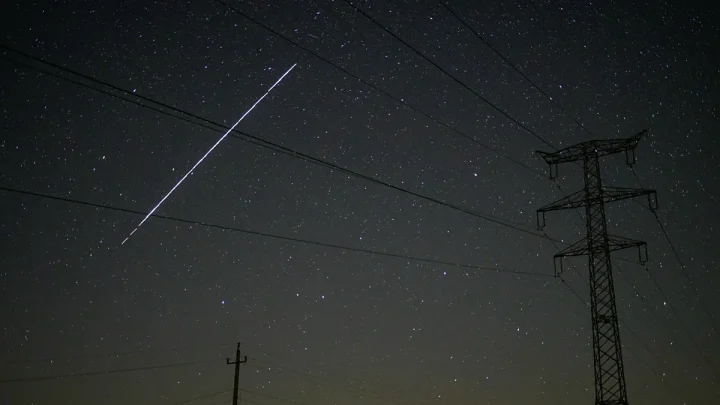
Spanish invisible shield that saves satellites from irreparable failure
For over four decades, the European Space Agency has tracked a persistent threat known as the multipactor effect. This phenomenon manifests as an electron


Nanometric Breakthrough Protects Spacecraft from Electron Avalanche Damage
Poinews.com – For over four decades, the European Space Agency has tracked a persistent threat known as the multipactor effect. This phenomenon manifests as an electron avalanche within vacuum-sealed components like waveguides and antennas, potentially destroying critical equipment beyond repair. While Alodine—a chromium-containing compound—has served as the industry standard for decades, it presents dual challenges: environmental concerns and health risks for workers handling the material. Despite regulatory pressure to phase out Alodine, no alternative has successfully matched its technical capabilities until now.
A New Approach at the Nanoscale
Lidia Martínez, researcher at the Spanish National Research Council’s Institute of Materials Science of Madrid, notes that the aerospace sector required a coating capable of minimizing secondary electron emission—the very particles that initiate the destructive chain reaction. Previous efforts concentrated on altering material surfaces at the micrometre level, yet these approaches fell short of space industry expectations. The ICMM team pivoted to a fundamentally different strategy: engineering roughness at the nanometric scale, where features measure approximately one billionth of a metre.
Using a gas aggregation source technique operating under ultra-high vacuum conditions, the researchers synthesized gold and silver nanoparticles ranging from four to eight nanometres. This solvent-free deposition method yielded porous, metallic films free of chemical residues. Laboratory testing conducted at ESA-accredited facilities revealed that these nanocoatings decrease secondary electron emission by roughly thirty percent relative to traditional Alodine applications. Furthermore, certain configurations demonstrated a three-hundred percent improvement in the cut-off energy threshold—the critical point where materials begin producing more electrons than they absorb.
Validation and Commercialization Path
Accelerated aging protocols spanning six months, alongside thermal cycling at 150°C to simulate solar exposure conditions, confirmed that while performance gradually diminishes, the nanocoatings consistently outperform newly applied Alodine. A joint European patent application submitted to the European Patent Office in July 2025 by CSIC and Nanostine—a CSIC spin-off entity—now awaits examination. Nanostine will oversee commercialization efforts targeting primarily the aerospace market.
Financial support originated from multiple sources: the Community of Madrid’s Industrial PhD programme and the ESA Business Innovation Centre, coordinated locally by the Madri+d Foundation. Despite encouraging laboratory outcomes, Martínez maintains realistic expectations regarding deployment timelines. Transitioning a novel coating from laboratory to operational space use typically demands approximately ten years of comprehensive testing and validation. While ESA has voiced satisfaction with the proposed solution, the researcher emphasizes that several additional milestones must be cleared before these materials can be integrated into actual satellite missions.