Europe wants to be a strong partner of the US in the Moon race, ESA astronaut says
```html

European Ambitions Take Center Stage in Lunar Return Mission
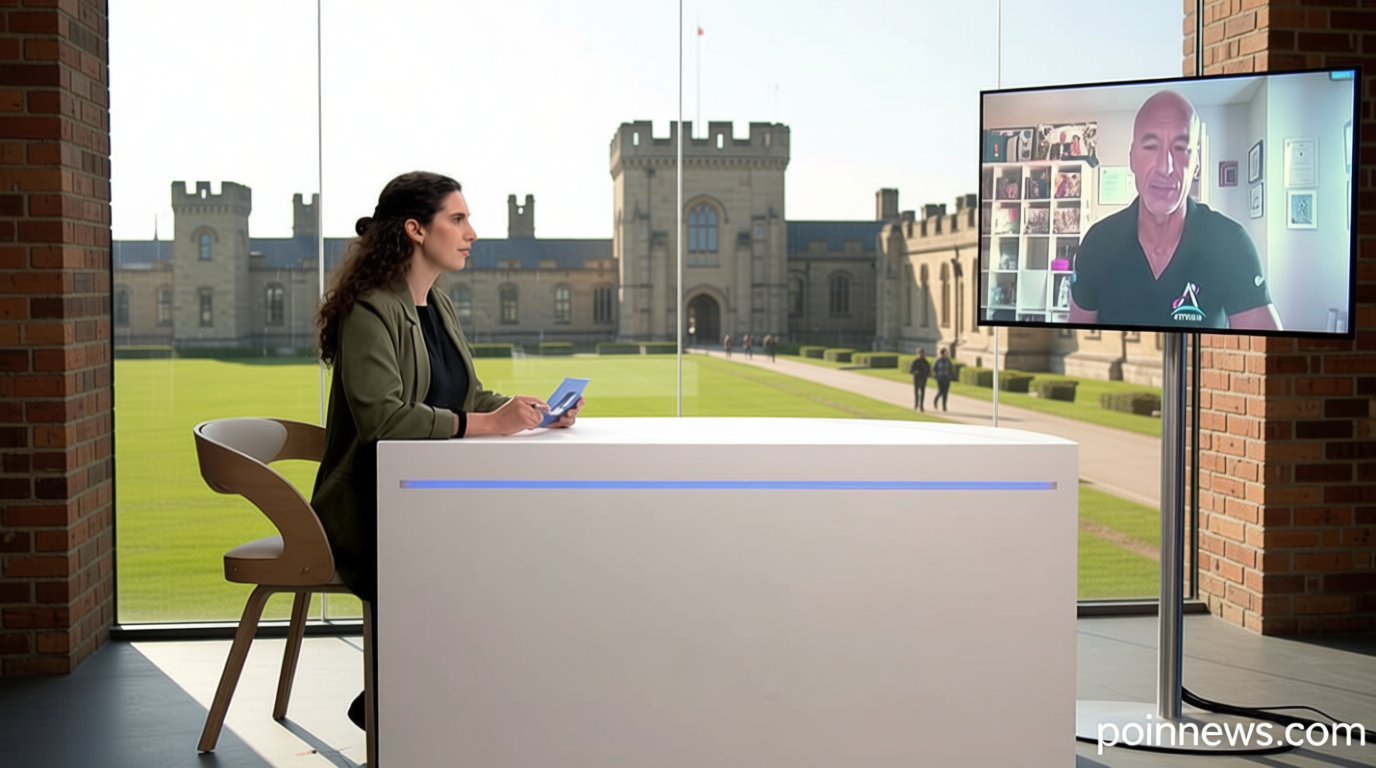
Poinews.com – Luca Parmitano shared his enthusiasm with Euronews regarding Europe’s position within the renewed lunar competition. The Italian astronaut, representing the European Space Agency, expressed his desire for his continent to serve as a reliable ally to America during this era of space exploration. His selection for NASA’s Artemis III program marks a significant milestone, as the mission aims to validate the agency’s approach to lunar landings.
A Historic Selection for an Experienced Voyager
Originally not part of his expectations, Parmitano described feeling completely astonished when informed of his nomination. The honor is particularly meaningful given his extensive background. He previously commanded the International Space Station as Italy’s first representative in that role, accumulating more than 366 days aboard the orbital laboratory across two extended missions known as Volare and Beyond.
“The mission was not at all on my horizon,” said Parmitano. “I was speechless, which is quite unusual for me, and I was really grateful.”
His accomplishments also include becoming the first Italian to conduct a spacewalk. Now, he stands poised to become the inaugural European to travel into orbit through the Artemis initiative.
Mission Architecture and Technical Challenges
Scheduled for deployment in 2027, the Artemis III expedition represents one of the most intricate human spaceflights documented in recent decades. The crew will consist of four astronauts—three from NASA alongside Parmitano—who will travel aboard the Orion vehicle. Their objective involves connecting with two separate lunar landers manufactured by competing commercial entities: SpaceX, founded by Elon Musk, and Blue Origin, established by Jeff Bezos.
Parmitano highlighted several operational hurdles that the team must navigate. The mission requires coordinating three distinct launches occurring within a narrow timeframe, utilizing different spacecraft systems. Additionally, the crew will reside within Orion’s compact living space, measuring approximately eight to nine cubic meters. This environment differs significantly from low-Earth orbit conditions, requiring adaptation to deep-space parameters.
“We have three launches that have to happen in close proximity and from very different spacecrafts,” he explained.
Training and Preparation Underway
Parmitano now trains alongside his fellow crew members: Randy Bresnik, Frank Rubio, and Andre Douglas. Their preparation regimen encompasses extensive simulations, skill development exercises, and scenario planning for potential equipment failures.
“Our training is very complex and wonderfully different and varied,” Parmitano stated.
European Identity and Political Context
During a public announcement on June 9 at Houston’s Johnson Space Center, Parmitano delivered an emotional address. He characterized Italy as his personal “launch pad” and described the ESA as his “launch tower.” He also expressed appreciation for Italy’s public education framework, hoping to carry forward a spirit of perseverance that he considers central to European character.
“People of my age, we were not born Europeans. We became Europeans. This identity was desired, this identity has been a goal, something we wanted to achieve,” he said.
Despite recent diplomatic tensions between Washington and Brussels, Parmitano observes that space operations remain unaffected. He noted that astronauts focus on their work rather than political developments.
“We don’t look at what’s happening at the political level; we are operators.”
ESA’s Growing Contribution
The European Space Agency has made substantial investments in the Artemis framework. Most notably, ESA constructed the European Service Module, which supplies Orion with power, temperature regulation, and essential gases including oxygen and nitrogen, along with water resources.
However, the agency’s role experienced modification after NASA announced a suspension of development for the Lunar Gateway—a space station intended to orbit the Moon. Europe had been developing several critical components for this orbital facility.
Looking Toward 2027
While numerous specialists consider the 2027 launch window overly optimistic, Parmitano maintains that ambitious targets drive progress.
“To achieve complex objectives, you have to be ambitious and push hard.”
He emphasized that the lunar return represents more than a competitive endeavor; it embodies a shared commitment to advancing human civilization. The partnership between Europe and the United States in space continues to strengthen, united by the vision of improving life on Earth through exploration beyond our atmosphere.