Low water levels: EU clears old Nazi warships from the Danube
Unusually high temperatures across Europe have triggered a significant decline in the Danube's water levels, revealing maritime treasures hidden for decades

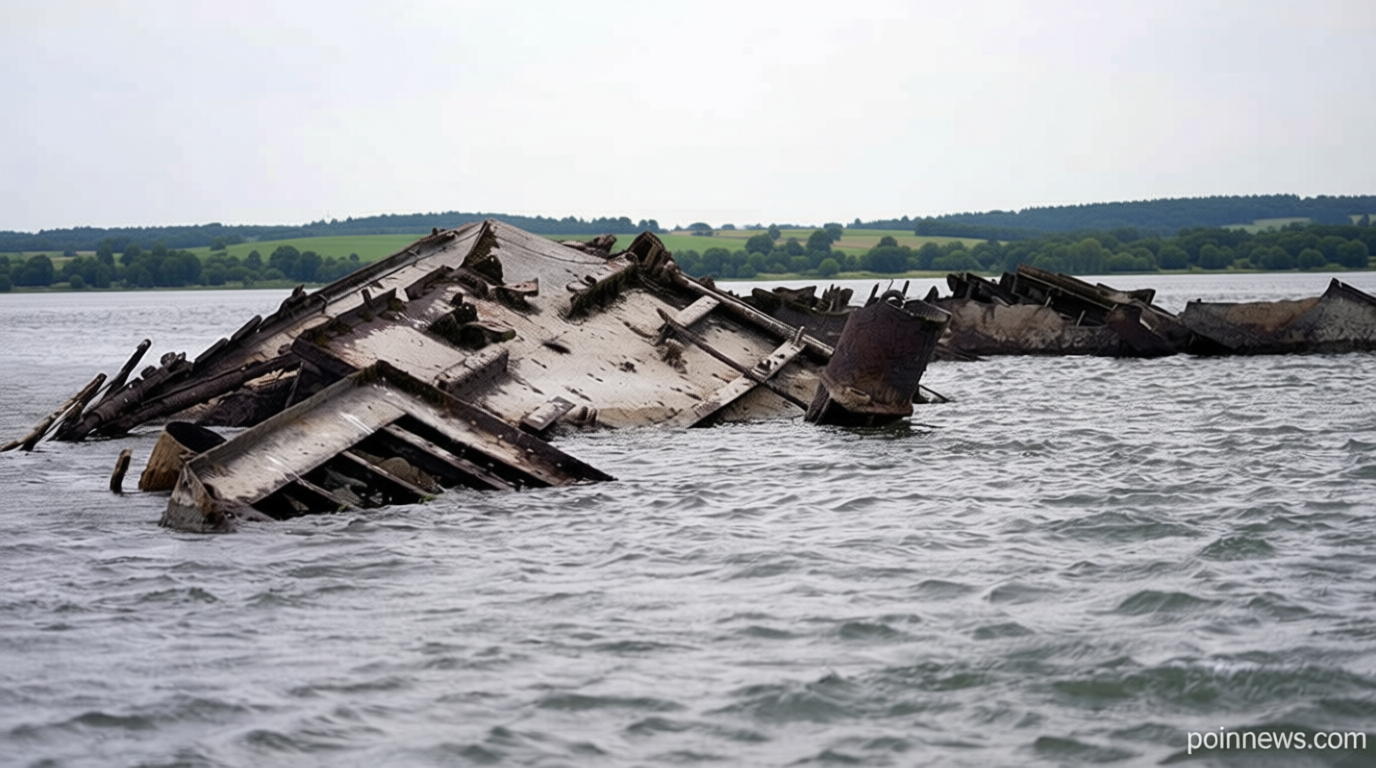
Historic Warships Emerge from Danube as Drought Exposes WWII Relics
Poinews.com – Unusually high temperatures across Europe have triggered a significant decline in the Danube’s water levels, revealing maritime treasures hidden for decades. The river near Prahovo in Serbia has become a natural archive, with German naval vessels surfacing with increasing regularity. While some of these sunken ships will be extracted over the next several years, others have already been pulled onto dry land.
Journalists at “Fokus” magazine recently provided the first comprehensive coverage of this phenomenon. The narrative traces back more than eight decades to the final stages of the Second World War. During autumn 1944, German forces withdrew from territories advancing toward by Soviet troops, conducting their retreat both across land and along waterways.
A Strategic Blockade That Lasted Decades
Orders from Adolf Hitler demanded that functional military assets remain out of enemy possession. This directive extended to Kriegsmarine units operating along Europe’s second-longest river. Crew members deliberately sank their vessels in the Danube to create an underwater barrier. The intention was to prevent Red Army forces from traveling upstream along the waterway.
This wartime obstruction continues to affect navigation today. During previous periods of extreme heat, particularly in August 2022, receding waters revealed portions of these sunken ships. The European Investment Bank serves as the strategic partner for the Western Balkans Investment Framework, which launched a project to extract twenty-one of the most problematic wrecks.
Challenges of Underwater Recovery
According to the EIB, several remains within a five-kilometer section of the river were already retrieved during 2024. Workers used heavy ropes to haul the vessels from the riverbed and removed accumulated sediment. Serbia’s deputy minister for construction, transport, and infrastructure at that time provided commentary on the progress.
According to the EIB’s information at the time, the work is due to be completed by 2028.
Before operations commenced, approximately two hundred ships were believed to rest on the river floor. These included cargo vessels, tugboats, and barges, many of which had been destroyed during the conflict. Extracting armed military vessels presents unique difficulties compared to civilian ships.
The EIB noted that certain boats might still contain ammunition, creating potential explosion hazards during extraction. Divers will assist in the recovery process, working alongside pumps designed to eliminate sand and silt. However, some vessels proved too massive for conventional methods, so operators left them buried deeper in the riverbed to avoid blocking commercial traffic.
Economic Benefits Drive the Project
Beyond historical preservation, the salvage effort carries substantial economic importance. The debris had created considerable bottlenecks for freight movement, costing Serbia an estimated five million euros annually. In July 2024, the European Investment Bank approved a sixteen million euro subsidy to support the initiative.
The broader objective involves enhancing competitiveness for inland waterway navigation throughout Serbia and neighboring regions. This undertaking forms part of the thirty billion euro Economic and Investment Plan for the Western Balkans. According to the EIB, the framework aims to encourage greater freight transport via water rather than road networks, creating more sustainable logistics solutions for the future.