‘Mind the sticky patch!’: Why has this Dutch museum covered the floor in peanut butter?
Floor Art Mind the sticky patch - The phrase “Mind the sticky patch” has become synonymous with a unique and unconventional art installation at Museum

Mind the Sticky Patch: Dutch Museum’s Peanut Butter Floor Art
Poinews.com – The phrase “Mind the sticky patch” has become synonymous with a unique and unconventional art installation at Museum Boijmans Van Beuningen in Rotterdam, Netherlands. This bizarre yet thought-provoking exhibit covers the entire floor in a thick layer of peanut butter, a tribute to the late Dutch artist Wim T. Schippers, who passed away on June 10, 2026. Known for his eccentric creativity and his iconic role as the voice of Ernie and Kermit the Frog in the Netherlands’ *Sesame Street* adaptation, Schippers first introduced the concept of “Pindakaasvloer”—translated as “Peanut Butter Floor”—in 1969. The installation, which spans a 25-square-metre hexagonal space, is part of his broader Floor Covering Series, a collection of works that challenge traditional notions of art by blending everyday materials with avant-garde expression. This latest iteration, however, has captured global attention for its sheer audacity and sensory appeal.
Art as a Subversive Statement
Wim T. Schippers’ Peanut Butter Floor is not merely a quirky gimmick but a deliberate artistic statement. By transforming a mundane substance like peanut butter into a medium for artistic expression, he questioned the boundaries between art and life, inviting viewers to reconsider the value of the ordinary. The piece is designed to evoke a multisensory experience, encouraging visitors to “follow the smell” of the peanut butter as they navigate the gallery. This immersive approach aligns with Schippers’ philosophy of art that is both accessible and provocative. His work often emphasized simplicity and playfulness, yet carried deeper meaning, making the peanut butter installation a fitting representation of his legacy. The phrase “Mind the sticky patch” has since become a cultural reference, symbolizing the intersection of humor and high art.
The Creative Process Behind the Installation
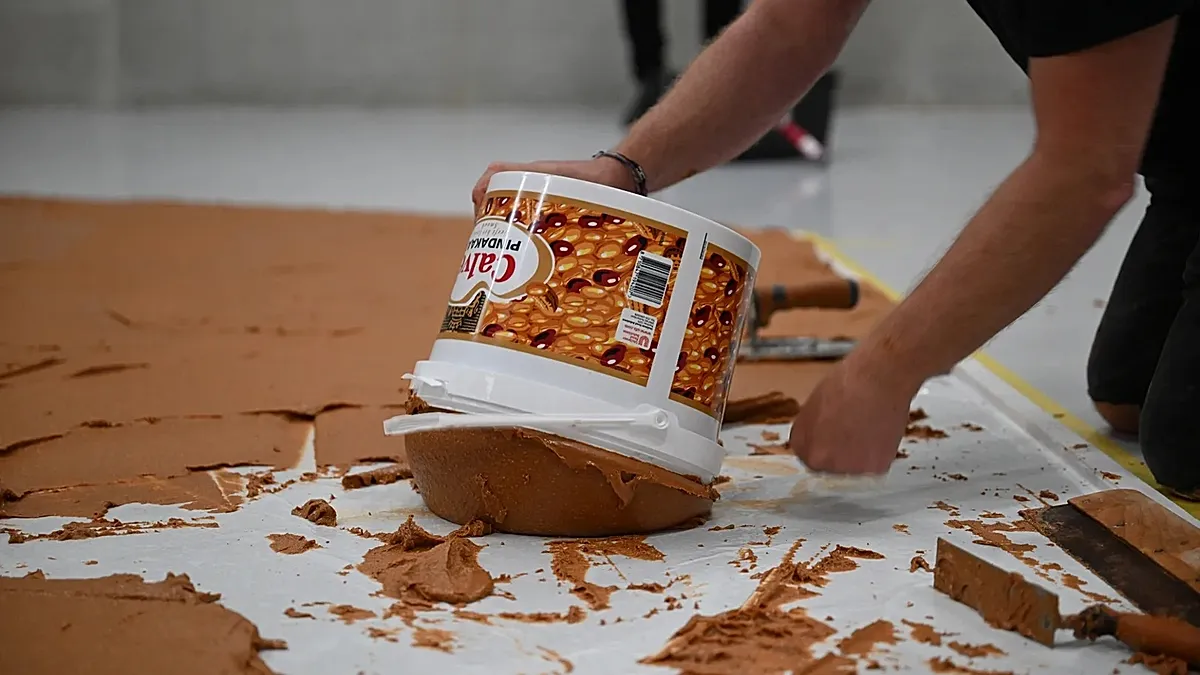
Creating the Peanut Butter Floor required meticulous planning and execution. Two museum staff members, working under the guidance of curators, spent several days applying 40 tubs of peanut butter, donated by the local brand Calvé, to the designated space. Using drywall trowels, they ensured the surface was “as smooth and boring as possible,” a nod to Schippers’ preference for understated elegance. The process itself was as much a performance as the final piece, with the artists’ labor becoming part of the exhibit’s narrative. This attention to detail reflects Schippers’ belief that even the most unassuming materials can hold profound artistic significance. The installation’s completion marked a milestone, not just for the museum, but for the art world’s growing embrace of unconventional media.
Visitor Reactions and Cultural Impact
The Peanut Butter Floor has sparked a wide range of reactions from visitors and critics alike. While some find it amusing, others appreciate its conceptual depth and the way it disrupts the traditional gallery experience. The exhibit has become a social media sensation, with many visitors documenting their encounters with the sticky masterpiece. For those with peanut allergies, the installation serves as a reminder of the risks of artistic innovation, but for the majority, it offers a novel way to engage with art. The phrase “Mind the sticky patch” has entered public discourse, with people using it both literally and metaphorically to describe situations where the unexpected takes center stage. This blend of humor and creativity has helped the exhibit transcend its initial novelty, sparking conversations about the role of absurdity in modern art.
A Legacy of Unconventional Creativity
Wim T. Schippers’ career was defined by his ability to transform the mundane into the extraordinary. His Floor Covering Series, which includes works like the Peanut Butter Floor, challenged the art establishment by using materials such as glass shards, salt, and even bread. The peanut butter installation is part of a larger trend in contemporary art that prioritizes sensory engagement and interactive experiences. Museum Boijmans Van Beuningen has described the exhibit as a “celebration of Schippers’ playful genius,” highlighting its importance in preserving his artistic vision. The display, which runs until September 6, 2026, is also a testament to the museum’s commitment to showcasing bold, experimental works. This exhibit ensures that Schippers’ legacy remains alive, inspiring new generations of artists and thinkers.
As the Peanut Butter Floor continues to draw crowds, it reinforces the idea that art can be both a reflection of culture and a catalyst for conversation. The installation’s success underscores the value of subversive creativity in a world increasingly saturated with digital media. Visitors are encouraged to embrace the unexpected, much like Schippers himself, who believed that art should provoke thought and spark joy. The phrase “Mind the sticky patch” has become more than a warning—it’s a rallying cry for artistic innovation. With its combination of humor, texture, and concept, the exhibit at Museum Boijmans Van Beuningen stands as a remarkable example of how everyday materials can redefine the boundaries of artistic expression. Whether seen as a whimsical piece or a serious statement, the Peanut Butter Floor is undeniably a landmark in contemporary art.