Bigger than Jupiter, lighter than cotton candy: Astronomers discover two ‘super-puff’ planets
Bigger Than Jupiter, Lighter Than Cotton Candy: Two 'Super-Puff' Planets Discovered Bigger than Jupiter lighter than cotton - Astronomers have made a

Bigger Than Jupiter, Lighter Than Cotton Candy: Two ‘Super-Puff’ Planets Discovered
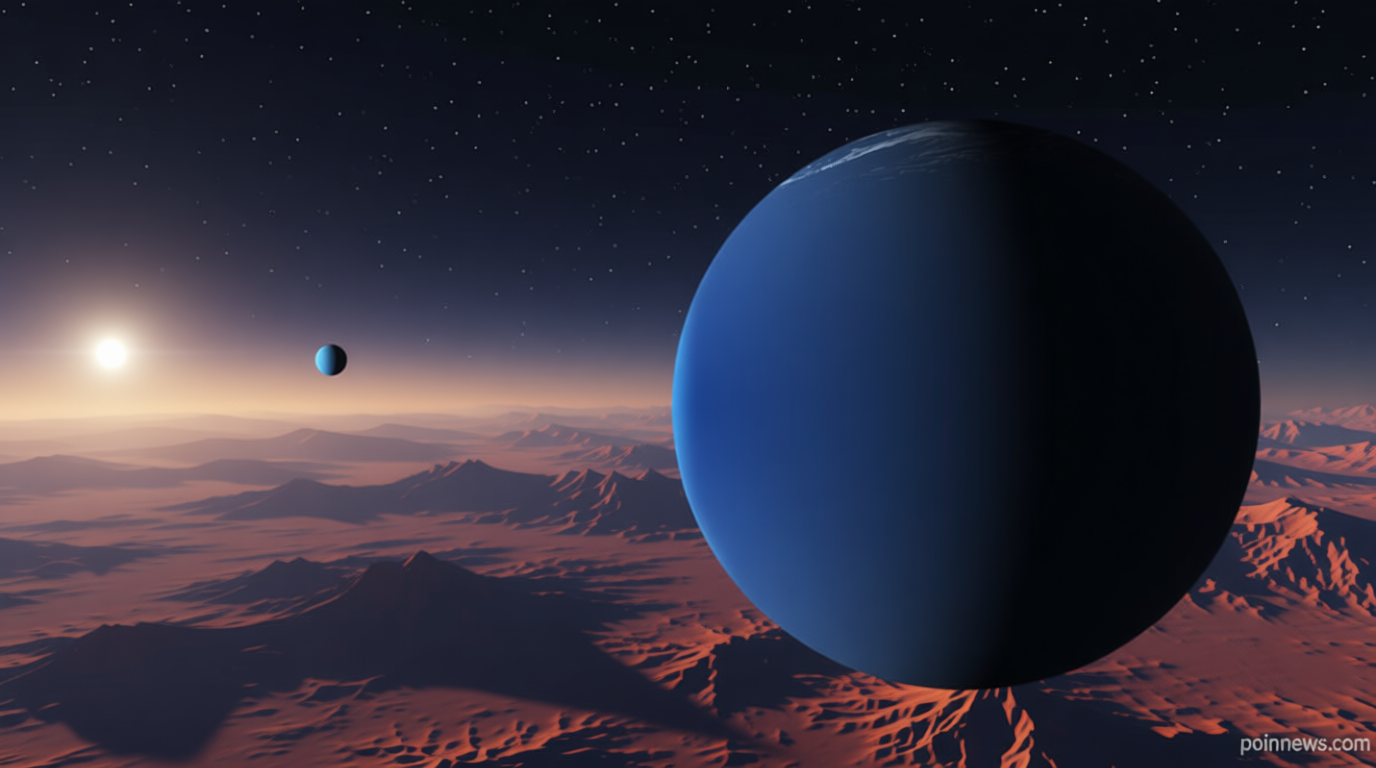
Poinews.com – Astronomers have made a groundbreaking discovery in the field of exoplanet research, identifying two unusually large and lightweight planets that challenge existing models of planetary formation. These celestial bodies, dubbed “super-puff” planets, are described as being bigger than Jupiter and lighter than cotton candy, with densities so low they resemble a floating cloud of hydrogen and helium. The planets, located over 1,110 light-years away in the constellation Volans, orbit a star that is part of a distant system, offering new insights into the diversity of worlds beyond our solar system.
Unique Physical Properties and Scientific Implications
Super-puff planets are among the most enigmatic discoveries in astronomy, as they defy traditional classifications. Unlike typical gas giants, which are dense and massive, these planets have a mass comparable to Jupiter but a volume that is significantly larger, resulting in an extremely low density. This characteristic has left scientists baffled, as it suggests the planets may have unique atmospheric compositions or formed under different conditions than previously thought. Dr. George Dransfield of the University of Oxford, who led the study, highlighted that their bigger than Jupiter size combined with lighter than cotton candy mass makes them stand out in the cosmic landscape.
“These two planets have densities comparable to a nice blob of shaving foam, fresh from the can,” Dransfield remarked. “It’s as if they were inflated by some unseen force, expanding their volume without adding substantial mass.”
Their bigger than Jupiter dimensions and lighter than cotton candy nature could be attributed to a combination of factors, including a high hydrogen content and the presence of vast, puffy atmospheres. Unlike the rocky composition of terrestrial planets or the dense cores of gas giants, super-puffs may consist primarily of light gases, possibly with a mix of helium and hydrogen. This hypothesis is supported by their lack of solid surface, making them more akin to massive, gaseous orbs rather than conventional planets. Further analysis using NASA’s James Webb Space Telescope will be crucial in confirming their exact composition and understanding how they formed.
Formation Theories and Cosmic Significance
Scientists believe these super-puff planets may have formed in the early stages of a star’s life, when gas-rich protoplanetary disks were more abundant. Over time, they could have lost mass through processes like stellar winds or radiation, leading to their current swollen state. This theory contrasts with the formation of typical gas giants, which usually accumulate substantial material during their development. The rarity of such planets, with fewer than 40 confirmed to date among NASA’s nearly 6,300 exoplanets, underscores the need for more detailed studies to determine if they are a unique class of worlds or a more common phenomenon than previously assumed.
Their lighter than cotton candy property raises intriguing questions about planetary evolution and the role of atmospheric dynamics in shaping celestial bodies. Dr. Dransfield emphasized that studying these bigger than Jupiter planets provides a rare opportunity to observe how planets can undergo dramatic changes over time. “By examining these super-puff worlds, we can better understand the mechanisms that govern planet formation and even explore how they might support life in unexpected ways,” he added. The discovery also expands the possibilities for habitable environments, as lighter atmospheres may allow for unique chemical interactions that could be conducive to life.
Technological Breakthrough and Future Research
The detection of these planets relied on NASA’s Transiting Exoplanet Survey Satellite (TESS), which scans for dimming in starlight caused by planetary transits. TESS’s precision enabled researchers to identify the planets’ unusual characteristics, including their bigger than Jupiter size and lighter than cotton candy mass. The star they orbit, part of a binary system, adds complexity to their study, as gravitational interactions may have influenced their formation or orbital patterns. Dr. Dransfield and his team plan to use the James Webb Space Telescope to analyze the planets’ atmospheres, seeking evidence of molecular hydrogen, helium, and potential trace elements that could reveal their origins.
While the discovery of super-puff planets is still in its early stages, it opens a new frontier in planetary science. Researchers are now working to determine whether these planets are a common feature in other star systems or a cosmic oddity. The implications of their bigger than Jupiter size and lighter than cotton candy composition could also influence our understanding of the solar system’s formation, as similar processes may have occurred in our own history. As Dr. Dransfield noted, “Each new discovery, no matter how small, adds a vital piece to the puzzle of how planets come to be in the universe.” With continued exploration, these bigger than Jupiter planets may one day help redefine our perception of what a planet can be.