
EU considers emergency meeting as nuclear shutdown leaves Hungary facing energy crisis
The European Commission has announced it is prepared to convene an emergency meeting of its Electricity Coordination Group following the unexpected shutdown

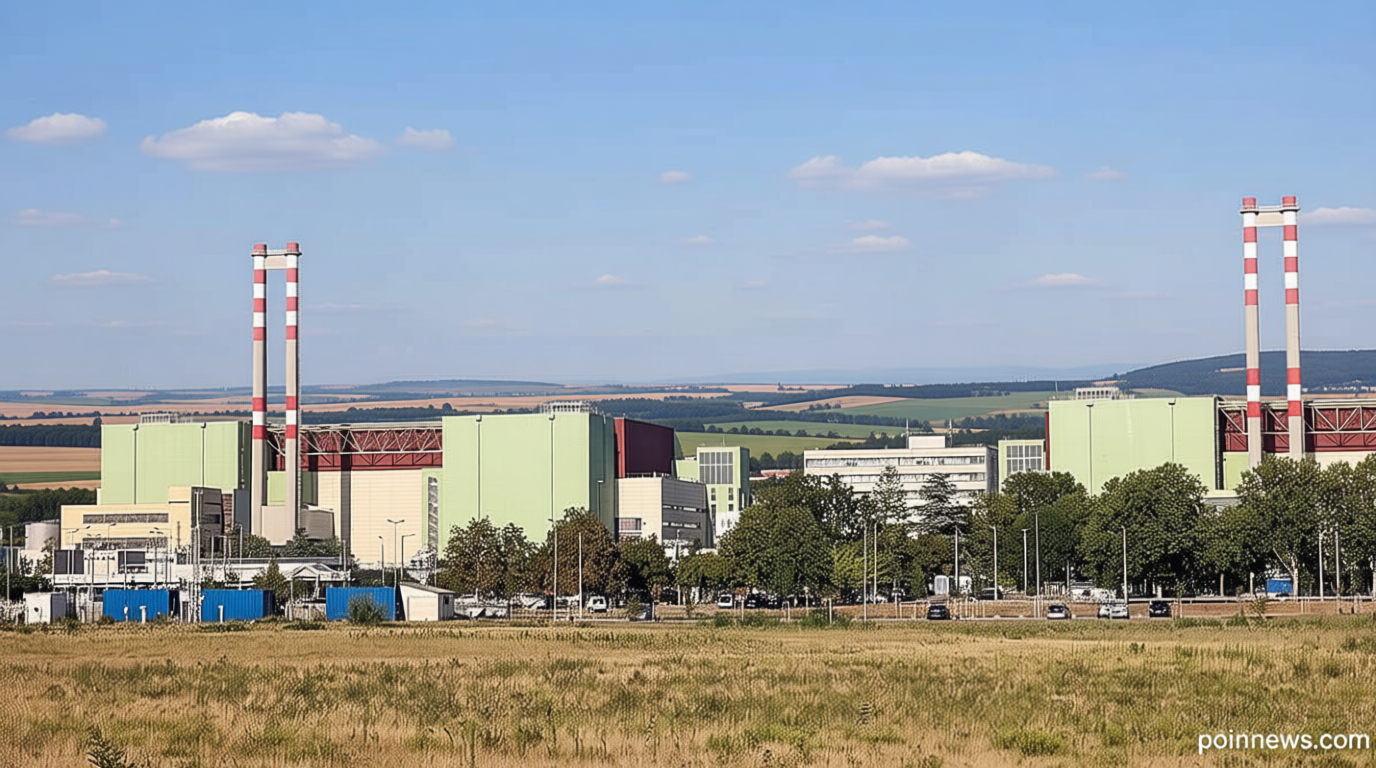
EU Considers Emergency Meeting as Nuclear Shutdown Threatens Energy Supply
Poinews.com – The European Commission has announced it is prepared to convene an emergency meeting of its Electricity Coordination Group following the unexpected shutdown of Hungary's Paks nuclear plant. This development has prompted officials to warn that the country could face a significant energy crisis within days. "Although the operator has emergency measures in place to guarantee nuclear safety, an event of this kind could further strain the regional electricity balance," Commission spokesperson Anna-Kaisa Itkonen explained to Euronews. "The Commission stands ready to convene an ad hoc meeting of the Electricity Coordination Group."
Hungarian Prime Minister Péter Magyar has cautioned that the nation could experience an energy crisis as early as next week. The Paks facility, which provides nearly half of Hungary's total energy requirements, was taken offline after record-low water levels in the Danube River disrupted its cooling systems. This marks the first complete shutdown of the plant since it began operations 42 years ago. "This means 2,000 megawatts will be lost from Hungarian energy production from Monday at the latest, while demand for residential and public consumption continues to rise because of the heat," Magyar stated on Thursday evening.
Emergency Measures and Regional Impact
In response to the crisis, the Hungarian government has implemented several immediate measures. Authorities have requested that both the public and businesses reduce energy consumption during peak hours between 5pm and 10pm. Citizens are specifically urged to avoid using air conditioning and washing machines during this period. Additionally, Magyar revealed that an emergency plan has been prepared to limit industrial consumption on a rotational basis, while other Hungarian power plants will increase their output to compensate for the shortfall.
"Given the severity of this unprecedented situation, we are asking everyone – large consumers and the public alike – to act responsibly. It is in our common interest to avoid unplanned outages and the kind of unexpected system collapse seen in Western Europe and the Balkans." — Hungarian Prime Minister Péter Magyar
András Perger, an energy expert at the Hungarian NGO Energiaklub, told Euronews that Hungary stands to lose between 25 and 30 percent of its energy output starting Monday. He described the situation as a serious test for both Hungarian and regional energy supply. "From Monday, when consumption is expected to rise and the Paks plant remains offline, a more serious situation will begin," Perger noted. He added that some of Hungary's energy demands could potentially be met through imports from neighboring countries, though hydroelectric power availability in the region remains limited.
Meanwhile, in Romania, the shutdown of one reactor presents fewer challenges since nuclear energy constitutes a smaller portion of that country's energy mix. "Although the situation in Hungary is stretched, I don't expect this to cause serious regional problems," Perger commented. Friends of the Earth Hungary, an environmental organization, emphasized that the Paks Nuclear Plant incident reflects a broader climate adaptation challenge rather than an isolated event.
"Hungary needs to speed up its transition into a more resilient, decentralised energy system that relies less on climate-vulnerable infrastructure and more on energy savings, flexibility and renewable energy," Executive President Ákos Éger stated in a message to Euronews. Commission representative Itkonen confirmed that Brussels is closely monitoring electricity supply conditions in both Hungary and Romania, though she emphasized that no immediate energy security concerns exist at this time. According to the Commission, the Electricity Coordination Group aims to facilitate information-sharing and coordinate next steps among regional countries.
The international community will watch closely as Hungary navigates what officials on both sides characterize as a critical test of the country's energy resilience and preparedness for future climate-related challenges.