Albania: mass protests against Trump son-in-law’s tourism investment enters 14th day
Albania's 14-Day Protests Against Trump Son-in-Law's Tourism Investment Gain Momentum Albania has become the epicenter of widespread public dissent as mass

Albania’s 14-Day Protests Against Trump Son-in-Law’s Tourism Investment Gain Momentum
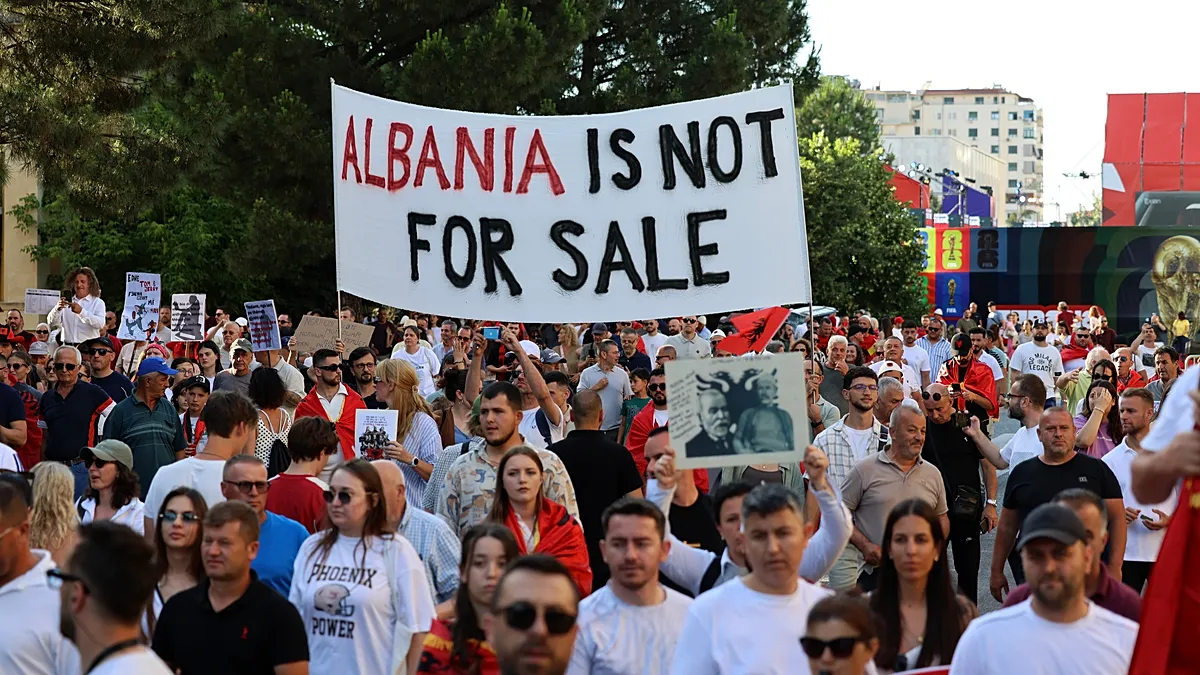
Poinews.com – Albania has become the epicenter of widespread public dissent as mass protests against a luxury tourism project linked to Jared Kushner, Donald Trump’s son-in-law, continue into their 14th day. The investment, estimated at 4.6 billion dollars (approximately 4 billion euros), is centered on a protected coastal zone along the Adriatic Sea, a region revered for its natural beauty and ecological significance. With protests intensifying across Tirana and other urban areas, citizens are demanding a halt to the development, which they argue threatens Albania’s unique biodiversity and its commitment to sustainable growth.
Environmental Concerns and Public Outcry
The proposed project aims to transform an abandoned island and its adjacent shoreline into a sprawling hotel complex, sparking fears of irreversible damage to the area’s ecosystems. Environmental activists, including local scientists and conservation groups, have highlighted the potential loss of habitats for migratory birds and the disruption of the lagoon’s delicate balance. Protesters have taken to the streets nightly, using creative methods such as holding cardboard flamingo replicas and blowing whistles to symbolize their opposition to the project’s impact on wildlife.
“This development represents a major threat to Albania’s ecological heritage,” stated a spokesperson for the Environmental Alliance of Albania. “The government has prioritized short-term economic gains over long-term environmental stewardship, putting the country’s natural resources at risk.”
The controversy has also sparked broader political debates, with critics accusing the ruling party of sidelining public opinion in favor of foreign investors. Protest leaders have called for the resignation of Prime Minister Edi Rama, claiming his administration’s decisions lack transparency and accountability. Despite Rama’s insistence that the project supports Albania’s EU accession strategy, the demonstrations have shown no signs of slowing, reflecting deepening public frustration with the government’s approach to development.
Legal and Ownership Disputes Intensify
As the protests grow, so do the concerns over land ownership and legal processes. The Greek minority in Albania, which has historically contested property rights in the region, has joined the fray, alleging that the investment is built on unresolved disputes over expropriated land. These claims have raised questions about the fairness of the project’s implementation, particularly among local communities who fear displacement and loss of cultural landmarks.
“The government has failed to engage stakeholders adequately,” said a Greek community representative. “This project is not just about tourism—it’s about control over our land and resources.”
The situation has drawn attention from international observers, with some EU officials expressing cautious support for the investment while acknowledging the need for public consultation. Meanwhile, the Albanian diaspora, especially in Greece, has remained vocal, organizing rallies and leveraging social media to amplify their concerns. The protests have become a symbol of the broader tension between economic development and environmental preservation in the Balkans.
Global Attention and Domestic Reactions
The scale of the demonstrations has not only captivated Albanian citizens but also garnered international media coverage. Reports from Euronews and other outlets have underscored the project’s symbolic significance as a potential test case for foreign influence on Albania’s development trajectory. Supporters of the investment, however, argue that it is a vital step toward modernizing the country’s infrastructure and attracting much-needed foreign capital.
Amid the growing unrest, the government has doubled down on its defense of the project, emphasizing its role in boosting Albania’s tourism sector and creating jobs. Yet, the protests have also exposed divisions within the political spectrum, with opposition parties using the issue to critique the ruling coalition’s alignment with U.S. interests. The debate has intensified as Albania prepares to host a major international summit later this year, with the project serving as a lightning rod for national sentiment.
As the 14th day unfolds, the movement shows no signs of abating, with participants increasingly uniting under a common cause. The protests have become a rallying point for citizens frustrated by perceived corruption and environmental neglect, and their persistence underscores the urgency of the issue. With the project’s future hanging in the balance, the outcome may shape Albania’s relationship with foreign investors and its domestic political landscape for years to come.
Challenges and the Road Ahead
Despite the government’s efforts to quell dissent, the protests have evolved into a multifaceted movement. Civil society organizations, media outlets, and even some lawmakers have joined the cause, amplifying the pressure on policymakers. The protests have also prompted renewed calls for eco-friendly initiatives, with some experts suggesting that alternative development models could preserve Albania’s natural appeal while meeting economic goals.
“Albania’s tourism potential lies in its pristine landscapes and cultural heritage,” noted a regional environmental expert. “If this project proceeds without safeguards, it could set a dangerous precedent for future developments.”
As the conflict continues, the international community is watching closely. The project’s success or failure may influence how other nations in the Balkans balance economic growth with environmental conservation. For now, the people of Albania remain united in their demands, ensuring that the 14th day of protests is just the beginning of a larger struggle for the country’s future.