
Explosive drone: Why Leipzig/Halle airport keeps becoming a target for sabotage
A drone rigged with explosives was discovered at Leipzig/Halle Airport, prompting Federal Interior Minister Alexander Dobrindt to describe it as a "hybrid

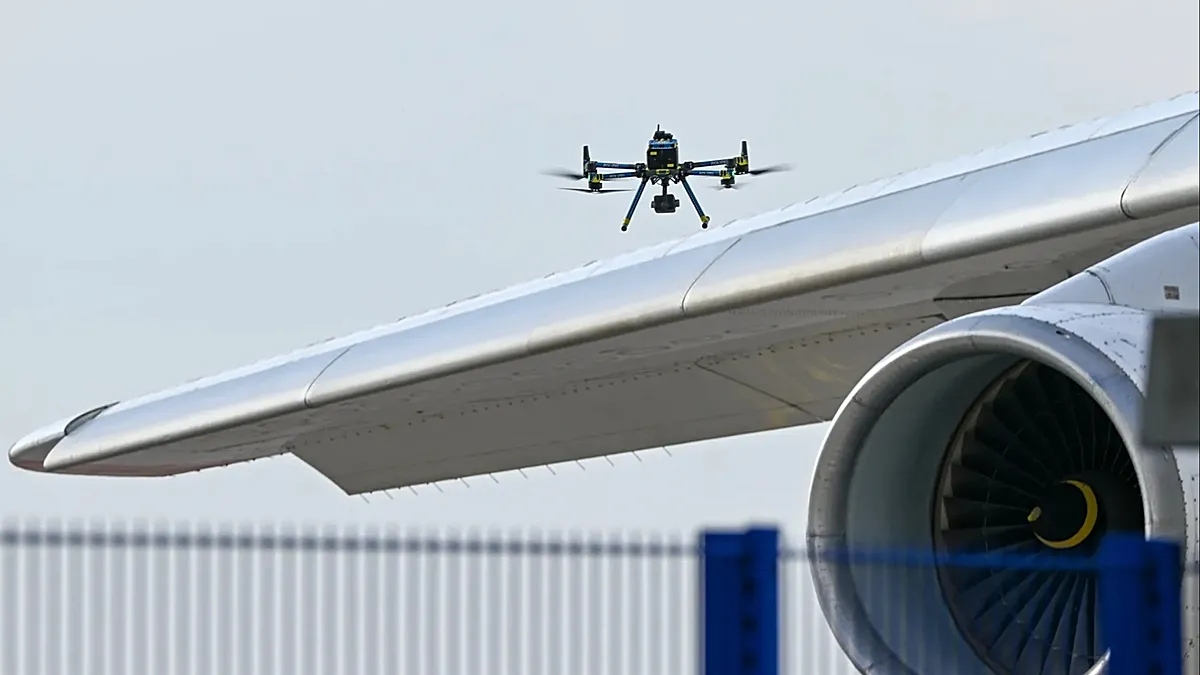
Table of Contents
Explosive Drone Attack: Why Leipzig/Halle Airport Remains a Sabotage Target
Poinews.com – A drone rigged with explosives was discovered at Leipzig/Halle Airport, prompting Federal Interior Minister Alexander Dobrindt to describe it as a "hybrid attack scenario." After consulting with investigating authorities, he emphasized: "This is a new level of threat." While drones have previously been spotted near sensitive German facilities, a drone equipped with explosives marks a significant escalation. Media reports indicate the device contained a highly explosive mixture.
The drone failed to detonate primarily because the detonator had torn off during the incident. Minister Dobrindt ruled out amateur involvement and suggested that "foreign powers" may be connected to the attack, though he did not identify a specific nation.
Leipzig/Halle: A Repeated Target for Drone Incidents
This event follows a pattern of security breaches at Leipzig/Halle Airport. Unauthorized drone flights have occurred repeatedly in recent months, placing the facility among Germany's most affected airports. According to German air traffic control data, 151 drone incidents were recorded nationwide in 2023. Frankfurt and Leipzig/Halle each experienced 21 cases, making them the most targeted locations. Flight operations have frequently been suspended temporarily to ensure safety.
Sabotage attempts have also been documented at the airport. Investigators believe that in July 2024, suspected perpetrators dispatched four parcels containing incendiary devices through DHL and DPD. These consignments were designed to ignite during transit.
"The consignment could have caused a plane crash," stated Thomas Haldenwang, then president of the Federal Office for the Protection of the Constitution, after one parcel ignited prematurely in a Leipzig sorting centre.
Strategic Importance Drives Targeting
Several factors explain why Leipzig/Halle Airport is repeatedly targeted. As one of Europe's largest cargo hubs and a component of Germany's critical infrastructure, its role as an international air freight centre is vital. DHL characterizes the site as the "heart of a global logistics chain," handling more than 2,500 tonnes of freight daily. The airport records approximately 23,600 cargo flight movements annually.
Every night, thousands of tonnes of consignments are unloaded, sorted, and reloaded. The airport also holds military significance dating to the early 2000s. During the Afghanistan mission, Leipzig/Halle became an important military hub where hundreds of thousands of US soldiers made stopovers. The Bundeswehr transported tanks, helicopters, and other military equipment from the facility.
Russia's full-scale invasion of Ukraine in 2022 heightened the airport's strategic value. Leipzig/Halle hosts the Strategic Airlift International Solution (SALIS) airlift programme, managed by the NATO Support and Procurement Agency (NSPA). Through this partnership, nine NATO countries secure access to Antonov AN-124-100 transport aircraft for heavy or oversized cargo that smaller military transporters like the Airbus A400M cannot carry. A five-year contract signed in 2021 between the NSPA and Antonov Logistics SALIS, headquartered at Leipzig/Halle, guarantees participating countries access to several Antonov aircraft deployable within days depending on urgency.
These planes serve NATO, EU, and national missions, regularly transporting military hardware and large-scale cargo. Beyond its freight operations, Leipzig/Halle has become one of the most important bases for Antonov Airlines outside Ukraine since Russia's war of aggression began. Maintenance facilities operate at the site, and a new large maintenance hangar is under construction.
Expert Analysis and Future Outlook
Security expert Nico Lange, in an interview with German broadcaster ZDF, contextualizes the latest incident within Russia's broader hybrid warfare strategy against Germany. This approach encompasses drone overflights, sabotage, arson, and cyberattacks. A concrete link to the current incident remains unconfirmed officially.
The growing frequency of drone incidents continues to occupy national security priorities. As Leipzig/Halle Airport maintains its dual role as a commercial cargo hub and military logistics centre, it will likely remain a focal point for potential threats.
Frequently Asked Questions
What caused the drone to not explode at Leipzig/Halle Airport? The detonator tore off during the incident, preventing the explosive mixture from detonating.
How many drone incidents occurred at Leipzig/Halle in 2023? The airport recorded 21 drone incidents in 2023, tying with Frankfurt as the most targeted locations in Germany.
Why is Leipzig/Halle Airport strategically important for NATO? The airport hosts the SALIS airlift programme, providing access to Antonov AN-124-100 transport aircraft for heavy military cargo and serving as a key base for Antonov Airlines outside Ukraine.
What types of sabotage have been attempted at the airport? Sabotage attempts include incendiary parcel deliveries and unauthorized drone flights, with investigators suggesting possible foreign involvement.
Is there a confirmed connection to Russia regarding the drone incident? While security experts place the incident within Russia's hybrid warfare strategy, no concrete link has been officially confirmed as of the latest reports.