US appeals court orders halt to Trump ballroom construction without congressional approval
A federal appellate court has issued a significant ruling that will pause the controversial Trump ballroom project at the White House. The US appeals court

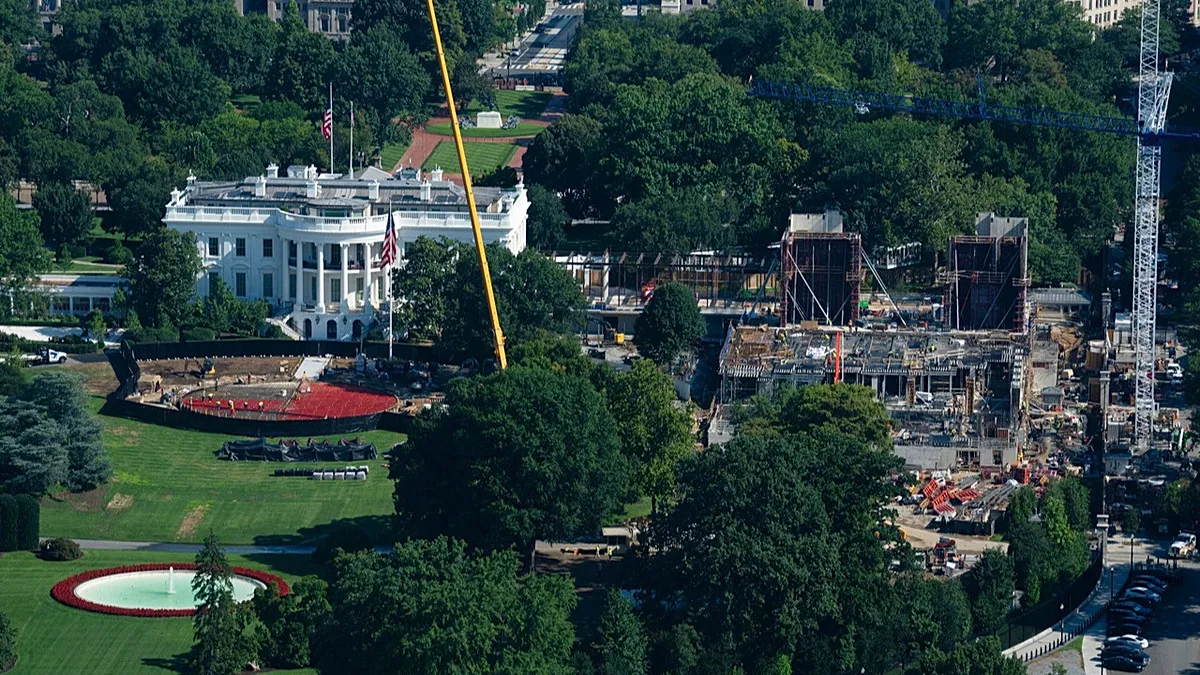
Table of Contents
US Appeals Court Orders Halt to Trump Ballroom Construction
Poinews.com – A federal appellate court has issued a significant ruling that will pause the controversial Trump ballroom project at the White House. The US appeals court orders halt to construction activities until Congress provides the necessary legislative approval for this major expansion. The US Court of Appeals for the DC Circuit initially allowed work to continue while reviewing the legal challenges, but ultimately agreed with the lower court’s determination that such an extensive renovation of the presidential residence requires explicit congressional consent.
Legal Decision and Historical Context
In a closely watched 2-1 decision regarding the ballroom expansion, the appeals court sided with historic preservation advocates who had filed a lawsuit to stop the massive structure’s development. Recent aerial photographs show that construction has already begun above ground on the White House’s eastern side. The planned 8,400-square-metre facility is being built on the location where the historic East Wing once stood before Trump ordered its demolition last autumn.
“Whether or not a massive ballroom should be constructed is for Congress to decide and is not a matter for Executive self-help,” the court wrote in its detailed opinion.
“This holding has nothing at all to do with whether the proposed ballroom is desirable, or not, as a matter of policy. This ruling does not even necessarily mean that the Defendants may not ultimately construct the ballroom.”
“What it does mean,” the court continued, “is that the Defendants may not do so during the district court’s expeditious litigation without securing Congress’s authorisation, as the Constitution and laws require.”
Political Reactions and Judicial Composition
The court announced it would maintain its decision for two weeks, allowing the administration an opportunity to petition the US Supreme Court for further review. Following the announcement, President Donald Trump criticized the ruling as “horrendous, politically motivated, and unlawful,” promising to challenge the verdict through additional legal channels.
Notably, both judges forming the majority were selected by Democratic presidents, whereas the lone dissenter had been nominated by Trump himself. This judicial split has drawn attention from legal analysts who are watching how the case might develop through the appellate process.
Funding Concerns and Broader Implications
Trump, who has frequently expressed dissatisfaction with the White House’s capacity to host elaborate events like state dinners, unilaterally directed the ballroom’s construction. While the president has maintained that the project would receive private funding, June media reports indicated that considerable taxpayer money was being allocated to the endeavor. Democrats cautioned that approximately $350 million from a tax cuts legislation appeared to have been diverted for the ballroom.
Several of Trump’s construction initiatives, including a planned 76-metre-tall triumphal arch, have encountered similar legal obstacles. However, the ballroom project represents the first of his construction efforts to potentially reach the Supreme Court level, making it a case of significant constitutional importance.
Frequently Asked Questions
What is the immediate impact of the US appeals court orders halt? Construction work on the Trump ballroom must stop immediately until Congress provides formal authorization. The court has given the administration two weeks to potentially appeal to the Supreme Court.
How much is the ballroom project expected to cost? The ballroom expansion is valued at approximately $400 million, with concerns that around $350 million may have been diverted from tax cuts legislation for this purpose.
Where exactly is the ballroom being built? The 8,400-square-metre facility is being constructed on the site where the historic East Wing previously stood before Trump directed its demolition last autumn.
What happens if Congress does not approve the project? The court’s ruling does not permanently stop the ballroom construction. It simply requires congressional approval before the administration can proceed with the project during the ongoing litigation.
Why is this case considered constitutionally significant? The case addresses whether the executive branch can unilaterally undertake major construction projects without legislative approval, raising important questions about separation of powers.