The great Infantino divide: Who is for and against the controversial FIFA chief?
The great Infantino divide has become one of the most significant moments in modern football governance. As the 2026 World Cup wrapped up last month, many

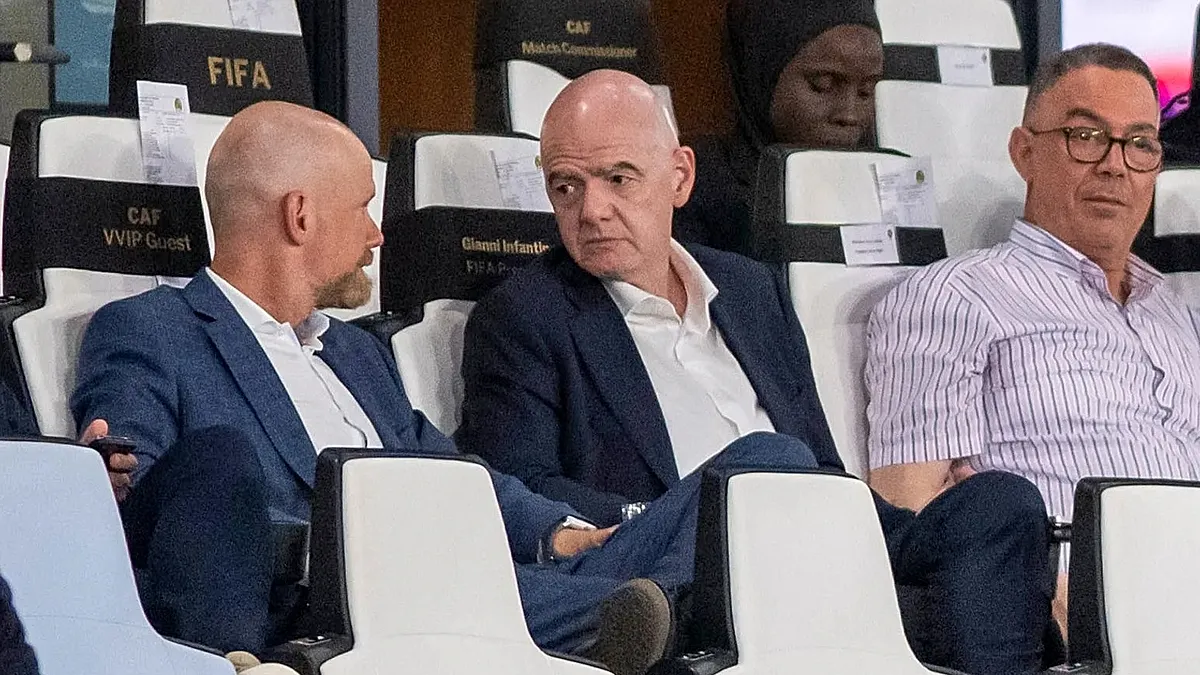
The Great Infantino Divide: Global Football Leaders Take Sides
Poinews.com – The great Infantino divide has become one of the most significant moments in modern football governance. As the 2026 World Cup wrapped up last month, many expected FIFA to step back while supporters returned to their domestic competitions. Instead, the organization sparked intense debate in late July by proposing to introduce private investment through a new subsidiary named the FIFA Forward Enterprise. This venture aimed to oversee commercial operations and flagship tournaments, including the World Cup.
FIFA estimated the project could yield up to $4.2 billion, built on a $20 billion valuation. The revelation prompted swift and fierce reactions from across the football community. President Gianni Infantino and his leadership team quickly reversed their decision, pulling back the proposal and issuing an apology. Despite mounting calls for him to leave, Infantino has committed to staying on.
European Nations Draw a Line
What began as a financial proposal has evolved into a wider rift among confederations and national associations. UEFA has emerged as one of the strongest voices opposing Infantino and the FFE initiative. The European body announced that all 55 member associations would withdraw from FIFA competitions unless the plan was fully scrapped.
UEFA later clarified that FIFA’s continued support for Infantino—already facing scrutiny over his connections with US President Donald Trump—combined with the apology, did not resolve fundamental issues. “UEFA’s associations were very clear about the conditions attached to the non-participation in FIFA competitions,” the organization explained on Thursday. “First, the proposals to sell off the major competitions had to be withdrawn, and secondly, assurances have to be made that such attempts to disfigure the game in this way will never be made again.” The message ended with a firm conclusion: “These conditions have not been met.”
Individual Associations Respond
National football associations rapidly began distancing themselves from Infantino’s re-election bid as tensions mounted. Wales, Finland, Serbia, and Sweden were among the first to announce they would no longer back the FIFA president for another term. The Serbian Football Association described its decision as “the only logical and rational course of action,” emphasizing that recent events had “seriously damaged the standing and reputation of both FIFA and its president.”
They were soon followed by associations from England, Norway, Jordan, and Albania. The Norwegian FA took a stronger stance, calling for Infantino’s resignation after stating its confidence had been broken. “We believe that trust has now been lost and that FIFA needs new leadership,” Lise Klaveness, the Norwegian FA president, said. “When trust is lost, the leadership must also be reassessed. We therefore believe that Gianni Infantino’s time as FIFA President should be over, and we are asking him to step down.”
Supporters Stand Firm
Despite the growing opposition, Infantino retains considerable backing from various regions of the football world, especially associations with limited budgets that rely on consistent financial assistance. On Thursday, the Confederation of African Football announced it had “unanimously reconfirmed its support” for Infantino while thanking him for his work advancing African football. “CAF will continue to focus on making African Football amongst the best in the world and is reaffirming its commitment to adhering to global governance, transparency and auditing best practices,” president Patrice Motsepe stated.
During a speech in Kinshasa last October, Infantino shared that FIFA had invested more than $1 billion into African football through the FIFA Forward Programme since 2016. This program provides development funding and resources to FIFA’s 211 member associations. The governing body expects to have distributed roughly $1.28 billion to the continent by the end of 2026.
World Cup co-hosts Mexico also remain loyal to Infantino, along with Paraguay and World Cup runners-up Argentina. Although the Confederation of North, Central America and Caribbean Association Football has voiced significant criticism toward FIFA, the Mexican Football Federation confirmed it “supports president Infantino’s leadership to continue driving the development of football through institutional strengthening.” Meanwhile, Argentina—whose national team has faced considerable hurdles lately—praised Infantino for his efforts since taking office.
Frequently Asked Questions
What is the FIFA Forward Enterprise?
The FIFA Forward Enterprise is a proposed subsidiary designed to bring private capital into football governance. It aims to manage commercial activities and major tournaments, including the World Cup, with an initial valuation of $20 billion.
Why is UEFA opposing Infantino?
UEFA opposes Infantino because it believes FIFA failed to fully withdraw its proposal to sell major competitions and did not provide sufficient guarantees against similar future attempts. The organization stated these conditions were not met.
Which associations support Infantino’s re-election?
Associations including Mexico, Paraguay, Argentina, and the Confederation of African Football continue to support Infantino, citing his contributions to football development and financial stability.
How much has FIFA invested in African football?
Since 2016, FIFA has channeled more than $1 billion into African football through the FIFA Forward Programme, with projections reaching approximately $1.28 billion by the conclusion of 2026.