World Cup 2026 kit ranking: Which teams are the fashionable winners and unstylish losers?
World Cup 2026 Kit Ranking: Which Teams Are the Fashionable Winners and Unstylish Losers?

World Cup 2026 Kit Ranking: Which Teams Are the Fashionable Winners and Unstylish Losers?
Poinews.com – With the World Cup just two weeks out, fans are left feeling ambivalent or torn. The astronomical cost of tickets has placed football’s governing body under legal scrutiny, casting a shadow over the event’s image as an exclusive spectacle. FIFA’s claim of political neutrality has been undermined by President Gianni Infantino’s admiration for Donald Trump, who recently won the inaugural Peace Price. Meanwhile, the Iranian Football Association expresses skepticism, stating, “
cannot be expected to look forward to the World Cup with hope
” amid ongoing geopolitical tensions and renewed cultural resistance.
Amid these challenges, Euronews Culture has turned its attention to the kits of the 48 teams participating in this year’s competition. The goal is to identify the most and least stylish uniforms, offering a brief respite for fans to focus on the intersection of sports and fashion. While the aesthetics won’t resolve the tournament’s controversies, they provide a moment of distraction and admiration. Here, we highlight the standout designs and the ones that fall short.
Distinctive Designs: A Fusion of Culture and Creativity
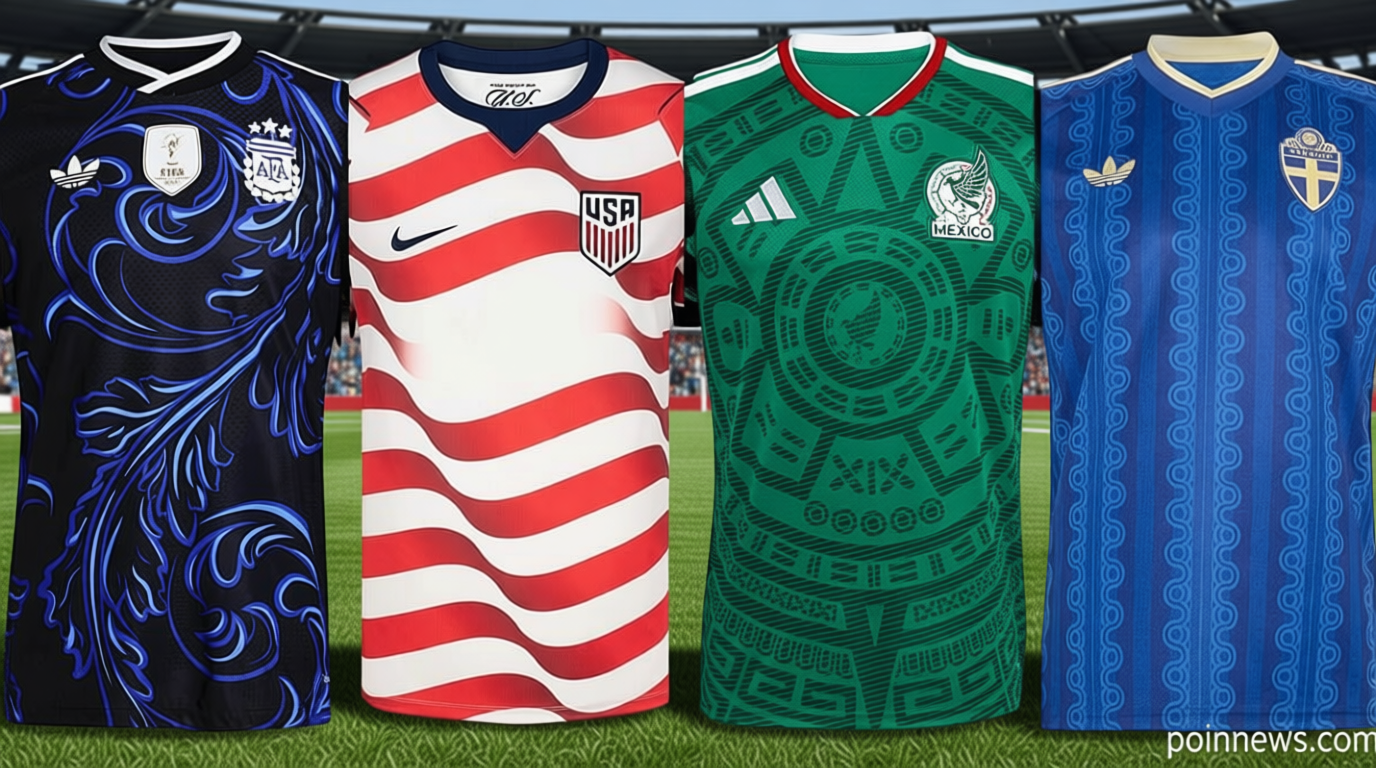
The US team’s kit is a bold statement, blending blue foliage with black shirts to evoke a sense of grandeur. The pattern draws inspiration from Fileteado art, a traditional style seen across Buenos Aires, where stylized lines and symmetries grace signs, posters, and even taxis. This design pays homage to the Porteños’ cultural heritage while maintaining a striking appearance. Though it surpasses the plain white shirts of 2022, the red-and-white stripes feel overly patriotic, especially given the nation’s celebrations for its 250th anniversary. The away kit, adorned with stars, complements the home design, but the overall look leans heavily into the “250 Freedom” motif, with a touch of “Look Ma, I’m star-spangled awesome”.
Mexico’s kit, however, avoids the excess. The green jerseys feature an Aztec Piedra del Sol calendar, a visually intricate and culturally resonant element. The subtle incorporation of the country’s flag colors adds depth without overwhelming the design. This choice is a triumph, proving that simplicity can be both elegant and meaningful. A notable highlight is the collaboration with the Jordan brand, offering a break from the usual Adidas and Nike dominance.
Ghana’s jersey is another standout, inspired by Anansi, a West African folk figure symbolizing wisdom and trickery. The central black star, paired with crack-like patterns radiating outward, mirrors the image of a spider’s web, aligning perfectly with Anansi’s iconic portrayal. This blend of tradition and modernity is a masterstroke, much like Argentina’s away kit, which seamlessly integrates cultural motifs with contemporary flair.
Where Style Meets Substance: The Middle Ground
Sweden’s away shirts, while less traditional than their yellow home kit, showcase a ripple pattern that is both intriguing and slightly perplexing. The subtle design may not be the most eye-catching, but it hints at a deeper narrative, reminiscent of octopus tentacles. This could be a clever nod to the team’s oceanic connection, though it’s not immediately clear. The question remains: does the subtle reference elevate the kit, or does it leave fans questioning its purpose?
France’s design is a testament to balance, offering a more refined look than their Euro 2024 attire. The signature blue, now featuring a zig-zag motif, adds texture without sacrificing elegance. A crisp white collar introduces contrast, and the bronze-textured logos deliver a touch of sophistication. This kit is effortlessly suave, proving that style can be both timeless and modern.
Unexpected Choices: Innovation and Inconsistency
Contrast this with England’s design, which feels like a nod to the past rather than a fresh vision. The “Happy and glorious” inscription on the shirt is a bold choice, but it’s hard to ignore the irony. After their 1966 triumph, the team’s current look seems to echo the same sentiment, yet it lacks the same energy. The overall design is functional but uninspired, offering little to engage the more fashion-conscious fans.
South Korea’s kit, inspired by the Amazon’s poison dart frog, is an interesting attempt to merge nature with sports. The warning colors—vibrant and striking—symbolize the country’s resilience. However, in practice, the design feels a bit too niche. While the reference is clever, it may not resonate with all viewers, making the kit’s appeal somewhat limited.
Legacy and Transition: The Final Kit of a Chapter
Germany’s final kit from Adidas is a nostalgic farewell, featuring the early 90s-inspired yellow, black, and red diamonds. The home shirt is a throwback, capturing the essence of the team’s storied history. Yet, it lacks the boldness of past designs, leaving fans to wonder if this is a deliberate shift or a missed opportunity. The away shirt, while matching the diamond theme, has a muted look, akin to an asthmatic Matrix screensaver, making it feel less dynamic than it could be.
Meanwhile, Spain’s kit is a clean, modern take, with its streamlined lines and subdued palette. The design is functional, prioritizing performance over embellishment. While it may not be the most creative, it’s a reliable choice that aligns with the team’s identity. The yellow borders, though simple, add a subtle yet effective pop of color, enhancing the overall aesthetic without overshadowing the main elements.
As the tournament approaches, the kits serve as a microcosm of the teams’ identities. Some, like the US and Mexico, blend tradition with contemporary flair, while others, such as England and Germany, feel more like echoes of previous eras. The diversity in design choices reflects the global nature of the event, offering fans a chance to appreciate the cultural nuances behind each uniform. Whether these designs will captivate the audience or remain overlooked depends on how well they balance style with substance.
In the end, the 2026 World Cup kits are more than just fabric and thread. They are a reflection of national pride, historical context, and design innovation. As the teams prepare to take the field, their uniforms will be the first thing fans notice—whether with enthusiasm or indifference. For those who appreciate fashion, the rankings offer a playful critique, but for the rest, they’re just another layer of the tournament’s complex narrative.
So, as the countdown continues, let’s take a moment to appreciate the artistry behind the kits. From the bold statements of the US to the subtle elegance of France, each design tells a story. Whether you’re a die-hard fan or a fashion enthusiast, there’s something to admire in this year’s collection. After all, in a world of high-stakes politics and soaring ticket prices, a well-designed jersey is a small victory for the soul.