Moderna starts human trials for Bundibugyo Ebola vaccine as Congo’s outbreak continues
Moderna starts human trials for Bundibugyo as the pharmaceutical giant launches its first Phase 1 clinical study in Canada for the experimental vaccine

Table of Contents
Moderna Starts Human Trials for Bundibugyo Ebola Vaccine Amid Congo Outbreak
Poinews.com – Moderna starts human trials for Bundibugyo as the pharmaceutical giant launches its first Phase 1 clinical study in Canada for the experimental vaccine targeting the Bundibugyo strain of Ebola virus. This groundbreaking development comes at a critical moment, as the Democratic Republic of Congo battles its second-largest Ebola outbreak in recorded history. The vaccine utilizes Moderna’s proven mRNA platform technology—the same innovative approach that powered its successful COVID-19 vaccine development. According to the company’s official press release, approximately 80 volunteers will participate in this initial trial phase, which will comprehensively evaluate safety profiles, tolerance levels, and immune responses specifically against the Bundibugyo variant of Ebola virus disease.
Accelerated Development Through Global Partnership
“Getting Moderna’s vaccine candidate into a Phase 1 trial this rapidly is a major step forward in the fight against this deadly outbreak,” emphasized Richard Hatchett, chief executive officer at the Coalition for Epidemic Preparedness Innovations (CEPI). This global public-private partnership plays a crucial role in financing and accelerating the development of vaccines and biological countermeasures against emerging infectious diseases and potential pandemics worldwide. In June, CEPI announced a significant investment in a diverse portfolio of vaccine candidates currently under development, including those being advanced by the International AIDS Vaccine Initiative, Moderna, and the University of Oxford.
“Every day matters and every vaccine candidate in clinical trials gives us another shot at getting a safe, effective vaccine to the people who need it as swiftly as possible,” added Hatchett.
The University of Oxford simultaneously launched its own Phase 1 clinical trial in July, joining the race to tackle what is now recognized as the fastest-growing Ebola outbreak in history. These parallel efforts demonstrate the international commitment to addressing this growing health crisis through multiple scientific approaches working in concert.
Outbreak Statistics and Community Transmission Challenges
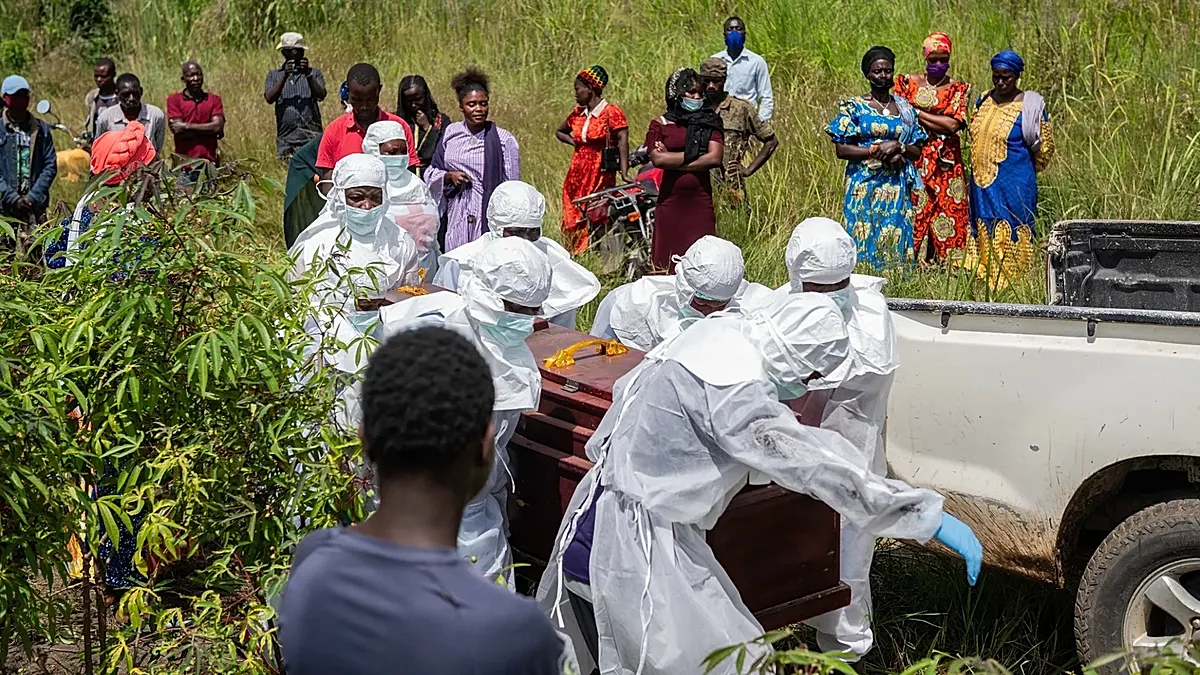
As of Tuesday, official government updates revealed that 3,802 cases had been recorded across the affected regions, with 1,707 deaths confirmed. The situation remains fluid, and experts are still determining when the outbreak will reach its peak. Africa CDC Director-General Jean Kaseya provided crucial insights during his second visit to the town of Bunia, located near the epicentre of the outbreak in Ituri province. Kaseya highlighted a concerning pattern: approximately 60-70% of new cases are now being recorded from community spreading rather than through contact tracing—a traditional method that tracks individuals who have been in contact with confirmed cases.
“Contact tracing is not working,” Kaseya stated frankly. “We don’t like the trajectory of this outbreak, and it’s already the second-largest outbreak (ever) in the world.” The outbreak remains predominantly concentrated in eastern Congo’s remote Ituri province, which accounts for nearly 90% of all cases. However, cases have also been confirmed in five additional provinces, including in one of the country’s largest urban centers, Kisangani.
What This Means for Global Health Security
The timing of Moderna’s clinical trial represents more than just scientific progress—it reflects a coordinated global response to an escalating health emergency. With the Bundibugyo strain lacking any existing vaccine, this trial could potentially save thousands of lives if successful. The mRNA technology’s flexibility allows for rapid development and adaptation, making it particularly valuable for responding to emerging infectious diseases.
Frequently Asked Questions
What is the Bundibugyo Ebola strain?
The Bundibugyo Ebola virus is one of several strains of the Ebola virus, first identified in Uganda in 2007. It causes Ebola virus disease and has been responsible for several outbreaks, including a significant one in Uganda in 2012. Unlike other strains, the Bundibugyo variant currently has no approved vaccine available for public use.
How does Moderna’s mRNA vaccine technology work?
Moderna’s mRNA platform works by delivering genetic instructions to human cells, enabling them to produce a specific protein that triggers an immune response. This approach allows for faster vaccine development compared to traditional methods and has proven effective against multiple pathogens, including SARS-CoV-2.
Why is contact tracing failing in this outbreak?
Community transmission has become the dominant mode of spread, with 60-70% of new cases occurring outside of known contact chains. This suggests widespread, untracked transmission within communities, possibly due to cultural practices, population mobility, or healthcare access challenges in the affected regions.
When can we expect results from the clinical trial?
Phase 1 trials typically last several months to evaluate safety and dosage. If successful, the vaccine would progress through Phase 2 and Phase 3 trials before potential emergency use authorization, which could take 12-18 months from the start of Phase 1.