22 EU leaders call for emergency talks over Ceuta migrant crisis
Twenty-two European Union heads of state have requested an immediate gathering to address the bloc's reaction to a massive influx of newcomers arriving in the

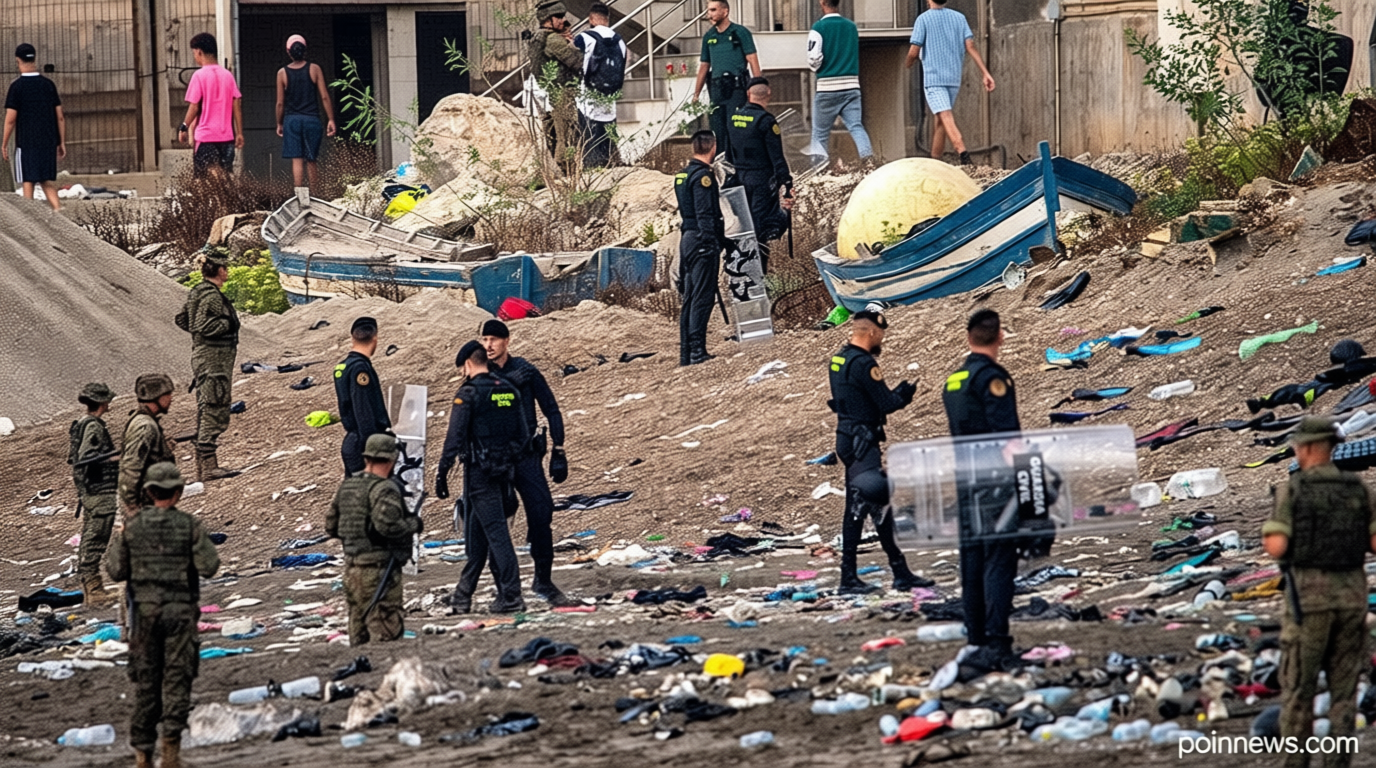
EU Heads of State Demand Urgent Summit Regarding Ceuta Migration Surge
Poinews.com – Twenty-two European Union heads of state have requested an immediate gathering to address the bloc’s reaction to a massive influx of newcomers arriving in the Spanish territory of Ceuta. According to sources speaking to Euronews, the diplomatic initiative originated from both Italy and Denmark. The correspondence urges member nations to convene an “extraordinary videoconference of the Ministers of the Interior,” labeling the developing situation as a “matter of urgency.”
While Spanish authorities maintain that nearly every one of the approximately 50,000 individuals who entered Ceuta from Morocco on Thursday have now been sent back, the collective group of leaders expressed “serious” reservations about how events are unfolding. Notably, French President Emmanuel Macron, Portuguese Prime Minister Luís Montenegro, and Luxembourg’s Luc Frieden abstained from signing the document. The open letter was directed toward European Commission President Ursula von der Leyen, European Council President António Costa, and Micheál Martin, who serves as Ireland’s prime minister. Dublin assumed leadership of the Council of the European Union during July.
Coordinated Action and Border Controls
The twenty-two signatories emphasized that the upcoming session must facilitate a “common assessment of the situation” within Ceuta while simultaneously securing an “agreement on a coordinated European response.” They warned that allowing chaotic mass movements to occur unchecked could foster the belief that unauthorized entry into the Union remains viable.
“We cannot allow uncontrolled mass crossings, the instrumentalisation of migration or other hybrid threats to create the perception that illegal entry into the European Union is possible,” the signatories said, adding that they would consider “any necessary measures” to address such risks, “including through reinforcing or reintroducing temporary internal border controls.”
The correspondence further cautioned that this growing perception might stimulate additional attempts at crossing, weaken trust in shared migration frameworks, and generate consequences for every member nation. Additionally, the letter identified Madrid’s decision to provide legal standing to certain unauthorized arrivals as a potential “pull factor” capable of triggering the current turmoil—a viewpoint that Spanish officials have contested.
Spain Faces Mixed Reactions from Partners
Simultaneously, Spanish Prime Minister Pedro Sánchez criticized what he described as a “rather asymmetric” reaction from various EU countries. In a separate communication sent to von der Leyen on Saturday, Sánchez noted that the majority of partners demonstrated solidarity and extended help.
“Most have shown us their support and solidarity, and have offered their assistance,” Sánchez wrote in his own letter to von der Leyen on Saturday. “Others, however, have chosen to attack Spain and to call for its temporary exclusion from the Schengen Area,” he continued, in an apparent reference to calls from Italian Prime Minister Giorgia Meloni’s administration to suspend its visa-free Schengen travel arrangement with Spain.