Ireland, as ‘honest broker’, reckons with the high price of dirty business
Ireland, as 'honest broker', reckons with the high price of dirty business The Alumina Export Controversy Ireland as honest broker reckons - The nation's role

Ireland, as ‘honest broker’, reckons with the high price of dirty business
The Alumina Export Controversy
Poinews.com – The nation’s role as a neutral mediator in EU affairs has been called into question following a major controversy over its alumina exports to Russia. This issue has emerged as a pivotal moment for Ireland, challenging its reputation as a fair and impartial leader in European diplomacy. The country, which has long prided itself on maintaining balanced relationships among EU members, now finds itself at the center of a political storm that highlights the tension between economic interests and moral obligations.
The scandal gained momentum in late March when a leading media outlet exposed the financial links between Aughinish Alumina, a key Irish refinery, and Russia’s military-industrial sector. This week, as Ireland assumed its rotating leadership, the situation escalated. During the opening ceremony at Dublin Castle, Ukrainian President Volodymyr Zelenskyy publicly confronted the Irish government, accusing it of indirectly supporting Russia’s war efforts through the continued shipment of raw materials.
“Every tonne of raw materials that ends up in Russia is used against us in this war. This is what we understand. This is how we see it,” Zelenskyy stated during his remarks. His words underscored the broader dilemma facing Ireland: how to balance its economic reliance on Russian imports with its commitment to European unity in the face of geopolitical conflict.
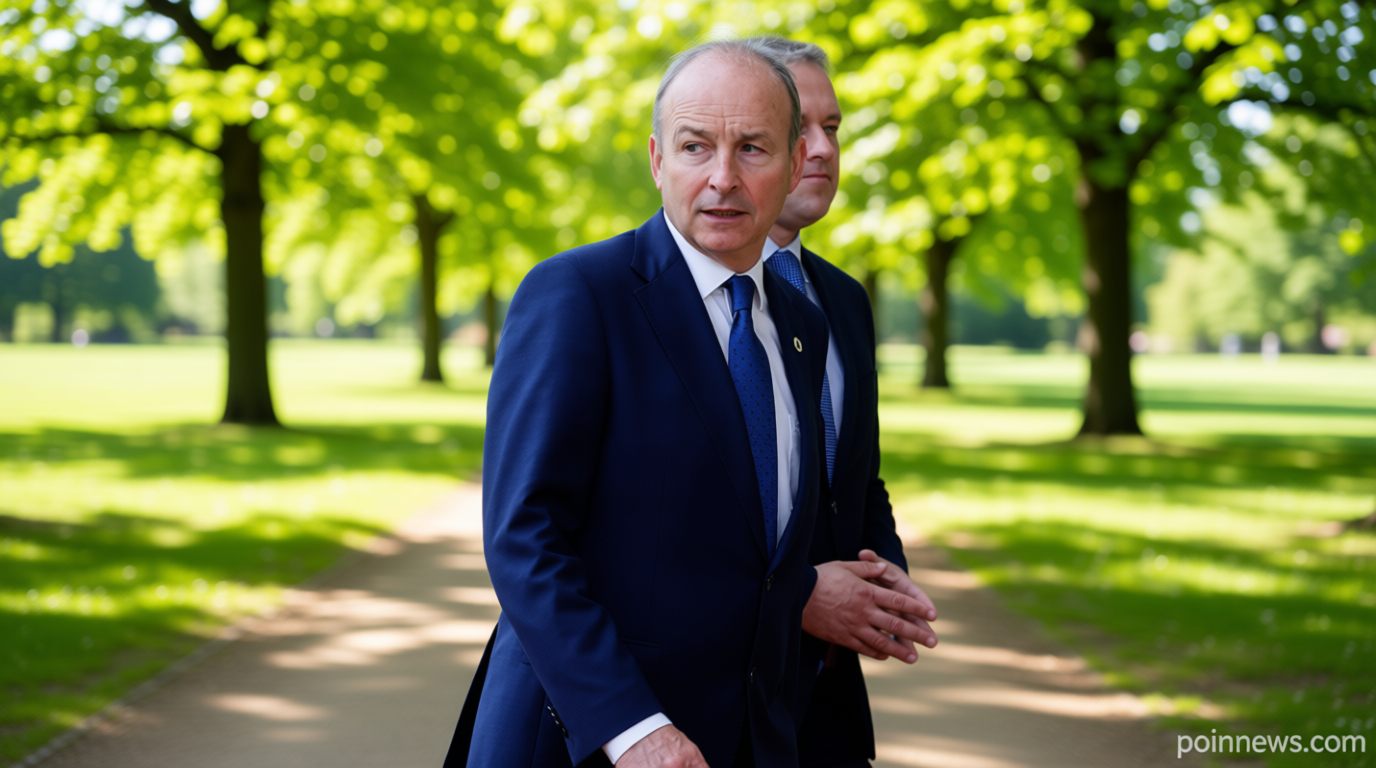
Taoiseach Micheál Martin sought to address the backlash by emphasizing Ireland’s dedication to resolving the matter. He claimed that a “good conversation” had occurred with Zelenskyy and that the European Commission’s investigation into the alumina exports was nearing completion. Despite these assurances, the controversy has raised doubts about Ireland’s ability to maintain its image as an honest broker, especially when its trade policies appear to align with Russia’s strategic goals.
EU Sanctions and the Fragile Balance
As the EU grapples with its sanctions regime, Ireland’s leadership has become a focal point for debate. The country’s decision not to sanction alumina exports has drawn sharp criticism, with some arguing that it weakens the bloc’s collective stance on Russia. Meanwhile, other EU nations have faced similar scrutiny for their economic ties to Moscow, from Hungary’s reliance on Russian energy to Spain’s imports of liquefied natural gas.
Ireland’s position as a “honest broker” has traditionally allowed it to mediate disputes and foster compromise. However, this incident has tested that reputation, as the nation now appears to be compromising its neutrality for the sake of economic stability. The upcoming 21st round of sanctions against Russia, which Ireland is responsible for finalizing, will be a critical moment to determine whether the country can reconcile its diplomatic role with its economic choices.
Analysts suggest that Ireland’s decision to delay sanctions on alumina exports reflects a strategic calculation. The country’s economy is heavily dependent on exports, and restricting these could have significant repercussions on employment and growth. Yet, this economic pragmatism has come at the cost of political credibility, particularly in light of the war in Ukraine and the EU’s broader efforts to isolate Russia.
As the investigation into Aughinish Alumina unfolds, the focus remains on whether the refinery’s exports are directly tied to Russia’s military operations. The findings will not only shape Ireland’s relationship with the EU but also determine the extent to which its “honest broker” role can withstand the pressures of a divided bloc. The situation underscores the complex challenges of maintaining neutrality in a rapidly shifting geopolitical landscape.
Ireland’s experience highlights a recurring theme in the EU’s response to Russia: the struggle between hard economic realities and moral imperatives. While the bloc has imposed stringent sanctions on Russian energy, finance, and defense sectors, some member states continue to prioritize trade agreements over political alignment. This divergence has created a fragmented approach, with Ireland’s leadership now seen as a key test case for the EU’s ability to uphold its collective values.