World’s largest digital camera starts mapping the universe
World's Largest Digital Camera Starts Mapping the Universe World s largest digital camera starts - Scientists and astronomers across the globe have taken a

World’s Largest Digital Camera Starts Mapping the Universe
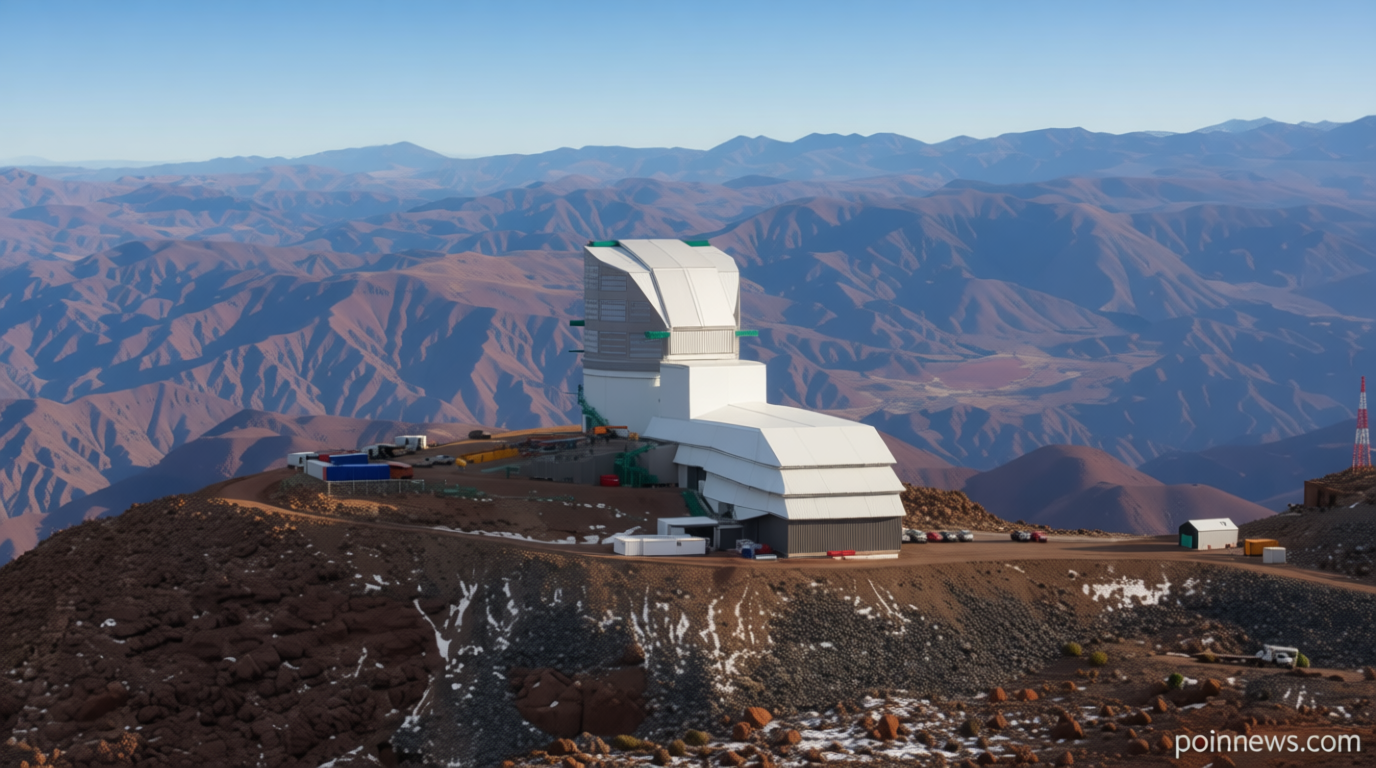
Poinews.com – Scientists and astronomers across the globe have taken a monumental step forward in their quest to understand the cosmos with the recent activation of the world’s largest digital camera. This groundbreaking instrument, which is now operational at the Vera C. Rubin Observatory in Chile, marks the beginning of a decade-long mission to capture an unprecedented amount of data about the southern sky. As the first of its kind, the camera is poised to revolutionize astronomical research by providing a vast, detailed archive of celestial objects and events. Its deployment heralds a new era in observational astronomy, offering insights into the universe’s hidden structures and dynamic processes.
Technical Specifications and Operational Capabilities
The world’s largest digital camera, a marvel of modern engineering, is designed to capture high-resolution images of the night sky with remarkable efficiency. Measuring the size of a compact car and weighing nearly 3,000 kilograms, the camera houses 3,200 individual sensors, each capable of recording light with extraordinary sensitivity. This advanced system is expected to take approximately 700 to 800 images every night, generating an immense dataset that will be analyzed to uncover new cosmic phenomena. Its ability to detect faint light and track changes over time makes it a powerful tool for studying everything from distant galaxies to nearby asteroids.
Located at the Vera C. Rubin Observatory on Cerro Pachón in Chile, this state-of-the-art camera is strategically placed to maximize its observational potential. The observatory’s high-altitude site, combined with minimal light pollution, allows the camera to capture data with exceptional clarity. Its primary mission is to create the Legacy Survey of Space and Time (LSST), a comprehensive cosmic map that will be one of the most detailed ever compiled. This map will serve as a critical resource for researchers, enabling them to track the movement of celestial objects, analyze their properties, and study the universe’s evolution over time.
Scientific Goals and Research Applications
The deployment of the world’s largest digital camera opens up a wide array of scientific opportunities. One of its key objectives is to investigate the elusive Planet Nine, a hypothetical dwarf planet thought to orbit far beyond Neptune. By capturing detailed images of the outer solar system, the camera could provide evidence for its existence and help refine its orbital parameters. Additionally, the instrument will play a vital role in mapping the distribution of dark matter, a mysterious substance that makes up a significant portion of the universe’s mass but remains invisible to the naked eye.
Another major focus of the project is the study of supernovae and black holes. These cosmic events, though rare, offer invaluable insights into the life cycles of stars and the fundamental forces governing the universe. The camera’s high-resolution imaging capabilities will allow scientists to detect these phenomena with greater accuracy, potentially leading to breakthroughs in our understanding of stellar evolution and gravitational physics. Furthermore, its ability to track asteroids and other near-Earth objects will enhance planetary defense efforts by identifying potential threats to our planet.
Phil Marshall, Deputy Director of Operations at the NSF-DOE Vera C. Rubin Observatory, emphasized the importance of this technological leap. “The world’s largest digital camera is not just a tool for observation; it’s a gateway to discovering new knowledge about the universe,” he noted. The data generated by the camera will be used to create a dynamic cosmic map that will be updated regularly, allowing researchers to monitor changes in the night sky and identify new celestial events. This ongoing process will also contribute to the study of the Milky Way’s structure, helping astronomers piece together the galaxy’s formation and evolution.
As the camera begins its mission, the scientific community is already anticipating its impact. The initial images released by the observatory, including a breathtaking view of the Lagoon Nebula—a glowing cloud of gas and dust located thousands of light-years away—have sparked excitement about the possibilities ahead. With full scientific operations now underway, the project underscores the power of global collaboration in space science. The data collected will be shared with researchers worldwide, fostering innovation and discovery across disciplines. This initiative not only advances our knowledge of the universe but also sets a new standard for future astronomical endeavors.