Trade MEPs back EU–US deal despite watered-down safeguards
EU-US Trade Agreement Passes Despite Revised Safeguards Trade MEPs back EU US deal - On Tuesday, members of the European Parliament’s International Trade

EU-US Trade Agreement Passes Despite Revised Safeguards
Poinews.com – On Tuesday, members of the European Parliament’s International Trade Committee approved a pivotal piece of legislation aimed at eliminating tariffs on most US industrial goods, setting the stage for the agreement’s full ratification in plenary session by the end of June. This decision marks a critical step in finalizing the EU-US trade pact, which has faced scrutiny over its balance and the extent of protections for European interests. The two legislative proposals that underpin the deal were endorsed by a strong majority, with 31 votes in favor, six against, and three abstentions for each. While the outcome signals broad support, it also reflects compromises made to align the agreement with broader political priorities.
The Context of the Deal
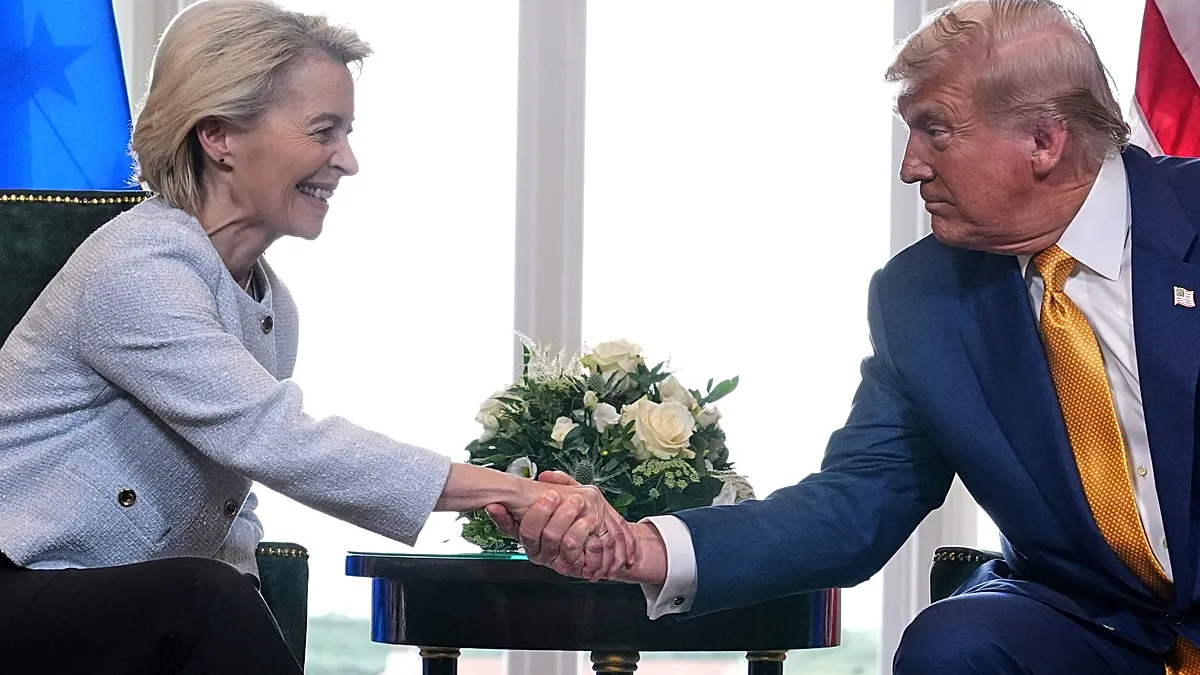
The vote occurs just days after European lawmakers and national governments reached a provisional agreement to implement the US-EU trade deal, finalized in late 2025 during a summit in Turnberry, Scotland. That summer, US President Donald Trump and European Commission President Ursula von der Leyen brokered a landmark agreement, setting the stage for a significant reduction in trade barriers. However, the deal has been met with mixed reactions, particularly from European officials concerned about its potential vulnerabilities. Trump had previously warned of imposing 25% tariffs on EU cars if the agreement was not ratified by 4 July, a date tied to the 250th anniversary of the United States. The looming deadline added urgency to the legislative process, with European negotiators determined to secure the deal despite reservations.
The Turnberry agreement, which many members of the European Parliament viewed as uneven in its terms, became the focal point of intense debates. While the deal was celebrated as a breakthrough for economic cooperation, critics argued that it favored US interests at the expense of European safeguards. This concern led to a series of negotiations between EU diplomats and parliamentary representatives, who sought to strengthen the agreement’s resilience against future challenges. The final text, however, incorporated several concessions, notably in the area of protective measures, which drew criticism from lawmakers.
The Safeguards Debate
European Parliament trade officials had pushed for a “sunset” clause that would automatically end the deal after March 2028 unless renewed. This provision was intended to ensure that the agreement would not become permanent without periodic review. Instead, the compromise reached with EU member states extends the sunset clause to December 2029, a delay that some saw as a strategic concession to avoid immediate backlash. Despite this, the Parliament managed to secure another critical safeguard: a mechanism allowing the European Commission to suspend the trade deal at the request of either the Parliament or a member state if the US fails to lift tariffs on European steel and aluminium by the end of 2026. This clause is designed to provide a legal tool for European countries to retaliate against US breaches, though its effectiveness depends on timely activation.
“We are sticking to our deal, but we are also clear that if the other side is breaching this deal, we have a lot of possibilities,” said Socialist German MEP Bernd Lange, the lead negotiator for the Parliament, in a statement prior to the vote. His remarks underscored the tension between embracing the deal and ensuring that European industries are not left exposed to unilateral US actions. The safeguards, while weakened compared to initial proposals, still represent a compromise that balances the need for immediate economic benefits with long-term risk mitigation.
The Impact of US Pressure
The approval process was heavily influenced by the US administration’s assertive stance, including its claims over Greenland and repeated threats of tariffs. These maneuvers created a climate of urgency for European negotiators, who sought to align the agreement with both economic and political imperatives. The threat of 25% tariffs on EU cars, in particular, galvanized support among lawmakers, as it directly impacted key industries and highlighted the stakes of the deal. Meanwhile, the US’s territorial ambitions in the Arctic were seen as a secondary but significant factor in the negotiations, as they signaled a broader shift in trade diplomacy.
The final agreement includes provisions that reflect the EU’s commitment to reducing its own tariffs on US imports while maintaining a 15% tariff rate on American goods. This dual approach aims to foster mutual economic growth while preserving some level of protection for European producers. However, the compromise to extend the sunset clause and dilute other safeguards has sparked discussions about the deal’s long-term implications. Some MEPs argue that the delayed sunset period gives the US more flexibility to impose tariffs without immediate consequences, while others see it as a necessary adjustment to ensure the agreement’s stability.
Industry and Political Reactions
European industries, particularly in manufacturing and automotive, have welcomed the deal as a step toward reducing costs and expanding market access. The removal of tariffs on US steel and aluminium is expected to lower production expenses for European companies reliant on these materials, while the phased elimination of EU tariffs on American goods will further integrate the two economies. However, the deal’s critics warn that the weakened safeguards could leave the EU vulnerable to future US trade actions, especially in sectors like automotive and agriculture, which are heavily exposed to tariffs.
Political factions within the Parliament have also expressed varied opinions. While the majority supported the deal, some members emphasized the need for stronger enforcement mechanisms to counter US breaches. The revised sunset clause, for example, has drawn criticism from left-leaning parties, who argue that it allows the US to retain influence over EU trade policy for an extended period. On the other hand, centrist and right-leaning groups have defended the compromise, citing the economic benefits of reducing trade barriers and the importance of maintaining a stable transatlantic relationship.
The final adoption of the agreement is scheduled for 16 June, a date that carries symbolic weight as it coincides with the 250th anniversary of the United States. The timing underscores the historical significance of the deal, which has been framed as a modernization of EU-US economic ties. Nonetheless, the process has revealed the challenges of balancing immediate gains with long-term risks, a dynamic that will continue to shape the agreement’s implementation. As the EU moves forward with ratification, the focus will shift to monitoring the US’s compliance with its commitments and assessing the deal’s impact on European markets.
Analysts suggest that the EU-US trade agreement will be a test of the bloc’s ability to navigate complex negotiations while maintaining its economic autonomy. The inclusion of the suspension clause provides a safety net, but its real-world application remains uncertain. Meanwhile, the US’s assertive tactics, including its Greenland claims and tariff threats, have set a precedent for how trade disputes are managed in the future. For European lawmakers, the decision to approve the deal despite its revisions reflects both a pragmatic approach and a recognition of the US’s growing influence in global trade. As the agreement nears finalization, the debate over its terms will continue, shaping the trajectory of EU-US relations for years to come.
Looking Ahead
With the legislative hurdle cleared, the EU now faces the task of implementing the agreement while addressing lingering concerns. The European Commission will play a central role in overseeing compliance, a responsibility that has been heightened by the inclusion of the suspension provision. The deal’s success will depend on the US’s adherence to its commitments, particularly in lifting tariffs on European steel and aluminium by 2026. Failure to meet this deadline could trigger the suspension clause, allowing European countries to renegotiate terms or impose retaliatory measures.
For the European Parliament, the approval of the deal marks a significant victory in securing a new trade framework. However, it also highlights the ongoing challenges of negotiating with a US administration that prioritizes strategic interests over balanced outcomes. The compromise on safeguards suggests that European lawmakers are willing to accept reduced protections in exchange for immediate economic benefits, a trade-off that will be closely monitored in the coming months. As the final adoption approaches, the EU-US trade agreement stands as a testament to the complexities of transatlantic diplomacy and the delicate balance between cooperation and protection.