Marine microplastic pollution: How scientists detect it | Euronews Tech Talks
Hidden beneath the waves lies a world of complexity—rare organisms, intricate food webs, and an alarming accumulation of human-made debris. The United Nations

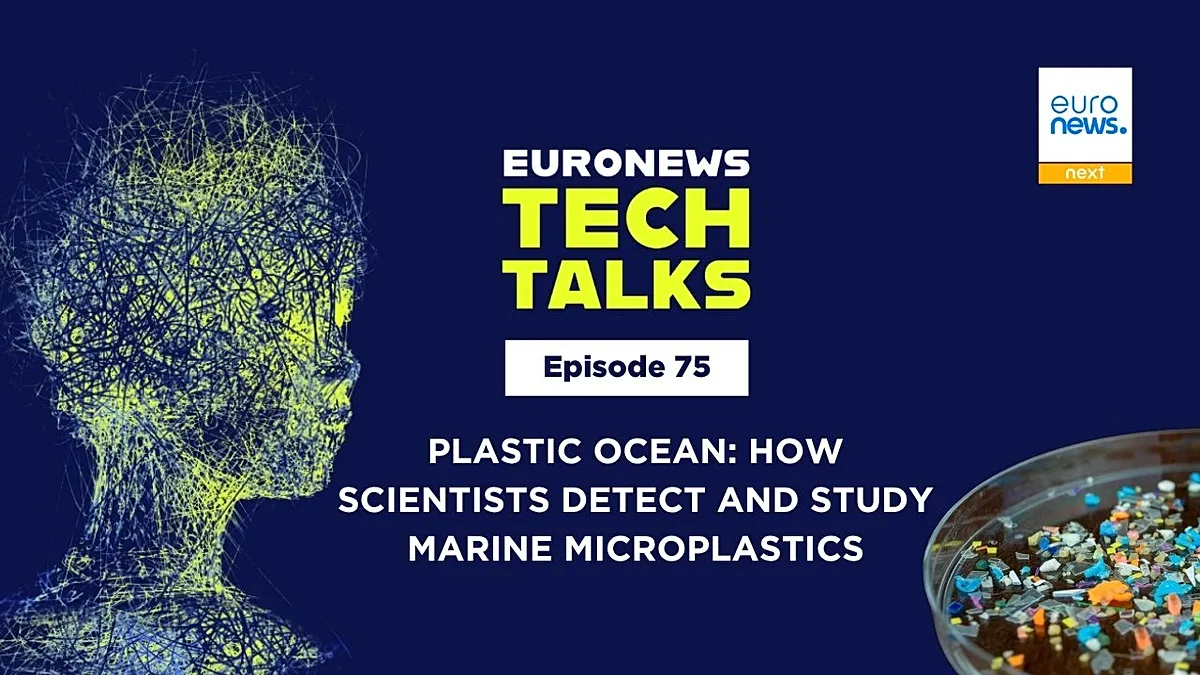
Unveiling the Invisible: New Methods for Tracking Ocean Microplastics
Poinews.com – Hidden beneath the waves lies a world of complexity—rare organisms, intricate food webs, and an alarming accumulation of human-made debris. The United Nations reports that annually, 52 million tonnes of plastic waste find their way into marine environments, creating approximately 24 trillion microplastic particles. These minute fragments, measuring under 5 millimetres across, inhabit both surface waters and deep ocean floors, altering ecosystems in ways researchers continue to unravel.
Where Do Microplastics Come From?
Plastic enters the sea through various pathways, including lost fishing gear and inadequate waste management infrastructure. Scientists classify these pollutants into two distinct groups. Primary microplastics consist of manufactured items such as nurdles—small industrial pellets—while secondary microplastics originate when larger plastic debris breaks down through wave action, wind exposure, and ultraviolet sunlight.
So if we have more sunny days and higher UV radiation exposure and heat waves and changes of temperature that might, for example, impact the degradation of plastics that are stranded, Catarino said.
This classification reveals a crucial connection between microplastic pollution and global climate patterns. Rising temperatures and increased solar radiation accelerate the breakdown of stranded plastics, while simultaneously stressing marine life. According to senior researcher Ana Catarino at the Flanders Marine Institute (VLIZ), organisms facing multiple pressures experience compounded effects.
These combined effects, they can be cumulative in the organism, Catarino explained.
Advanced Detection Techniques
Identifying microplastics presents unique challenges due to their diminutive size, varied shapes, and diverse colouration. To address these obstacles, postdoctoral researcher Nelle Meyers developed a semi-automated identification system at VLIZ in Ostend, Belgium.
The process begins with collecting seawater samples using specialized nets. Researchers then remove organic matter and apply Nile Red staining before examining specimens under a fluorescence microscope. Two automated software programs analyze the resulting images to determine whether particles qualify as microplastics and classify their polymer type.
We wanted to automate to speed up the whole process, Meyers said. We wrote a code so when you upload the picture, the image analysis is done automatically, she continued.
Meyers emphasizes that this approach balances efficiency with accessibility, utilizing equipment commonly available in laboratories. However, the technique has constraints—it cannot reveal chemical compositions and identifies only specific polymer categories.
Ecological Consequences
Microplastics affect marine organisms across all size levels. Small creatures like plankton ingest these particles, which can obstruct their digestive systems and prevent proper nutrient absorption.
They [microplastics] can also get their stomach, their gut clogged. And then they [small organisms] don’t eat their nutrients, they don’t eat their own food, Catarino explained.
This disruption creates cascading effects throughout marine ecosystems. When organisms cannot feed properly, reproduction rates decline and populations struggle to thrive.
Sometimes it’s not just one issue or another, it’s the accumulation of all these effects that may be harmful to the organisms, Catarino told Euronews Next.
The severity of microplastic impacts depends on numerous variables, including species characteristics, particle types, and additional environmental stressors such as ocean acidification and temperature fluctuations. As research continues at VLIZ, scientists work to understand how these invisible pollutants reshape our oceans.