Safe glasses for Spain’s total eclipse: where to get them for free
As millions of skywatchers prepare for the celestial spectacle on August 12, 2026, finding reliable safe glasses for Spain s total eclipse has become a

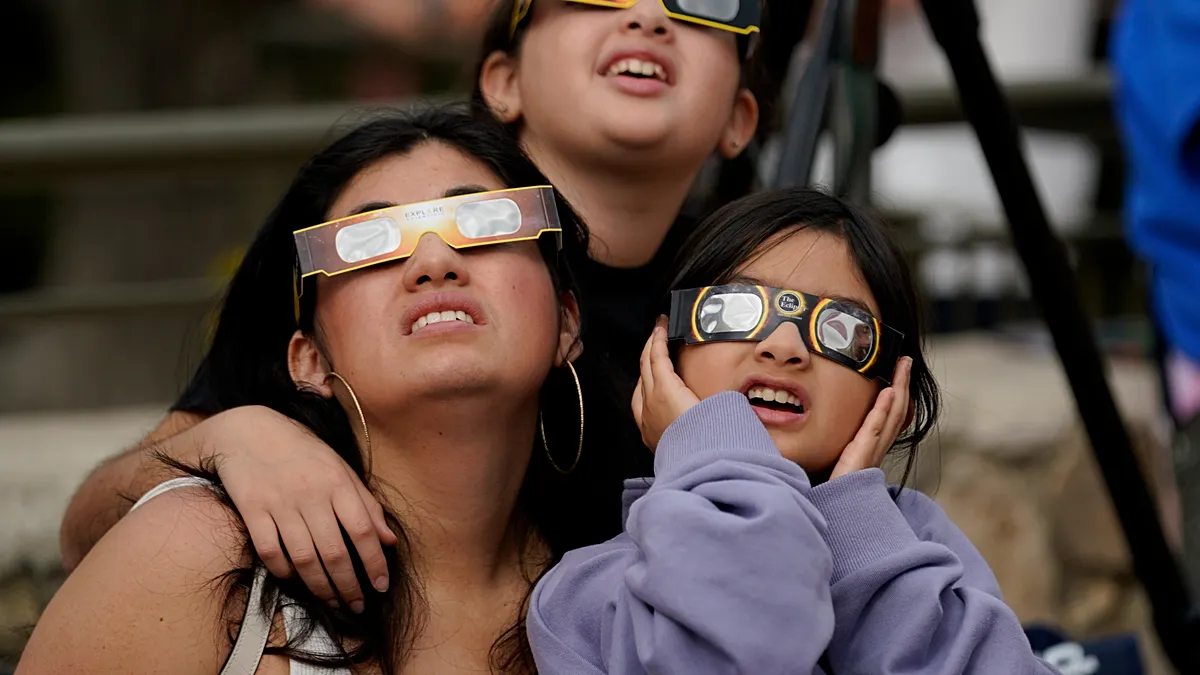
Table of Contents
Safe Glasses for Spain’s Total Eclipse 2026: Complete Guide to Free Distribution Points and Certification Standards
Poinews.com – As millions of skywatchers prepare for the celestial spectacle on August 12, 2026, finding reliable safe glasses for Spain s total eclipse has become a priority for families and astronomy enthusiasts alike. The Ministry of Science and Innovation, in partnership with the ONCE foundation, has announced an ambitious distribution program that will provide two million certified viewing glasses free of charge across the country. This comprehensive initiative ensures that everyone from casual observers to serious astronomers can safely witness the extraordinary phenomenon without risking permanent eye damage.
Collection points have been strategically established throughout Spain’s autonomous communities, making access convenient for residents and visitors alike. ONCE stands located in major cities and towns serve as primary distribution centers, while research institutions, science museums, and public libraries have also joined the effort. Many regional governments have supplemented these efforts by setting up additional collection stations at popular eclipse viewing locations, particularly in areas along the path of totality where crowds are expected to be largest.
Why Proper Eye Protection Matters During the Eclipse
The science behind eclipse safety cannot be overstated. When the Moon passes directly between Earth and the Sun, blocking our star’s light, the danger to human eyes remains surprisingly high. Without certified protective eyewear, ultraviolet radiation penetrates the eye’s photoreceptors—both cones responsible for color vision and rods for low-light conditions—while infrared energy simultaneously creates a direct thermal effect on the retinal tissue.
This dual assault can cause solar retinopathy, a condition that damages the macula and may result in permanent vision impairment. Symptoms often do not appear immediately after exposure, which makes prevention through proper eyewear essential. Those affected typically experience blurred vision, dark spots or scotomas at the point of greatest visual acuity, metamorphopsia where shapes appear distorted, and heightened photophobia that can subsequently trigger debilitating headaches.
The total phase of this eclipse will last no more than one minute and forty-eight seconds for observers positioned directly on the line of totality. People viewing from locations closer to this central path will enjoy more seconds of the experience. During this brief window of totality, lucky viewers may safely remove their approved glasses to observe the Sun’s corona with the naked eye, though they must put them back on before the partial phases resume.
Understanding ISO Certification Standards
Not all eyewear qualifies for safe solar observation. The ISO standard 12312-2 applies exclusively to products specifically designed for direct solar observation—what astronomers refer to as viewing the photosphere, or the Sun’s bright face. These specialized glasses ensure that no more than 0.00032% of visible sunlight passes through to your eyes, providing adequate protection during the most intense moments of the eclipse.
The Ministry of Science explains that “you must put the glasses on before looking at the Sun, look briefly for a few seconds and then lower your gaze, repeating observation of the eclipse always with pauses”. You should not take them off before you stop looking at the Sun.
The standard covers only glasses without prescription or focus adjustments. Ordinary sunglasses meeting ISO 12312-1 do not qualify, as they permit hundreds or thousands of times more light than is safe for direct solar viewing. Similarly, solar filters designed for telescopes, binoculars, or camera lenses do not meet this particular standard for human eye protection.
Key requirements include transmittance ratios at ultraviolet, visible, and infrared wavelengths reaching the retina, uniformity of that transmittance across the entire lens surface, and appropriate material quality that prevents degradation. Additionally, the Scientific and Advisory Commission of the Eclipse Trio notes that glasses sold within the European Union must display the CE mark, confirming compliance with European safety regulations.
FAQ: Common Questions About Eclipse Eyewear
Q: When do free glasses become available for collection? A: Distribution begins several weeks before August 12, 2026, with most ONCE stands and partner institutions starting collections in early July. Check local announcements for specific opening dates in your area.
Q: How many glasses does each person receive? A: Most distribution points offer one pair per person, though some locations may provide additional pairs for families. Bring identification if required by your local collection point.
Q: Can I use my old eclipse glasses from 2017? A: Only if they meet ISO 12312-2 standards and show no signs of damage. Scratches, tears, or warping can compromise protection. The certification number 12312-2015 incorporates the 2015 standard date, making verification straightforward.
Q: Where can I find the complete list of collection points? A: A comprehensive online directory is available through the Ministry of Science website and ONCE’s official channels, updated regularly as new locations are added throughout the distribution period.
Mark your calendar for August 12, when the eclipse crosses the Iberian Peninsula, and ensure you have your certified glasses ready. With proper preparation and the right eyewear, millions will experience this once-in-a-century phenomenon safely and memorably.