Hyperion GR-1 enters orbit: A new step for Greece’s space programme
ne for Greece’s Space Ambitions Hyperion GR 1 enters orbit - Greece has achieved a significant milestone with the launch of Hyperion GR-1, marking a pivotal

Hyperion GR-1 Enters Orbit: A Milestone for Greece’s Space Ambitions
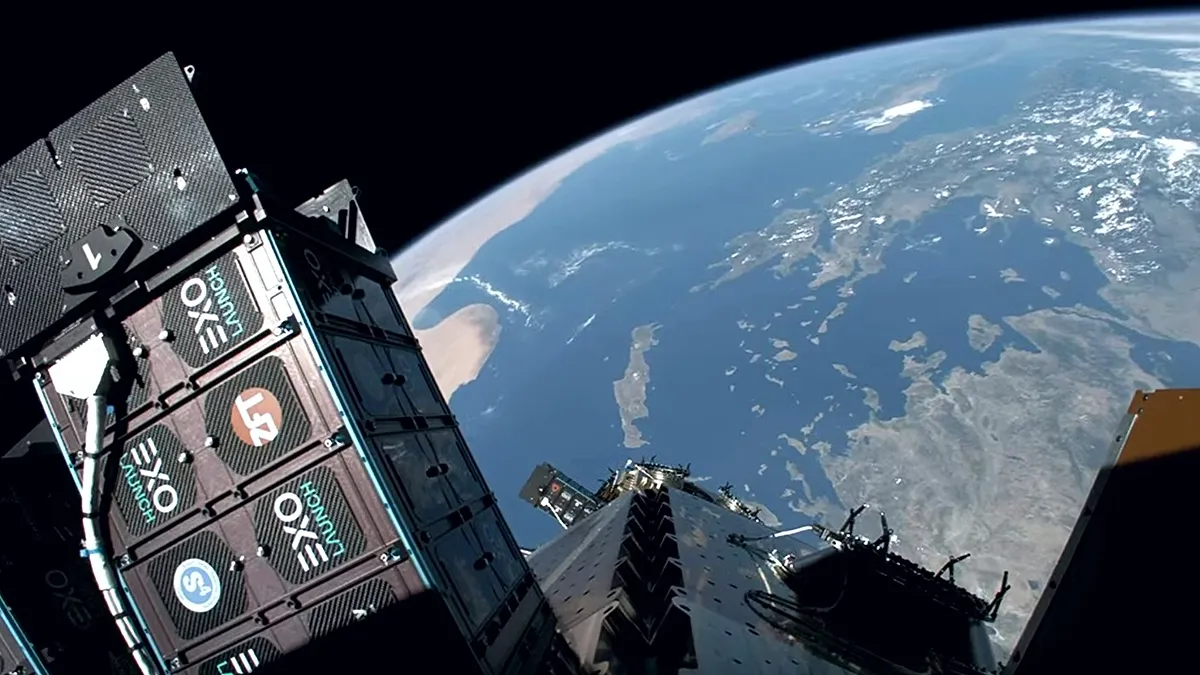
Poinews.com – Greece has achieved a significant milestone with the launch of Hyperion GR-1, marking a pivotal moment for its burgeoning space initiatives. The first optical microsatellite developed under the National Microsatellite Programme was deployed into Earth’s orbit on Tuesday, July 7, 2026, via a SpaceX rocket from Cape Canaveral Space Force Station in Florida. This event signifies Greece’s growing independence in space technology and its commitment to expanding its capabilities in satellite-based services.
Programme Objectives and Industry Collaboration
The National Microsatellite Programme aims to establish a contemporary satellite observation framework to bolster public-sector operations. Key areas of focus include civil protection, environmental monitoring, maritime surveillance, precision agriculture, and safeguarding critical infrastructure. Hyperion GR-1 is the inaugural satellite in a planned constellation of seven, constructed entirely within Greece by Open Cosmos Aegean. This project underscores the country’s efforts to foster domestic expertise and promote export-ready space technologies.
Satellite Features and Technological Innovation
Hyperion GR-1 is equipped with advanced capabilities, including high-resolution multispectral imaging that can resolve details as fine as 90 centimetres on the ground. This allows for precise tracking of changes in both natural and urban landscapes. Additionally, the satellite integrates AI-driven onboard data processing and inter-satellite communication systems, enhancing the speed and efficiency of information transfer to ground stations.
Data Utilization and Strategic Goals
The satellite’s data will be managed through the Government Geospatial Observation Hub, a centralized platform designed for the collection and analysis of satellite information. According to the Ministry of Digital Governance and Artificial Intelligence, the data will support early wildfire and flood detection, disaster impact assessments, and resource conservation efforts. Future applications also include maritime monitoring, pollution tracking, and urban planning, with the objective of streamlining crisis response and policy decisions.
Broader National Strategy
Hyperion GR-1 is part of Greece’s larger vision for space development, backed by the Recovery and Resilience Facility “Greece 2.0.” The initiative is managed by the General Secretariat for Telecommunications and Post, with collaboration from the Hellenic Space Centre (ELKED) and the European Space Agency (ESA). Greece now operates 18 microsatellites in orbit, as reported by the ministry, reflecting its strategic push to build a robust national space infrastructure.
“The launch of Hyperion GR-1 represents a new era for our country,” said Dimitris Papastergiou, Minister of Digital Governance and Artificial Intelligence. “This satellite provides a powerful tool to leverage geospatial data for citizen welfare, from protecting forests and marine ecosystems to enhancing agricultural precision and monitoring infrastructure development. It also enables quicker decision-making during emergencies,” he added.
Building on this achievement, the government has outlined further ambitions through the HELLAS-SPACE 2.0 programme, which allocates 350 million euros to expand space applications. This initiative is a continuation of the National Microsatellite Programme, emphasizing Greece’s long-term strategy to integrate advanced technology into public administration and improve national resilience.