Exclusive: ‘If China attacks Taiwan, you will be affected too,’ Taiwan’s deputy FM warns Europe
Exclusive: China's Potential Invasion of Taiwan Threatens Global Markets, Says Deputy FM Exclusive - In an exclusive interview with Euronews Next, Taiwan’s

Exclusive: China’s Potential Invasion of Taiwan Threatens Global Markets, Says Deputy FM
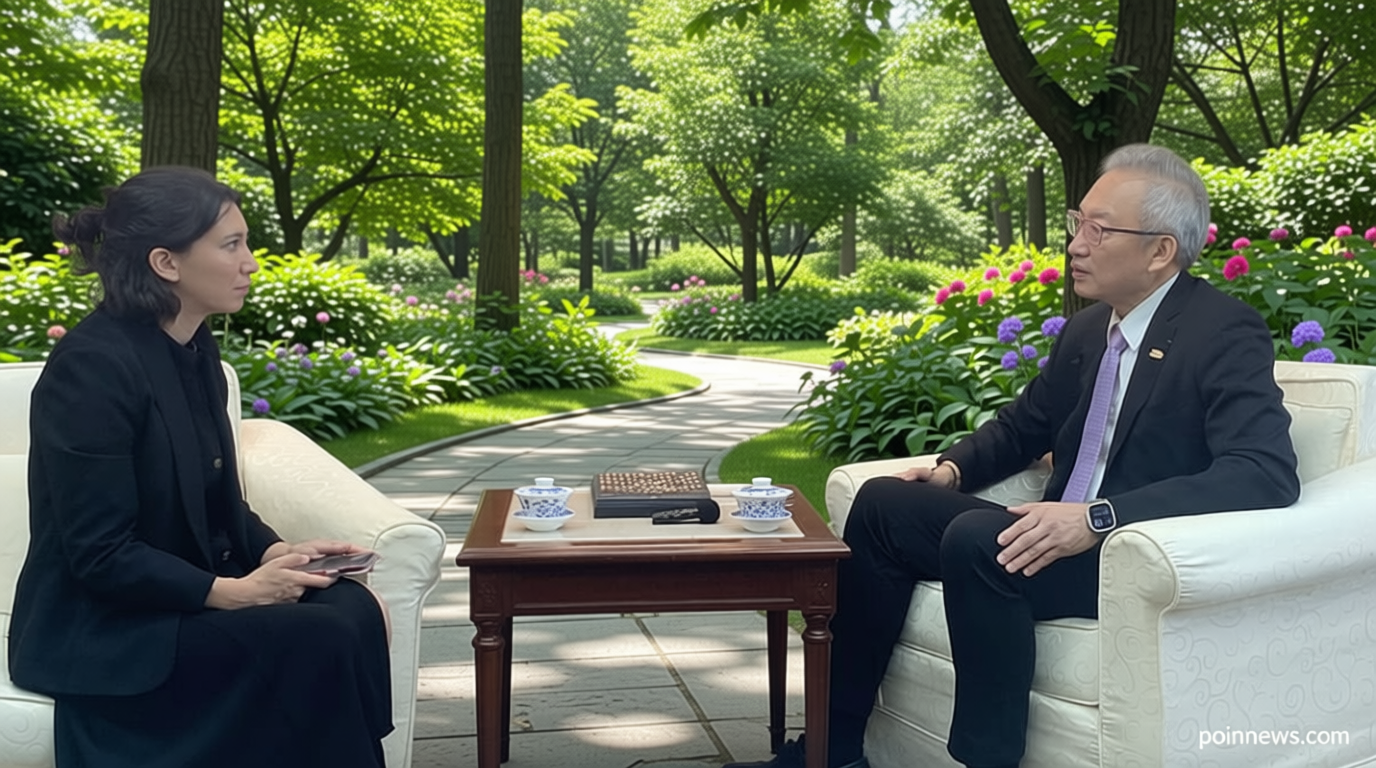
Poinews.com – In an exclusive interview with Euronews Next, Taiwan’s Deputy Foreign Minister, François Chih-chung Wu, has issued a stark warning to Europe, stating that a Chinese military strike on Taiwan would have far-reaching consequences. “If China attacks Taiwan, France, Europe, the United States, and Japan will all be affected,” he emphasized, highlighting the island’s critical role in global supply chains. This warning underscores Taiwan’s strategic position in the world economy, where its contributions extend beyond regional concerns to impact international markets and technological advancements.
Historical Context and Sovereignty Debates
Taiwan’s geopolitical status remains a focal point of international discourse, with Wu challenging China’s assertion of perpetual sovereignty over the island. He noted that the claim of Taiwan as an inalienable part of China emerged only after the 1949 conclusion of the Chinese civil war. While China prefers the term “Chinese Taipei” in diplomatic settings, Taiwan itself recognizes itself as the Republic of China, a designation rooted in its pre-1949 government. Wu’s remarks draw attention to the island’s historical legacy, which includes centuries of rule by Dutch, Spanish, Qing Dynasty, and Japanese forces.
“The concept of China’s permanent control over Taiwan is relatively recent,” Wu explained. “It wasn’t until 1885–1894 that Taiwan was officially established as a province, a brief period that contrasts sharply with its current geopolitical significance.”
Technological Dependence and Supply Chain Vulnerabilities
Wu’s warning is particularly pertinent given Taiwan’s dominance in the global semiconductor industry. The island’s semiconductor sector, spearheaded by Taiwan Semiconductor Manufacturing Company (TSMC), produces over 90% of the world’s most advanced chips, which are essential for artificial intelligence, computing, and even military technologies. “About 70% of all semiconductors are manufactured in Taiwan, as well as 95% of the most advanced chips and 100% of those destined for artificial intelligence,” he said, emphasizing the critical role of Taiwan in sustaining modern infrastructure.
“Europe relies heavily on Taiwan’s technological expertise, from photolithography equipment to chip design tools,” Wu added. “A disruption in Taiwan’s operations would ripple through industries that are vital to your economies.”
Economic Ties and Logistical Importance
Taiwan’s economic relationship with Europe is deeply intertwined, with over 60,000 cargo containers passing through the Taiwan Strait annually—exceeding the combined traffic of the Panama and Suez Canals. This logistical volume illustrates the island’s role as a key node in global trade networks, particularly for European industries dependent on Taiwanese manufacturing. Wu pointed out that European companies such as Netherlands-based ASML, German optics giant Zeiss, and French industrial gas supplier Air Liquide rely on Taiwan’s capabilities for critical components.
“You can imagine, if China attacks Taiwan or even imposes a blockade around the island, how the interests of the world will be damaged,” Wu said. “Taiwan’s stability is not just a regional issue—it’s a global one.”
Geopolitical Ripples and Strategic Alliances
Europe’s economic interests in Taiwan are further amplified by its technological partnerships. For instance, French company Thales collaborates with Taiwanese firm Foxconn on semiconductor production and space data centers, demonstrating the interdependence between the two regions. Wu also highlighted how China’s growing anxiety over Taiwan reflects its perception of the island as a slipping grip, stating, “In the Chinese mindset, once Chinese, always Chinese. That is a huge problem.”
Despite these challenges, Taiwan’s economy has flourished, with its stock market surpassing those of Germany and France in recent years. Wu argued that Europe must recognize the island’s strategic value beyond political narratives, urging collective action to safeguard its role in the global economy. “Europe’s future is tied to Taiwan’s stability,” he asserted, stressing the need for continued support and dialogue.
Global Implications and Future Scenarios
Wu’s message resonates globally, as the semiconductor industry underpins everything from consumer electronics to defense systems. A conflict in the Taiwan Strait could disrupt supply chains for industries in the United States, Japan, and Europe, creating economic instability and security risks. The United States, for example, has invested heavily in Taiwanese chip production to counter China’s growing dominance in technology. Similarly, European nations depend on Taiwan for advanced manufacturing tools, making the island a linchpin in their industrial strategies.
While the situation remains tense, Wu expressed confidence in Taiwan’s resilience and its ability to maintain independence through international alliances. “Europe’s response will determine how effectively we can mitigate the fallout,” he said, calling for a coordinated approach to address the potential consequences of a Chinese invasion. This call to action underscores the importance of maintaining strong transatlantic partnerships in the face of rising geopolitical uncertainty.