Japan dominates the world’s best cities for digital nomads, while Spain makes an impact
The remote-work lifestyle continues to expand without restraint, and a fresh global ranking confirms that East and Southeast Asia have become the

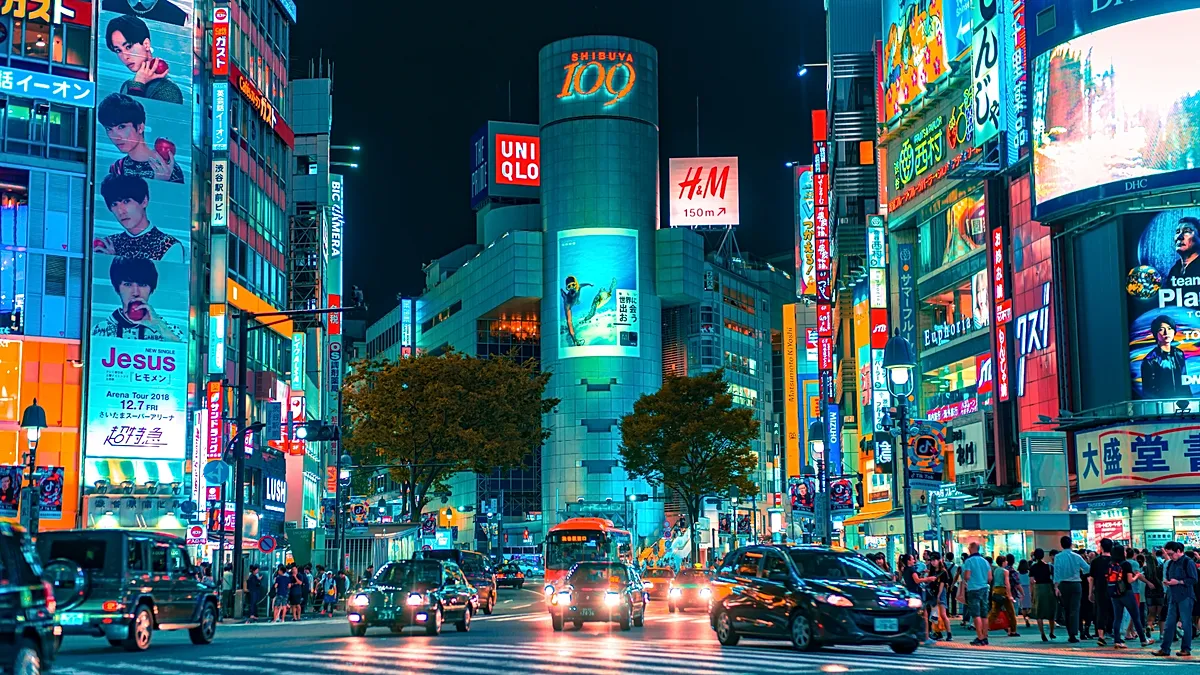
Table of Contents
Remote Workers’ Paradise: Asian Cities Sweep Global Digital Nomad Rankings
Poinews.com – The remote-work lifestyle continues to expand without restraint, and a fresh global ranking confirms that East and Southeast Asia have become the gravitational center for location-independent professionals. Japan alone claimed three spots in the top ten, while two Spanish cities also broke through. The study, conducted by independent VPN review platform vpn.jpn.com, evaluated 104 major metropolitan areas across the globe.
Methodology Behind the Rankings
The researchers began with 150 of the world’s largest cities, identified through population thresholds aligned with the UN’s Degree of Urbanisation framework. Forty-six were subsequently removed for various reasons, leaving the final cohort of 104. Each city received a composite score out of 100, built from several weighted dimensions:
The framework measured the density of coworking and remote-work locations, the availability of nightlife and leisure venues, and the concentration of cultural institutions. National-level internet download and upload speeds factored in, as did local price levels benchmarked against a United States baseline of 100. A final metric counted “comfortable working days” — defined as days averaging between 15 °C and 28 °C with rainfall below 5 mm.
Seoul Takes the Crown
Despite Japan’s heavy representation, the South Korean capital claimed first place with an overall score of 73.60. Seoul packs 59.67 work-friendly locations per square kilometre, 172.94 going-out options, and 10.74 cultural venues into its urban fabric. It also posted the fastest download speed among the top ten at 69.27 Mbps. On affordability, Seoul scored 63.99, translating to prices roughly 36 % below the US benchmark.
Tokyo and the Japanese Cluster
Tokyo followed closely at number two with a score of 72.61. The Japanese capital offers 56.43 work locations per square kilometre — marginally fewer than Seoul — and carries a slightly higher price tag at an affordability score of 65.66. What Tokyo more than compensates for is its extraordinary leisure density: 395.12 going-out venues per square kilometre, more than double Seoul’s figure and the highest rate in the entire top ten. Cultural venues add another 12.71 per square kilometre.
Osaka, Japan’s third-largest city by population, landed in fifth place with a score of 70.15. It fields 45.80 work locations per square kilometre and 350.27 going-out options per square kilometre, the second-highest leisure density among the leading destinations. Nagoya also appeared within the top ten, rounding out Japan’s triple representation.
Hanoi and Taipei: Value and Variety
Hanoi secured third place at 71.86, driven largely by the highest work-location concentration in the top ten — 96.88 spots per square kilometre — and prices nearly 71 % below the US benchmark. The Vietnamese capital also logged 180 comfortable working days, far exceeding Seoul’s 105 and Tokyo’s 103. Its weakness: national download speeds of just 16.12 Mbps.
Taipei, the Taiwanese capital, placed fourth. It provides 48.24 work locations per square kilometre, a going-out score of 295.77, and 10.71 cultural venues per square kilometre. Local prices sit approximately 57 % beneath the US baseline.
Spain’s Dual Entry
Barcelona claimed sixth place with a score of 68.11, making it the highest-ranked Spanish city. While its work-location density trails the Asian entries above it, Spain posted the fastest national upload speed in the top fifteen at 36.71 Mbps. The city also delivers 104.83 going-out options and 8.97 cultural venues per square kilometre, alongside 164 comfortable working days.
Madrid trailed in seventh at 66.67. Because both Spanish cities share identical national internet and price-level scores, the gap between them hinged entirely on city-level metrics. Barcelona pulled ahead through slightly greater concentrations of work locations, leisure venues, and cultural sites, plus 43 additional comfortable working days.
São Paulo and the Final Stretch
São Paulo matched Madrid’s score of 66.67 but took eighth place. The Brazilian metropolis recorded the highest comfortable-working-day count in the top ten at 252, and its price level sits roughly 53 % below the US benchmark. Japan re-entered the list at ninth place, extending its already dominant presence in the rankings.
Related Reading
Frequently Asked Questions
What is Japan dominates the world s best?
Japan dominates the world s best is the main topic of this guide. The article explains the context, practical details, and next steps readers should understand.
Why does Japan dominates the world s best matter?
Japan dominates the world s best matters because readers are looking for a useful answer, not just a short summary. Good content should match search intent and help them decide what to do next.