Iran publicly executes two Isfahan protesters despite UN calls to stop
Iranian officials have put two demonstrators to death in a public setting at Shahid Alikhani Square in Isfahan. The executions occurred early Tuesday morning

Iran Carries Out Public Executions in Isfahan Amid International Concern
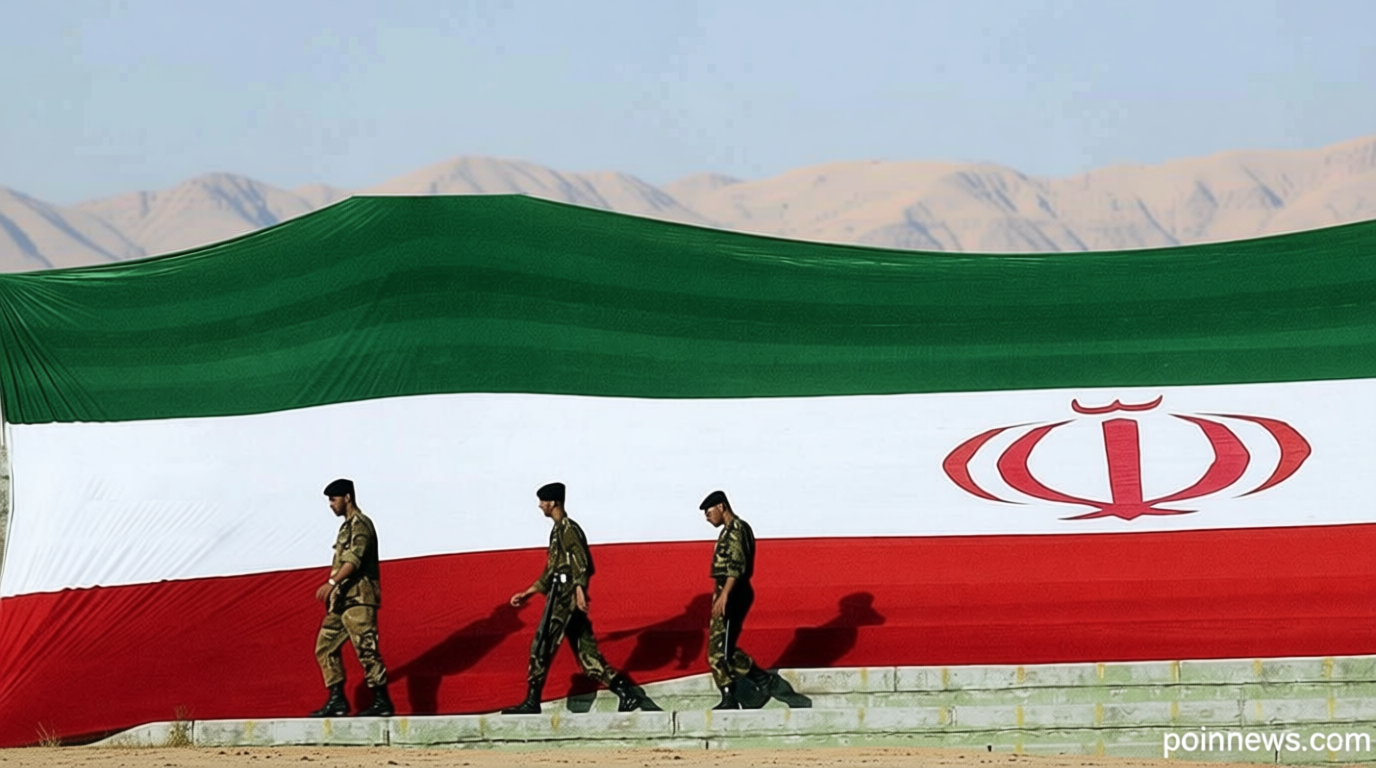
Poinews.com – Iranian officials have put two demonstrators to death in a public setting at Shahid Alikhani Square in Isfahan. The executions occurred early Tuesday morning in the Malekshahr district, according to Mizan news agency and Fars news agency, both connected to Iranian state institutions. The condemned men were identified as Amirhossein Safari Hosseinabadi and Abolfazl Sepahi Badjiani.
Heavy security deployments were observed throughout the night as guards clashed with civilians who had gathered near the execution site. Social media users and witnesses noted that security forces maintained a strong presence across Monday evening, with some accounts describing brief confrontations between officers and local residents.
Scaffold Installation Sparks Fear
Concerns had been mounting on social media platforms following reports that an iron scaffold was being set up in Alikhani Square for the public executions. Online videos circulated showing the structure being prepared while security personnel surrounded the surrounding area. Although these reports could not be independently confirmed, they coincided with the timing of the executions.
A relative of Safari mentioned that family members had been called to Isfahan Central Prison, believing they might receive one final opportunity to visit before the execution took place.
Background of the Case
Both men were part of a group of twelve young defendants who received death sentences connected to demonstrations that began on January 8 in the same square. Iranian authorities charged the accused with participating in the deaths of four Basij militia members and special unit personnel during violent confrontations. Additional allegations included acts of arson and property destruction.
Fars news agency reported that security officers were allegedly attacked, set ablaze, and killed during the unrest. These executions bring the total number of death sentences carried out in this particular case to four. Golmohammad Mohammadi and Erfan Esfandiari were put to death on July 19, while eight other defendants continue to face capital punishment.
United Nations Experts Raise Fair Trial Concerns
The public executions proceeded despite appeals from United Nations human rights specialists who had requested Iran suspend the planned death sentences. On Monday, experts headed by Mai Sato, the UN Special Rapporteur examining human rights conditions in Iran, called on Tehran to prevent further executions of remaining defendants.
“Sentencing 12 people to death in one hearing, in a closed courtroom and without clarity as to each defendant’s individual responsibility violates established fair trial standards,” the experts stated.
According to UN representatives, many of the defendants were teenagers or in their early twenties when arrested. The experts highlighted concerns regarding arbitrary detention, enforced disappearances, and instances of mistreatment during custody.
The convictions were reportedly based largely on confessions aired on state television. Court hearings before Iran’s Revolutionary Courts took place behind closed doors, and verdicts were not made available to the public.
Shervin Bagherian Jebeli Among Those Still Facing Execution
One defendant who remains under death sentence is Shervin Bagherian Jebeli, who had just turned eighteen before his arrest. UN experts noted that Iranian state television aired his confession within seven days of his detention, prior to any formal trial proceedings.
The UN human rights office reported that at least twenty-four individuals have been executed this year in connection with the January protests. While Tehran maintains that 3,117 people died during demonstrations that began in December over sudden hyperinflation and evolved into nationwide anti-government protests, rights organizations have documented figures as high as 42,000. UN officials have acknowledged that determining the complete extent of civilian casualties remains challenging due to information access restrictions and internet disruptions.