Most waste ends up in landfill. This scientist finds unexpected ways to give it a second life
Most waste ends up in landfill, but Australian researchers and businesses are finding ways to turn discarded materials into useful products. Australia

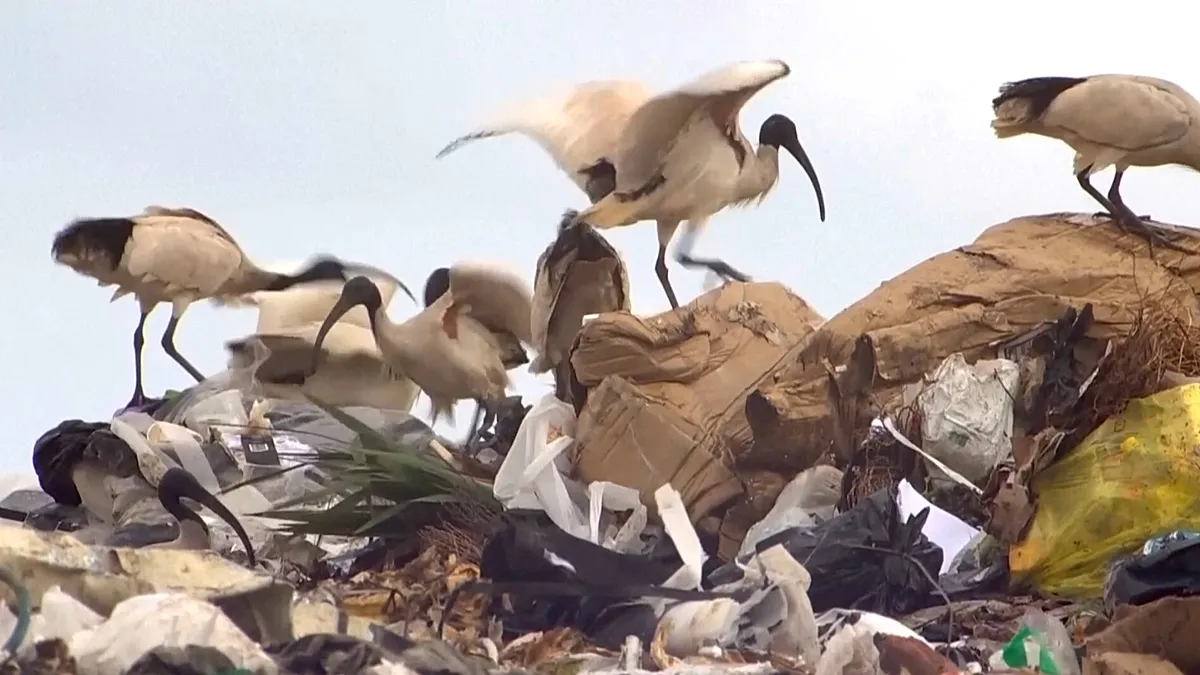
Table of Contents
Australia Finds New Uses for Waste Bound for Landfill
Poinews.com – Most waste ends up in landfill, but Australian researchers and businesses are finding ways to turn discarded materials into useful products. Australia generates 76 million tonnes of waste each year, according to the Department of Climate Change, Energy, the Environment and Water. That challenge is encouraging innovators to look at waste streams as potential sources of valuable raw materials.
Professor Lynne Loo has spent the past decade exploring how materials once considered useless can be given another purpose. Her work began with waste from Australia’s abalone industry and has expanded to support ideas that recover value from overlooked materials.
Most waste ends up in landfill when it is difficult to sort, transport or process. Yet food scraps, agricultural residues and municipal waste can contain fibres, carbon and other components that may be used in manufacturing or agriculture.
Food Waste Turned Into Cellulose
Matt Barber is developing a process to extract cellulose from food waste in a laboratory he built at home. The recovered material can then be processed into paper, leather or wood-like products, and could also be used to make bioplastic.
“So, what I get is pure cellulose that comes out and then from there, I process that into other paper, leather or wood products. But it could be turned into a bioplastic. It can be turned into any uses. So you can, instead of growing a tree, which takes 75 years, you can grow this in a week,” explains Barber.
Cellulose is the main structural component of plants and is commonly associated with paper and wood products. Recovering it from food waste could reduce reliance on newly grown timber while creating a use for materials that might otherwise be discarded.
Barber says support from people such as Loo can help emerging businesses move from an experimental idea to a product with a market.
“You have a start up and you don’t know what to do with it and she [Loo] helps you find a market for it,” says Barber.
Thermal Conversion in Western Australia
In Collie, Western Australia, Renergi is taking a different approach to materials that would otherwise be thrown away. Its facility uses thermal conversion technology to transform waste into products including vinegar, biochar and oil.
Deejay Parker of Renergi says the site can process just under 30,000 tonnes of biomass waste each year, along with 4,000 tonnes annually of the town’s municipal solar waste.
“We can process just under about 30,000 tonnes of biomass waste per year and 4,000 tonnes per annum of the town’s municipal solar waste,” says Deejay Parker of Renergi.
More than 70 per cent of material handled through the process is recovered and made into a new product. The biochar produced at the facility is already being used at fruit farms and a winery in southern Western Australia.
The project has received support from the Australian Renewable Energy Agency and is intended to bring renewable technology to regional communities. At full production, the facility is expected to become one of Australia’s largest of its type.
Creating a Circular Economy
Most waste ends up in landfill because there is no single recovery method suitable for every material. Some waste can be separated into fibres for new products, while other streams can be converted into carbon-rich soil inputs, oils or industrial materials.
For Loo, visible examples are important. Demonstration projects can help shift the focus from disposal to the question of what a discarded material could become next.
FAQ: Reducing Waste in Australia
What happens to waste that cannot be recycled?
Materials that cannot be recovered through existing collection and processing systems may be sent to landfill. New technologies are being developed to recover useful materials from some of these waste streams.
What is biochar used for?
Biochar is a carbon-rich material created through thermal processing. At Renergi’s facility, it is being used by fruit farms and a winery in southern Western Australia.
Can food waste become new products?
Yes. Food waste can contain cellulose, which can be processed into materials such as paper, leather-like products, wood alternatives and potentially bioplastic.