
North Korea fires ‘several ballistic missiles’ into Sea of Japan, Seoul’s military says
North Korea launched several ballistic missiles from the Pyongyang area toward the East Sea on Monday, deepening a period of heightened military tension on

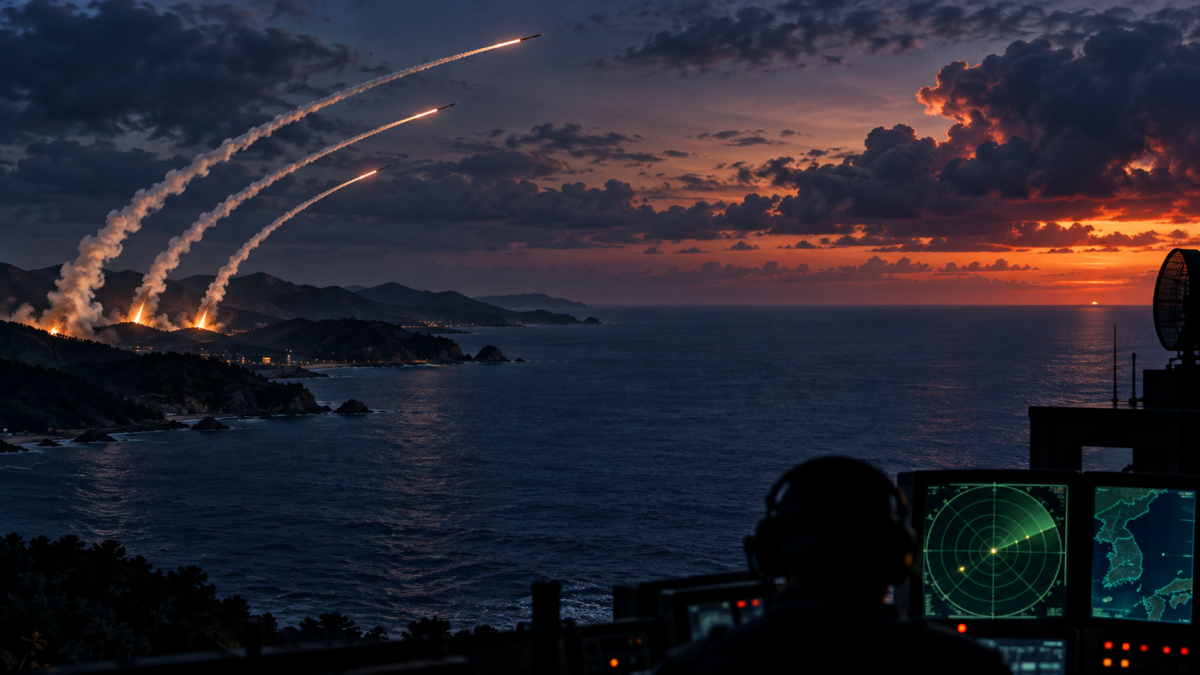
Table of Contents
North Korea Launches Multiple Ballistic Missiles as Border Tensions Escalate
Poinews.com – North Korea launched several ballistic missiles from the Pyongyang area toward the East Sea on Monday, deepening a period of heightened military tension on the Korean Peninsula following a landmine explosion in the Demilitarised Zone.
South Korea’s Joint Chiefs of Staff said the launches were detected at about 09:20 local time, or 02:20 CET. The East Sea is also commonly called the Sea of Japan. Japanese defence authorities separately confirmed that at least one suspected ballistic missile had been fired.
“Our military detected around 09:20 (0220 CET) several ballistic missiles launched from the Pyongyang area towards the East Sea.”
Some of the projectiles travelled more than 900 kilometres, the Joint Chiefs of Staff said. South Korean and US officials are examining the launches to determine the missiles’ precise characteristics and capabilities.
Seoul’s military also increased its monitoring posture in case of further activity.
“Our military has stepped up surveillance and vigilance against possible additional launches.”
Emergency security meeting in Seoul
South Korea’s National Security Office convened an emergency meeting after the launches to assess the country’s readiness and the wider security situation. The missiles were fired amid a worsening dispute over an explosion that injured three South Korean soldiers in a Seoul-controlled part of the DMZ.
A joint investigation by Seoul and the United Nations concluded last week that North Korea had planted the landmines responsible for the blast more than a year earlier. Pyongyang has strongly rejected that finding.
The incident has revived concerns surrounding the DMZ, which separates the two Koreas and remains among the most heavily defended borders in the world. While the frontier is often viewed as a fixed dividing line, landmine incidents have repeatedly shown how quickly a local security event can fuel wider political and military friction.
South Korea and North Korea remain technically at war. The 1950-53 Korean War ended with an armistice, rather than a permanent peace agreement, leaving the peninsula divided and relations vulnerable to military displays, border incidents and stalled diplomacy.
Competing demonstrations of missile technology
The latest launch follows a series of weapons tests on both sides. On 3 October, North Korea test-fired an intermediate-range ballistic missile. Kim Yo-jong, the influential sister of leader Kim Jong-un, said the weapon used unspecified artificial intelligence technology and could alter its course while flying at low altitude.
Such claims draw attention because manoeuvring during flight can complicate efforts to track and intercept a missile. South Korea and the United States are now studying the latest launches, including whether they show any further advances in North Korea’s missile programme.
Days after the North’s October test, Seoul announced the successful test of a domestically developed hypersonic glide vehicle, or HGV. These systems are carried toward the upper atmosphere by rocket boosters or ballistic missiles before gliding toward their intended targets.
The presidential Blue House described the HGV as providing “a new deterrence capability capable of striking key targets within the Korean Peninsula’s operational environment.” The announcement underscored the continuing competition in military technology between the two neighbours, even as both sides face the risks created by faster and more difficult-to-track weapons.
Kim Yo-jong demands greater respect
Political relations have deteriorated alongside the military developments. Kim Yo-jong has denounced South Korean demands for an apology over the landmine blast, calling them “despicable.” She has also rejected an offer from Seoul to provide medical equipment.
On Thursday, she said any effort to repair inter-Korean ties would require a change in Seoul’s approach.
“If they (South Korea) truly wish to restore relations between the DPRK and South Korea, they should be mindful of the other side’s feelings in every word and deed and first demonstrate the utmost respect, consideration and sincerity.”
Her comments referred to North Korea by its official name, the Democratic People’s Republic of Korea, or DPRK. The remarks offered little indication of an immediate opening for dialogue, particularly while the landmine dispute remains unresolved.
Questions over future US-North Korea diplomacy
The renewed tension has also unfolded as US President Donald Trump’s recent outreach to Pyongyang has raised concern in Seoul that South Korea could be sidelined if future nuclear negotiations move ahead. Washington and Seoul are longstanding allies, but engagement between the United States and North Korea has historically carried implications for South Korea’s own security and diplomatic priorities.
In October, North Korea fired several short-range ballistic missiles one day after Trump suggested that he could meet Kim Jong-un this year. The sequence highlighted the uncertain relationship between diplomatic signals and military activity: overtures toward talks have not prevented Pyongyang from continuing missile tests.
For residents of the region, the immediate significance of Monday’s launches lies in the combination of military activity and unresolved political confrontation. Missile tests, competing weapons announcements and the dispute over the DMZ landmines are reinforcing an atmosphere in which even limited incidents can carry wider consequences for stability on the peninsula.
Related Reading
Frequently Asked Questions
What is North Korea fires several ballistic missiles?
North Korea fires several ballistic missiles is the main topic of this guide. The article explains the context, practical details, and next steps readers should understand.
Why does North Korea fires several ballistic missiles matter?
North Korea fires several ballistic missiles matters because readers are looking for a useful answer, not just a short summary. Good content should match search intent and help them decide what to do next.