‘Turning blind eye’ to AfD win further angers voters, political scientist warns
The way Chancellor Friedrich Merz and his coalition choose to respond to a seismic electoral shift in eastern Germany will likely determine whether the

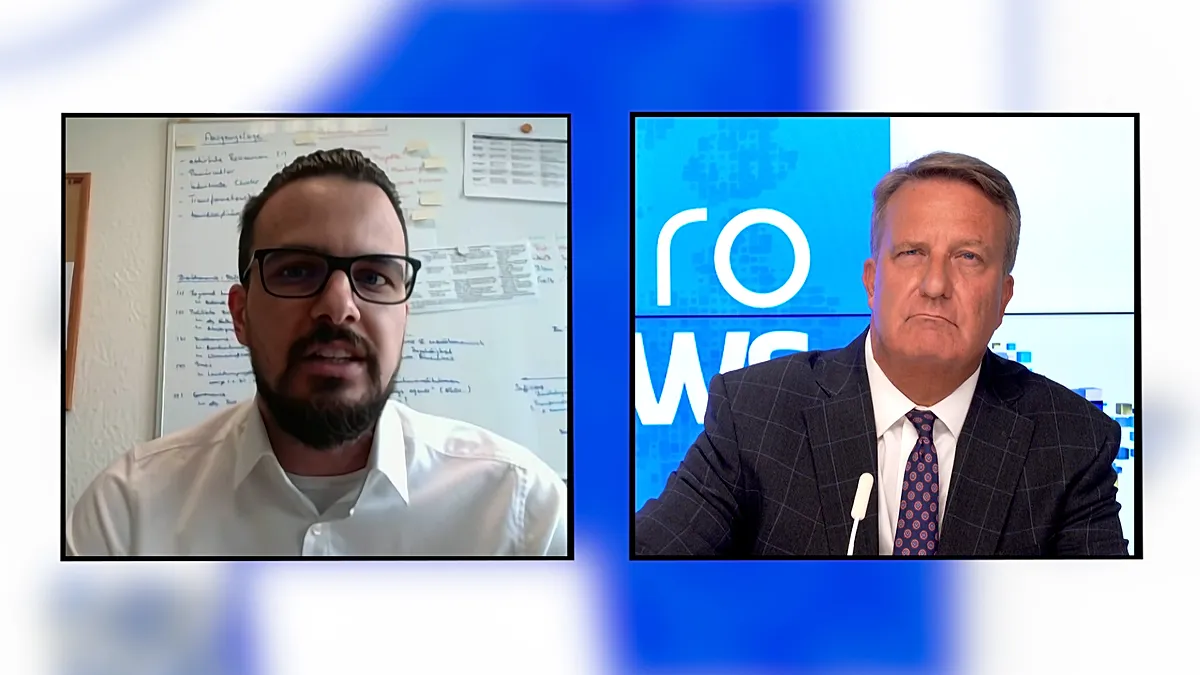
Table of Contents
Germany’s Federal Government Faces a Reckoning After AfD’s Historic State-Level Surge
Poinews.com – The way Chancellor Friedrich Merz and his coalition choose to respond to a seismic electoral shift in eastern Germany will likely determine whether the current federal government survives its full term, according to political scientist Nicolas Spohn, a specialist in East German state-level politics. Last Sunday’s vote in Saxony-Anhalt delivered a result that few analysts had projected even a year ago, and the political fallout is already rippling through Berlin’s corridors of power.
A Landslide That Rewrites the Map
Final tallies from the Saxony-Anhalt state election showed the Alternative for Germany (AfD) capturing 43.8 percent of the vote across a region home to roughly 2.1 million residents. That figure represents more than a twenty-fold increase over the party’s 2.1 percent share in the same state five years earlier. Meanwhile, Merz’s own party, the Christian Democratic Union (CDU), collapsed to just 17.2 percent — a result that underscores how rapidly voter allegiance has shifted in the former East German territories.
The structural significance of the outcome cannot be overstated. For the first time since the end of World War II, a far-right formation has positioned itself within striking distance of governing a German state. The AfD, widely characterised as pro-Kremlin and fiercely anti-immigration, now holds enough seats to shape coalition arithmetic in a way that was unthinkable a decade ago.
Dismissal at the Federal Level
Despite the magnitude of the result, CDU leadership in the Bundestag has moved quickly to contain the narrative. Thorsten Frei, the party’s federal parliamentary leader, publicly insisted that the CDU’s poor showing in Saxony-Anhalt would carry no consequences for national politics. Spohn views that framing as precisely the problem.
“But this is what frustrates people,” Spohn said, adding that “turning a blind eye to the warnings of elections like in Saxony-Anhalt could give the AfD more votes.”
In his assessment, the CDU’s failure to honour campaign pledges made before the 2025 federal elections — most prominently Merz’s commitment to reignite a stagnant German economy — has eroded the party’s credibility at every level of government. A recent YouGov survey found that only 16 percent of Germans hold a favourable view of the chancellor, a figure that signals deep institutional distrust rather than mere policy disagreement.
Frustration, Not Ideology
Spohn argues that the dominant driver behind the AfD’s surge in Saxony-Anhalt was not enthusiasm for the party’s platform but exhaustion with the status quo. In that state, Merz’s personal approval rating had sunk to barely above 9 percent before polling day.
“It is not genuine support for the AfD’s agenda, but rather for the [idea associated with the party] of doing everything differently,” Spohn explained.
He went further, contending that roughly 40 percent of those who cast ballots for the AfD did so despite its far-right positions, not because of them. Eastern German voters, in his reading, are not more ideologically right-leaning than their western counterparts; they are simply more disillusioned with the governing class.
A Region in Demographic Freefall
The frustration Spohn describes is rooted in material conditions that have compounded over decades. Saxony-Anhalt, whose territory formed part of the former German Democratic Republic, has suffered the steepest population decline of any German state over the past 35 years. Since reunification in 1990, the region has lost approximately one quarter of its inhabitants. The hollowing-out is most acute in rural districts and among younger residents, who face chronic teacher shortages and thin labour-market prospects.
These structural pressures mean that electoral volatility in the state is not a one-off anomaly but a predictable expression of long-term neglect. External shocks — including the ongoing wars in Ukraine and Iran — have further dented household incomes, though Spohn acknowledges that such factors lie beyond any single chancellor’s direct control.
“These are issues that Chancellor Merz can’t do a lot about, but still, Germans feel this economically,” he noted.
The Road Ahead: Berlin and Mecklenburg-Western Pomerania
The AfD’s momentum shows no sign of plateauing. Regional elections are scheduled in Berlin and in another former East German state, Mecklenburg-Western Pomerania, within just under two weeks of the Saxony-Anhalt vote. In Mecklenburg-Western Pomerania, voter-intent polling already places the AfD in the lead at approximately 35 percent, suggesting the party could replicate its Saxony-Anhalt performance on a larger stage.
For the CDU, the strategic calculus is stark. Spohn contends that Merz’s party must articulate a credible, forward-looking programme that offers voters something to aspire toward rather than merely a defence of existing policy.
“At the moment, we don’t have this positive vision, and the AfD is the only party giving voters some kind of positive outlook, which was, ‘everything is possible’. So, everything can also be different,” Spohn said.
Whether the federal government heeds that warning or continues to treat eastern German electoral shocks as contained anomalies will, in Spohn’s view, decide not only the fate of the current coalition but the broader trajectory of German democracy in an era of unprecedented right-wing electoral strength.
Related Reading
Frequently Asked Questions
What is Turning blind eye to AfD win further?
Turning blind eye to AfD win further is the main topic of this guide. The article explains the context, practical details, and next steps readers should understand.
Why does Turning blind eye to AfD win further matter?
Turning blind eye to AfD win further matters because readers are looking for a useful answer, not just a short summary. Good content should match search intent and help them decide what to do next.