US slaps sanctions on Cuba’s oil and gas company, accusing it of weaponising energy
US Slaps Sanctions on Cuba's Energy Sector, Alleging Resource Misuse US slaps sanctions on Cuba s oil - On Thursday, the US government imposed sanctions on

US Slaps Sanctions on Cuba’s Energy Sector, Alleging Resource Misuse
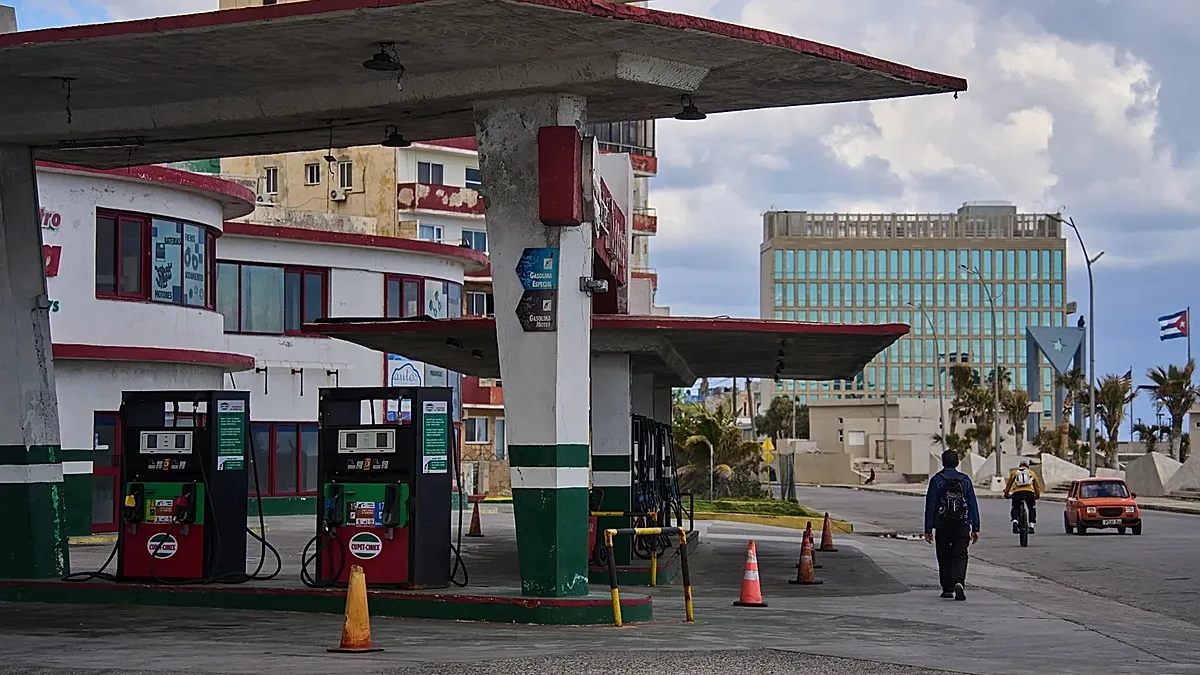
Poinews.com – On Thursday, the US government imposed sanctions on Cuba’s state-controlled energy firm, Cupet, marking a significant escalation in tensions with the island nation. The focus keyword, “US slaps sanctions on Cuba,” underscores the administration’s decision to target the company’s assets, accusing it of leveraging energy resources to consolidate political power. This move aligns with broader efforts to pressure Cuba’s leadership and reshape its economic landscape, as outlined in statements from U.S. Secretary of State Marco Rubio.
Accusations of Energy Exploitation
Rubio highlighted that Cuba’s energy strategy has led to widespread shortages, affecting both citizens and industries. He stated, “The Cuban people have endured fuel shortages and blackouts due to decades of under-investment, while the regime has diverted resources to benefit itself.” The focus keyword, “US slaps sanctions on Cuba,” is central to the administration’s argument that energy is being weaponized to control the population and secure political stability. These claims, however, lack concrete evidence, prompting criticism from Cuban economists and analysts.
The U.S. sanctions on Cuba’s energy sector are part of a larger campaign against the Communist government, which has long been accused of centralizing control over critical resources. Cupet, responsible for oil and gas distribution, has faced scrutiny for its role in prioritizing government needs over public access. The focus keyword, “US slaps sanctions on Cuba,” reflects the policy’s aim to disrupt Cuba’s economic autonomy and force reforms. This comes amid an existing embargo that has restricted Cuban imports for years, compounding the nation’s energy challenges.
Industry experts argue that the sanctions could have severe consequences for Cuba’s energy-dependent economy. Ricardo Herrero, a U.S.-based Cuban economist, noted that private importers rely heavily on Cupet’s infrastructure to store and distribute diesel. “The US slaps sanctions on Cuba to undermine its energy system, which is already struggling under the weight of the embargo,” Herrero wrote on X. He criticized the move as a shift from humanitarian aid to economic aggression, emphasizing its potential to destabilize daily life and hinder progress.
Global Reactions and Strategic Implications
While Cuba’s government has not yet formally responded to the sanctions, it has previously framed them as tools to weaken the regime and its citizens. The focus keyword, “US slaps sanctions on Cuba,” is often cited in discussions about the impact of these measures. With most energy supplies allocated through rationing, the move is seen as an attempt to further strain public services and deepen reliance on U.S. energy imports. Analysts suggest that the sanctions could also pressure Cuba into aligning more closely with U.S. interests in the region.
These sanctions follow a series of targeted measures against Cuban officials and institutions, including President Miguel Díaz-Canel. The U.S. has frozen assets related to Cupet, citing its role in the nation’s energy crisis. The focus keyword, “US slaps sanctions on Cuba,” appears repeatedly in policy documents, reflecting the administration’s commitment to economic pressure. While the move is framed as support for greater freedom, critics argue it may exacerbate existing hardships for the Cuban people. Meanwhile, Trump has reiterated his stance on military intervention, linking the sanctions to a broader strategy of regime change.
As the U.S. continues to tighten its grip on Cuba’s energy sector, the impact on daily life and economic stability grows more pronounced. The focus keyword, “US slaps sanctions on Cuba,” is central to the narrative of a nation struggling to meet its energy demands. With power outages and fuel shortages worsening, the policy is testing the resilience of Cuba’s infrastructure and its ability to sustain growth. The future of the energy sector will depend on how effectively Cuba can navigate these sanctions while maintaining its economic and political independence.