Video. Hundreds of nostalgic Germans flock to see Angela Merkel’s portrait
Hundreds of nostalgic Germans flock to the Bode Museum each day, drawn not by ancient sculptures or Renaissance masterpieces but by a single contemporary

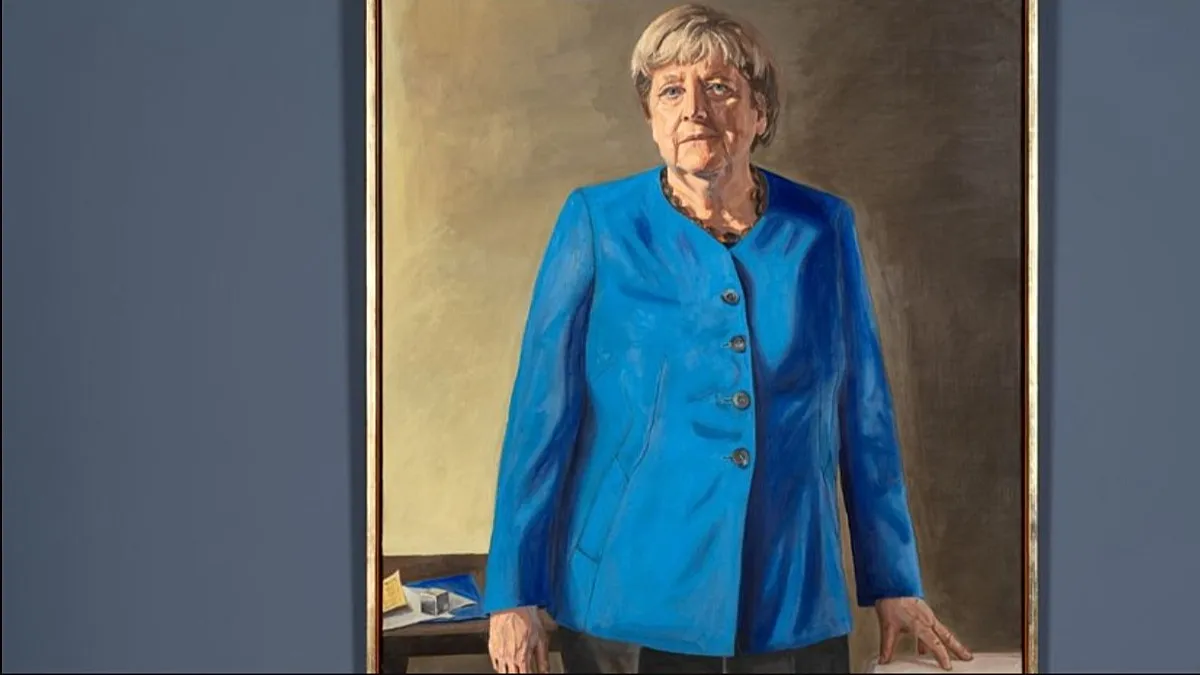
Table of Contents
Why Hundreds of Nostalgic Germans Flock to a Single Portrait in Berlin
Poinews.com – Hundreds of nostalgic Germans flock to the Bode Museum each day, drawn not by ancient sculptures or Renaissance masterpieces but by a single contemporary canvas: a painted portrait of Angela Merkel, the former German chancellor who shaped European politics for nearly sixteen years. Since the artwork went on display on 30 June, daily visitor numbers have surged to approximately 900 — a figure that eclipses the museum’s typical footfall by a wide margin and has turned a quiet gallery into one of Berlin’s most talked-about cultural destinations of the summer.
The Artist Behind the Canvas
The portrait was executed by Jérémie Queyras, a painter whose practice straddles French and German artistic traditions. Queyras rendered Merkel’s likeness with a painterly approach that balances formal portraiture conventions with a contemporary sensibility, lending the image a warmth that a state-issued photograph would never achieve. The work entered the Bode Museum’s galleries on 30 June, and the institutional response was swift: within weeks, museum administrators noted that attendance for the comparable period in the previous year had been outpaced by margins ranging from 85 to 90 percent.
A Nostalgia That Crosses Party Lines
What makes the phenomenon particularly striking is the breadth of its audience. Hundreds of nostalgic Germans flock to the gallery not because they supported Merkel politically, but because the image triggers a collective memory of an era defined by continuity, institutional stability, and a particular style of leadership. Visitors who queued for a glimpse have described the reaction as wistful rather than partisan — a sentiment that reaches well beyond the ranks of Merkel’s former coalition supporters and into households that never cast a ballot for her.
The reaction is less about politics and more about a time — a sentiment that has made the portrait an unlikely cultural touchstone in the summer of 2026.
The surge has also prompted discussion about how post-political figures are memorialised inside public institutions. Unlike commemorative coins or official photographs, a painterly portrait invites a more intimate, subjective encounter with its subject. It foregrounds expression, gesture, and the artist’s interpretive choices rather than the flat authority of an institutional image, and that ambiguity appears to be precisely what keeps visitors returning.
What Happens After the Berlin Run
The portrait’s exhibition at the Bode Museum concludes on 4 October. Following that date, the canvas will be transferred to the German Chancellery, where it will join the collection of likenesses depicting Merkel’s predecessors in office. The move signals that the work is being treated not as a transient exhibition piece but as a document of institutional memory — a painted record of leadership that will hang in the corridors where decisions continue to be made.
Frequently Asked Questions
Where can visitors see the Merkel portrait? The painting is on display at the Bode Museum on Berlin’s Museum Island. The current run ends on 4 October 2026, after which the work relocates to the German Chancellery.
Who painted the portrait? Jérémie Queyras, a French-German painter, created the canvas. His practice draws on both French and German figurative traditions.
How much has attendance increased since the portrait opened? Museum figures indicate that daily footfall reached roughly 900 visitors during the peak period, representing an increase of 85 to 90 percent over the comparable window in the previous year.
Is the portrait available for purchase or viewing elsewhere? No public sale has been announced. After the Berlin exhibition closes, the work will be housed at the German Chancellery as part of its collection of former-chancellor likenesses.