Video. China rescuers race to find trapped people after landslide
China Rescuers Race to Find Trapped People After Landslide: A Critical Response to Disaster China rescuers race to find trapped - When a sudden landslide

China Rescuers Race to Find Trapped People After Landslide: A Critical Response to Disaster
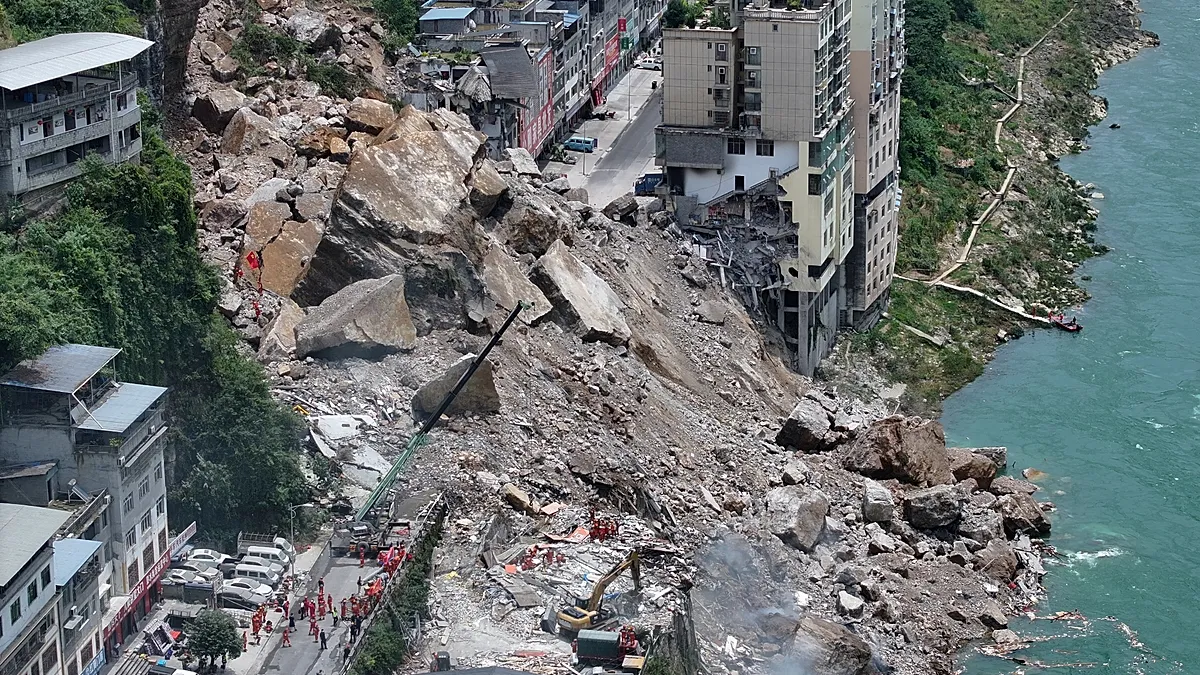
Poinews.com – When a sudden landslide struck near the Wujiang River in China, emergency responders were immediately mobilized to locate and rescue those trapped beneath the rubble. The focus keyword—China rescuers race to find trapped people after landslide—captures the urgency of the situation as teams worked tirelessly under challenging conditions. The event, which occurred on July 17, 2026, highlighted the critical role of rapid response in mitigating the impact of natural disasters. With the help of advanced equipment and coordinated efforts, rescuers managed to free nine survivors in the early hours, but the search for additional victims continued as the scene remained chaotic and hazardous.
Triggering the Disaster: Weather and Terrain as Key Factors
The landslide was triggered by intense rainfall that had persisted for days, saturating the mountainous terrain and weakening the soil. This region, known for its karst topography, is particularly vulnerable to such events due to its unique geological structure, which allows water to seep into underground cavities and destabilize the land. The disaster struck at around 9:08 a.m. local time, collapsing massive slabs of earth into nearby residential areas. The affected zone included two high-rise buildings, which were partially damaged but still standing, creating a complex environment for rescue teams to navigate.
Authorities quickly activated emergency protocols, deploying over 50 sets of specialized search tools, including thermal imaging cameras and acoustic sensors, to detect survivors within the debris. Heavy machinery, such as excavators and cranes, was also brought in to clear the wreckage and create safe access points for rescuers. Despite the challenges posed by the unstable ground and the risk of further collapses, teams worked with precision to avoid endangering themselves while maximizing their chances of saving lives.
Evacuation and Support: A Multi-Faceted Effort
As the search and rescue operations intensified, hundreds of residents in the surrounding areas were evacuated to safer zones. Local authorities prioritized the safety of the population, implementing traffic restrictions and setting up temporary shelters. The response included not only immediate rescue efforts but also a comprehensive support system for those displaced. Over 8,000 emergency supplies, such as tents, medical kits, and portable water sources, were distributed to affected families, ensuring their basic needs were met during the crisis.
“The speed and coordination of the response were crucial in minimizing casualties and stabilizing the situation,” said a spokesperson from the National Emergency Management Agency. This statement underscores the importance of preparedness in regions prone to landslides. Additionally, local hospitals and mobile medical units were deployed to treat the injured, with doctors and paramedics working alongside rescuers to provide on-site care. The community’s resilience and the government’s swift action became defining elements of the relief effort, reflecting a well-rehearsed disaster response strategy.
As the days passed, the focus keyword—China rescuers race to find trapped people after landslide—remained central to the narrative. Rescuers utilized drones to survey the area and identify potential pockets of survivors, while teams of trained dogs assisted in locating victims buried deep within the debris. The collaboration between different agencies, including the military and civil defense units, demonstrated the country’s ability to mount large-scale operations in the face of natural calamities. However, the search for additional lives was far from over, with teams continuing their efforts even as the weather conditions began to ease.
Experts emphasize that the landslide serves as a stark reminder of the vulnerabilities in China’s mountainous regions. The event occurred during the summer monsoon season, a period when heavy rains are common and the risk of landslides is heightened. Officials have since announced plans to enhance early warning systems and improve infrastructure in such areas to reduce the likelihood of similar incidents. The ongoing rescue efforts, combined with these proactive measures, aim to ensure that future disasters are met with even greater preparedness and efficiency.