Saving Europe’s farmland: Agri-PV leads the way towards sustainable solar panel use
Saving Europe’s Farmland: Agri-PV Leads the Way Toward Sustainable Solar Panel Use Saving Europe s farmland - Europe’s farmland is under increasing pressure

Saving Europe’s Farmland: Agri-PV Leads the Way Toward Sustainable Solar Panel Use
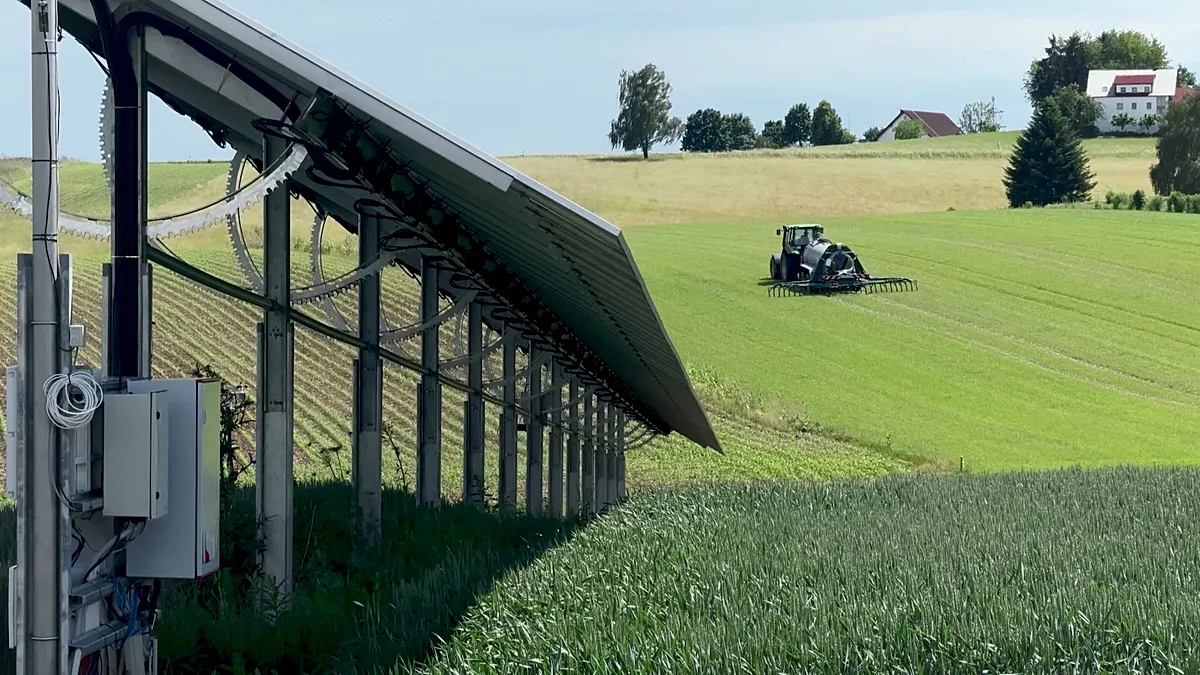
Poinews.com – Europe’s farmland is under increasing pressure from the demand for renewable energy, but a promising solution is emerging to preserve agricultural land while harnessing solar power. At the heart of this innovation is agri-PV, a technology that integrates photovoltaic panels into farming systems, allowing crops to grow beneath them. This approach, which is gaining traction across the continent, offers a sustainable way to expand solar energy production without sacrificing the land that feeds millions. Georg Bockmaier, a farmer in Bavaria, is among the pioneers adopting agri-PV, demonstrating how this dual-use model can support both food security and climate goals.
The Agri-PV Revolution
Agri-PV, also known as agrivoltaics, represents a paradigm shift in land use by combining solar energy generation with agricultural activities. Unlike traditional solar farms that require vast, undisturbed plots of land, agri-PV systems are designed to coexist with crops, livestock, and traditional farming practices. This technology, developed by teams across Europe, uses solar panels mounted on structures that allow sunlight to reach the soil while capturing energy. For instance, Bockmaier’s farm in southern Germany features solar tracking panels, which optimize energy production by adjusting their angle throughout the day. This innovation not only conserves farmland but also ensures that farming remains a viable and profitable enterprise.
One of the key advantages of agri-PV is its ability to mitigate the environmental impact of large-scale solar projects. By placing panels above crops, the system reduces the need for additional land, which is critical in regions where farmland is limited. This is especially relevant in densely populated areas or regions with high agricultural value, where land is often at a premium. According to a 2025 report by the European Environment Agency, agri-PV could help reduce the pressure on natural habitats while supporting the EU’s green energy targets. The success of such projects depends on careful planning and collaboration between farmers, engineers, and policymakers to ensure long-term viability.
Scaling Agri-PV Across Europe
While agri-PV is still in its early stages, its potential is already evident in countries like Germany and Slovakia, where pilot projects have demonstrated its effectiveness. Feld.energy, a start-up based in Bavaria, has been instrumental in scaling the technology, with over 800 farmers participating in its initiatives. By 2027, the company aims to achieve one gigawatt of PV capacity, which is equivalent to the output of a conventional nuclear power plant. This ambitious goal underscores the growing interest in agri-PV as a sustainable alternative to conventional solar farms.
The scalability of agri-PV also extends to other agricultural sectors. For example, in regions where crops like wheat or rapeseed are grown, panels can be installed in a way that complements the natural light requirements of the plants. This method not only maximizes energy output but also minimizes the disruption to farming cycles. Experts estimate that agri-PV systems can generate up to 20% more energy than traditional solar farms due to their ability to harness sunlight more efficiently. Such improvements make agri-PV a compelling option for countries seeking to balance energy production with food security.
Challenges and Opportunities
Despite its benefits, agri-PV faces challenges that must be addressed to ensure widespread adoption. One of the primary concerns is the initial cost of installation, which can be higher than traditional solar systems. However, government incentives and long-term energy savings are helping to offset these expenses. Another challenge is the need for specialized knowledge to manage both crops and solar panels effectively. Farmers like Bockmaier are working closely with agricultural experts to develop best practices, ensuring that the land remains productive and the panels function optimally.
Opportunities for agri-PV are abundant, particularly as the EU pushes for a green transition. By 2030, the bloc aims to generate 42.5% of its energy from renewable sources, and agri-PV could play a vital role in achieving this target. Moreover, the technology offers additional benefits beyond energy production, such as shade for crops that can reduce water evaporation and protect against extreme weather. These features make agri-PV not only a sustainable energy solution but also a tool for climate resilience in agriculture. As more farmers adopt this model, it could pave the way for a new era of integrated land use that supports both ecological and economic goals.