Video. Portugal seizes five tonnes of cocaine in Atlantic bust
Portugal seizes five tonnes of cocaine in what has become one of the most significant drug busts in the country's recent history. Portuguese authorities

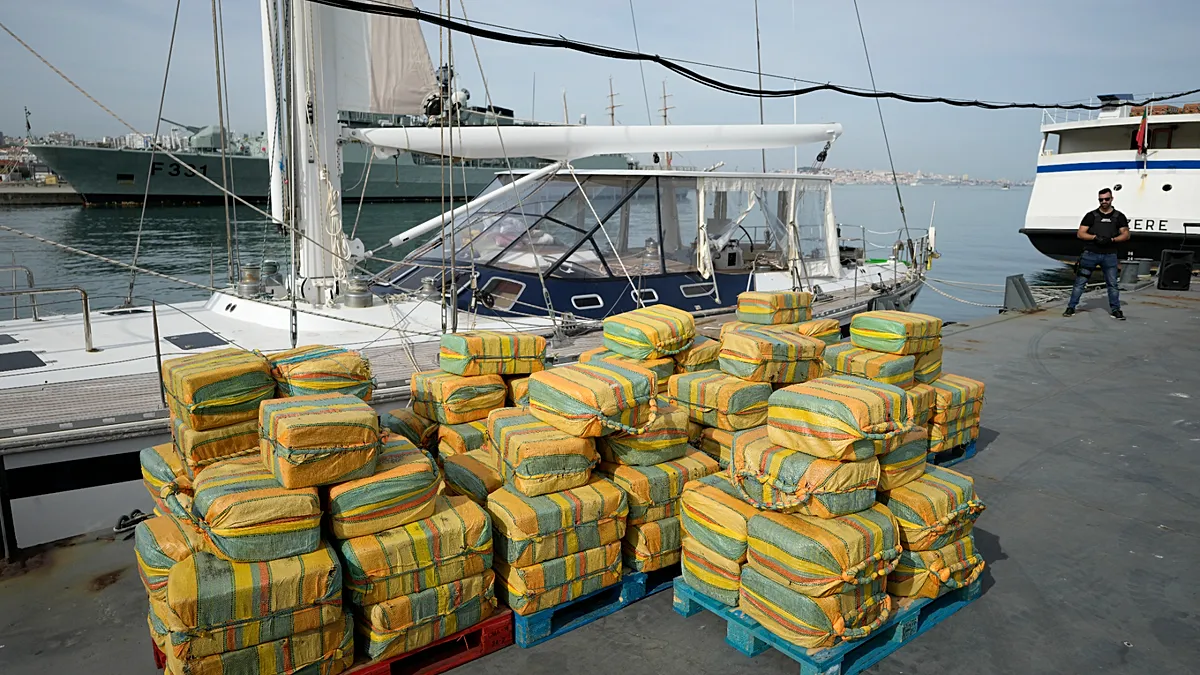
Table of Contents
Portugal Seizes Five Tonnes of Cocaine in Major Atlantic Operation
Poinews.com – Portugal seizes five tonnes of cocaine in what has become one of the most significant drug busts in the country’s recent history. Portuguese authorities successfully intercepted a cargo ship carrying an estimated five tonnes of cocaine off the nation’s Atlantic coastline. The operation, which unfolded in August 2026, involved multiple Portuguese law enforcement agencies working in coordination with international partners to secure the massive haul of illicit drugs.
The intercepted vessel had departed from South America, a common origin point for cocaine shipments bound for European markets. Upon boarding the ship, authorities discovered that the majority of the cocaine was concealed inside a standard shipping container, while additional quantities had been strategically relocated into the ship’s cargo hold. This sophisticated distribution method suggests the shipment was organized by experienced trafficking networks familiar with evading maritime inspections.
International Cooperation Strengthens Maritime Security
The successful operation demonstrated the power of international cooperation in combating transnational drug trafficking. Portugal’s Judiciary Police led the boarding operation, supported by personnel from the Portuguese Air Force and Navy. The mission received additional assistance from Britain’s National Crime Agency and Spain’s National Police, highlighting the collaborative approach European nations are taking to secure their waters against drug smuggling operations.
Three foreign nationals were arrested during the operation: an Italian citizen, a Colombian national, and an Indian citizen. These arrests represent only a fraction of the suspected network behind the shipment, as investigators continue to trace connections between the arrested individuals and the broader trafficking organization. The multinational composition of those detained suggests an international criminal enterprise operating across multiple continents.
Record-Breaking Year for Portuguese Drug Seizures
This latest seizure brings Portugal’s total cocaine confiscations for 2026 to approximately 28 tonnes, according to official authorities. This figure already surpasses the entire amount seized throughout the complete year of 2025, marking a dramatic increase in Portugal’s anti-drug enforcement efforts. The accelerated pace of seizures indicates either heightened trafficking activity or improved detection capabilities along Portugal’s strategic Atlantic shipping routes.
The significance of this operation extends beyond the sheer volume of drugs recovered. Portugal’s geographic position as a gateway between South America and Northern Europe makes it a critical node in the global cocaine supply chain. Each successful interception not only removes drugs from circulation but also disrupts the financial networks that fund organized crime across continents.
Frequently Asked Questions
How much cocaine was seized in this operation?
Portugal seizes five tonnes of cocaine in this major Atlantic bust, with most of the drugs found inside a shipping container and additional quantities in the ship’s hold.
Which countries participated in the operation?
The operation involved Portugal, Britain, and Spain, with Portuguese Judiciary Police, Air Force, and Navy leading the boarding while receiving support from Britain’s National Crime Agency and Spain’s National Police.
How does this compare to previous years?
Portugal has now seized around 28 tonnes of cocaine in 2026 alone, already exceeding the total amount confiscated during the entire year of 2025.
Who were the arrested individuals?
Three foreign nationals were detained: an Italian citizen, a Colombian national, and an Indian citizen, representing the multinational nature of the trafficking operation.
Where did the cargo ship originate?
The intercepted vessel departed from South America, a primary source region for cocaine shipments destined for European markets.
As Portugal continues to strengthen its maritime security infrastructure, this operation serves as a model for international drug enforcement cooperation. The combination of advanced detection technology, coordinated multi-agency responses, and cross-border intelligence sharing has proven effective in intercepting substantial drug shipments before they reach European consumers.