Video. Latest news bulletin | August 30th, 2026 – Evening
As the sun drops below the horizon across most of Europe on the last Saturday of August, millions of viewers settle into the familiar ritual of the evening

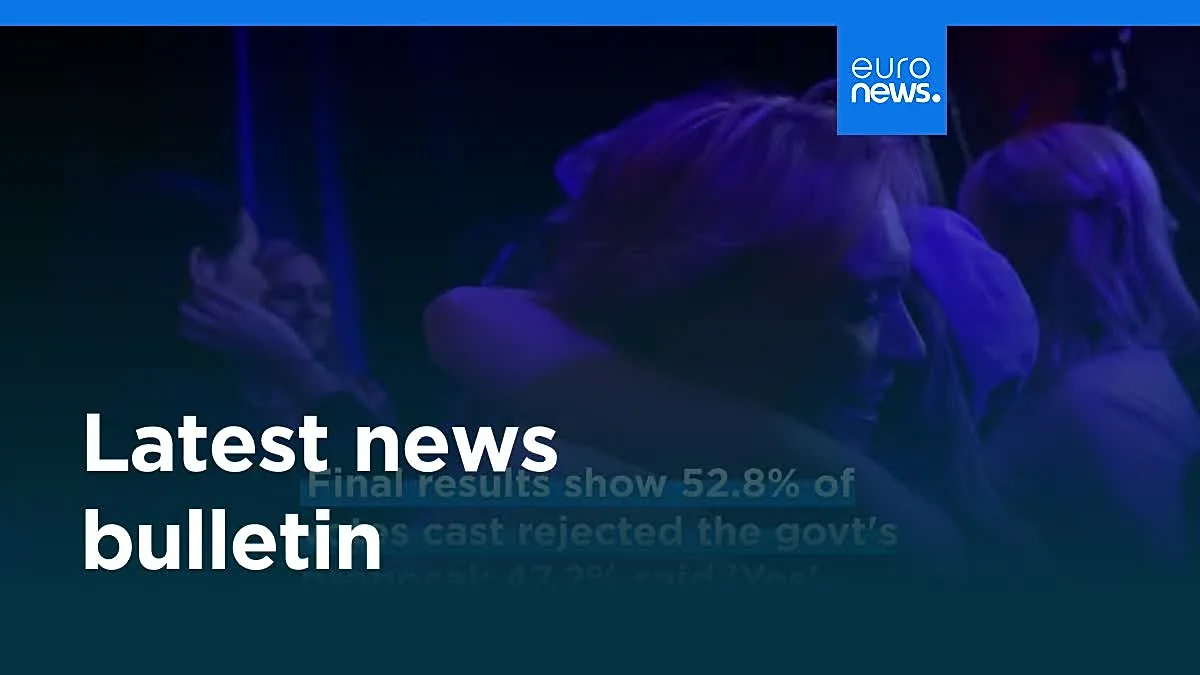
Table of Contents
Evening’s Final Dispatch: How a Single Bulletin Frames a Continent’s Day
Poinews.com – As the sun drops below the horizon across most of Europe on the last Saturday of August, millions of viewers settle into the familiar ritual of the evening news round-up. The August 30, 2026, bulletin arrives at the close of a day that, like every other, has delivered a dense cascade of headlines spanning diplomacy, markets, legislation, and the cultural calendar. What distinguishes this particular dispatch from the dozens of other newscasts airing simultaneously is its editorial compass: a European vantage point, an independence pledge, and a compact format designed to compress a sprawling global news cycle into a few watchable minutes.
The Architecture of a Compact Round-Up
Evening bulletins of this kind have evolved over decades from lengthy, anchor-driven programs into tightly edited summaries that prioritize breadth over depth. The August 30 edition follows that compressed model, threading together stories from world affairs, business, politics, culture, entertainment, and travel within a single short segment. The editorial logic is straightforward: a viewer who has spent the day at work, at school, or managing household responsibilities may have only a narrow window before bedtime to absorb what happened. The bulletin’s job is to fill that window with enough signal to orient the viewer without demanding an hour of attention.
Each category carries its own rhythm. World affairs and politics tend to dominate the opening minutes, where breaking developments in foreign policy, elections, or institutional disputes receive the most airtime. Business segments follow, translating market movements, corporate announcements, and regulatory shifts into plain language. Culture and entertainment items, often lighter in tone, provide a tonal counterweight before the bulletin closes. Travel advisories, seasonal warnings, and transport disruptions round out the package, particularly relevant in late August when summer holiday traffic still lingers on European roads and airports.
Why the European Lens Matters
The bulletin’s stated commitment to a European perspective is not merely a branding choice; it shapes which stories are elevated, which are contextualized, and which are omitted. A story that might receive a single line in a purely domestic broadcast can occupy a full segment here if it touches on cross-border implications for EU member states, Schengen mobility, or continental economic policy. Conversely, events confined to a single nation’s internal politics may be summarized more briefly unless they ripple outward.
This editorial framing carries practical consequences for viewers. A farmer in the Po Valley, a software engineer in Tallinn, and a nurse in Lisbon will each extract different utility from the same bulletin, but all receive a shared frame of reference rooted in continental rather than purely national interests. The independence pledge attached to the format signals that the reporting is not subordinate to any single government’s narrative, a distinction that grows sharper in an era of state-aligned media and algorithmically curated feeds.
Context as a Service, Not a Luxury
One of the bulletin’s explicit functions is to supply the context needed to make sense of a fast-moving day. Headlines arrive in fragments: a minister resigns, a central bank adjusts a rate, a cultural festival opens, a border crossing reopens after weeks of closure. Without the surrounding explanatory tissue, each item risks becoming an isolated data point. The bulletin’s editorial team layers brief background into each segment so that a viewer encountering a story for the first time can grasp its significance without needing to consult a separate explainer.
This contextual function becomes especially important in late August, a transitional month when summer’s slower news tempo gives way to the autumn legislative calendar, back-to-school logistics, and the resumption of full parliamentary sessions across Brussels, Berlin, Paris, and other capitals. Stories that appeared dormant during the holiday lull re-enter the cycle with renewed urgency, and the evening bulletin serves as the first structured re-entry point for many viewers.
The Viewer’s Role in a Fragmented Information Landscape
In an environment where news arrives through push notifications, social-media threads, and twenty-four-hour streaming channels, the scheduled bulletin retains a particular value: it imposes a fixed temporal boundary on the day’s information flow. The viewer knows precisely when the summary begins and ends. There is no infinite scroll, no algorithmic rabbit hole. The format respects the viewer’s time while still delivering the breadth of coverage that a single outlet’s editorial judgment can provide.
For the August 30, 2026, evening audience, that boundary matters. The day’s stories—whatever their specific content—will be distilled, sequenced, and contextualized within minutes, offering a reliable overview of the forces shaping the continent and, by extension, the wider world. Wherever the viewer sits, the bulletin performs the same function: a clear, independent, European-anchored summary that transforms the chaos of a single day into a navigable narrative before the lights go out.
Related Reading
Frequently Asked Questions
What is Latest news bulletin?
Latest news bulletin is the main topic of this guide. The article explains the context, practical details, and next steps readers should understand.
Why does Latest news bulletin matter?
Latest news bulletin matters because readers are looking for a useful answer, not just a short summary. Good content should match search intent and help them decide what to do next.