Video. Rhine River remains low amid ongoing drought in Germany
The Rhine River remains low amid a prolonged drought gripping Germany, raising urgent questions about the resilience of Europe's most heavily trafficked

Rhine River Remains Low Amid Germany’s Persistent Drought Crisis
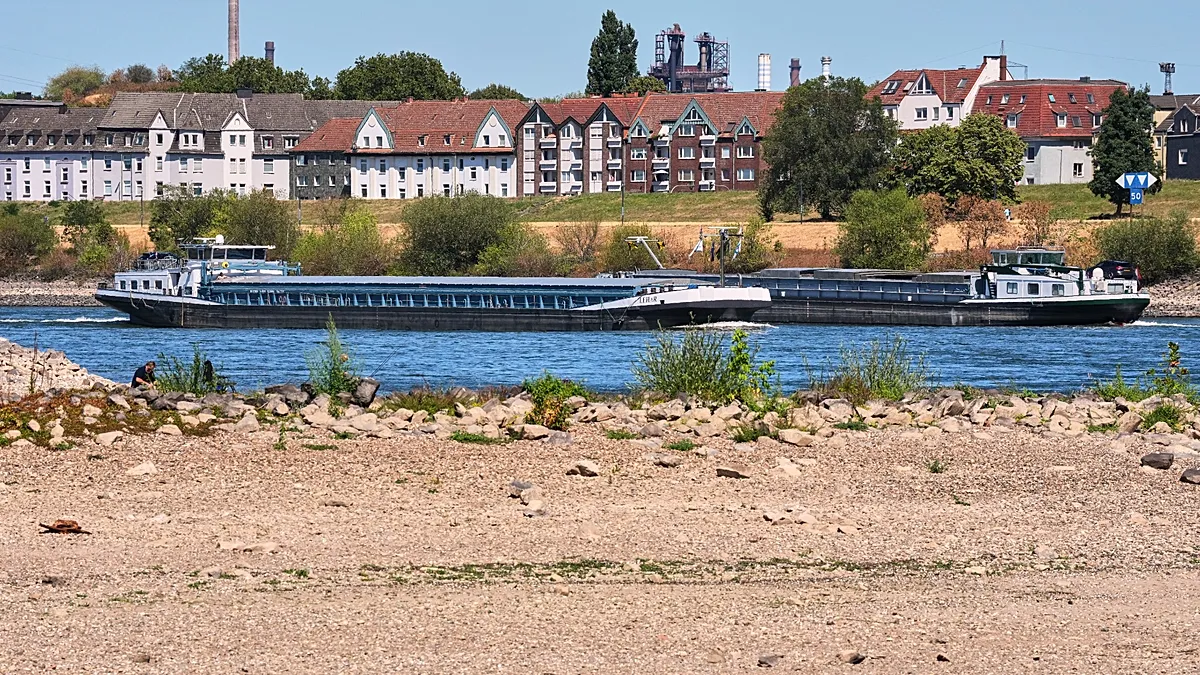
Poinews.com – The Rhine River remains low amid a prolonged drought gripping Germany, raising urgent questions about the resilience of Europe’s most heavily trafficked inland waterway. Aerial footage captured in August 2026 shows the channel narrowed to a fraction of its usual width, with stretches of riverbed lying fully exposed to the sun. For the thousands of vessels that depend on the Rhine for freight movement between the North Sea and the interior of the continent, the shrinking depth translates directly into tighter loading limits, slower transit times, and elevated navigational risk along sections that were once deep and reliable.
Shipping Under Pressure
Inland shipping on the Rhine carries an estimated share of Europe’s bulk cargo — chemicals, grain, construction materials, and fuel — that would be far costlier and more carbon-intensive to move by road or rail. When water levels fall below the thresholds set by the Central Commission for Navigation on the Rhine, operators must reduce draft, split loads across multiple trips, or await water-level recovery before proceeding. Each of these adjustments adds days to delivery schedules and inflates freight rates for downstream industries. Port authorities along the river have reported increased congestion at lock chambers as vessels queue for reduced-capacity passages, compounding the economic strain already felt by logistics firms in the Rhine corridor.
The situation is not confined to a single stretch of water. Tributaries feeding the main channel have also run at diminished flow, meaning that even localized rainfall events are insufficient to restore navigable depth quickly. Water-management agencies monitor daily gauge readings and issue advisories to pilots, but the cumulative deficit from weeks without meaningful precipitation has outpaced the system’s natural recovery capacity.
Exposed Riverbed at Kaub and the Wider Climate Picture
Footage taken from above near the town of Kaub, on the river’s middle course in Hesse, provides a stark visual record of the deficit. Sections of gravel and sand that normally sit several metres beneath the surface are now bare, their textures and colours unmistakable from altitude. Residents and river workers describe the sight as unprecedented in recent memory, though meteorologists caution that comparable episodes occurred during the 2018 and 2022 droughts.
The Rhine River remains low amid a broader pattern of record-shattering extreme weather sweeping western Europe. Sustained periods without rainfall have accelerated the decline in river depth, compounding pressures on inland shipping, agriculture, hydropower generation, and municipal water supply throughout the region.
Climate scientists note that warmer air masses increase evaporative demand from open water surfaces, effectively shrinking river volumes even where precipitation totals appear only marginally below average. The combination of reduced inflow and elevated outflow creates a compounding deficit that is difficult to reverse within a single season. German federal and state agencies have activated drought-response protocols, including temporary restrictions on non-essential water abstraction and accelerated coordination between basin authorities.
Frequently Asked Questions
How low is the Rhine right now, and what does that mean for shipping? Gauge stations along the river report levels well below the minimum navigable depth for fully loaded vessels. Operators are required to reduce draft or split cargo, which increases transit times and freight costs. Full recovery depends on sustained rainfall over multiple weeks.
Will the drought affect drinking water or agriculture in the Rhine basin? Municipal supply systems draw from multiple sources and maintain reserve capacity, so household water is not currently at risk. Irrigated agriculture downstream of major intake points, however, faces tighter allocation limits during peak summer demand.
How long has the Rhine River remained low amid these conditions? The current episode of critically reduced flow has persisted through the summer of 2026, following a spring with below-average precipitation. Agencies project that meaningful recovery will require consecutive weeks of above-normal rainfall, which has not yet materialised.
What can individuals near the river do? Avoid swimming or wading in exposed shallow sections where currents and submerged obstacles remain hazardous. Follow local advisories from water-management authorities and river-traffic control centres for up-to-date gauge readings and navigation restrictions.