‘A close partner’: EU offers muted reaction after Iceland rebuffs accession talks
Iceland's electorate has delivered a narrow but decisive verdict on the country's future relationship with Europe's largest political bloc. In a referendum

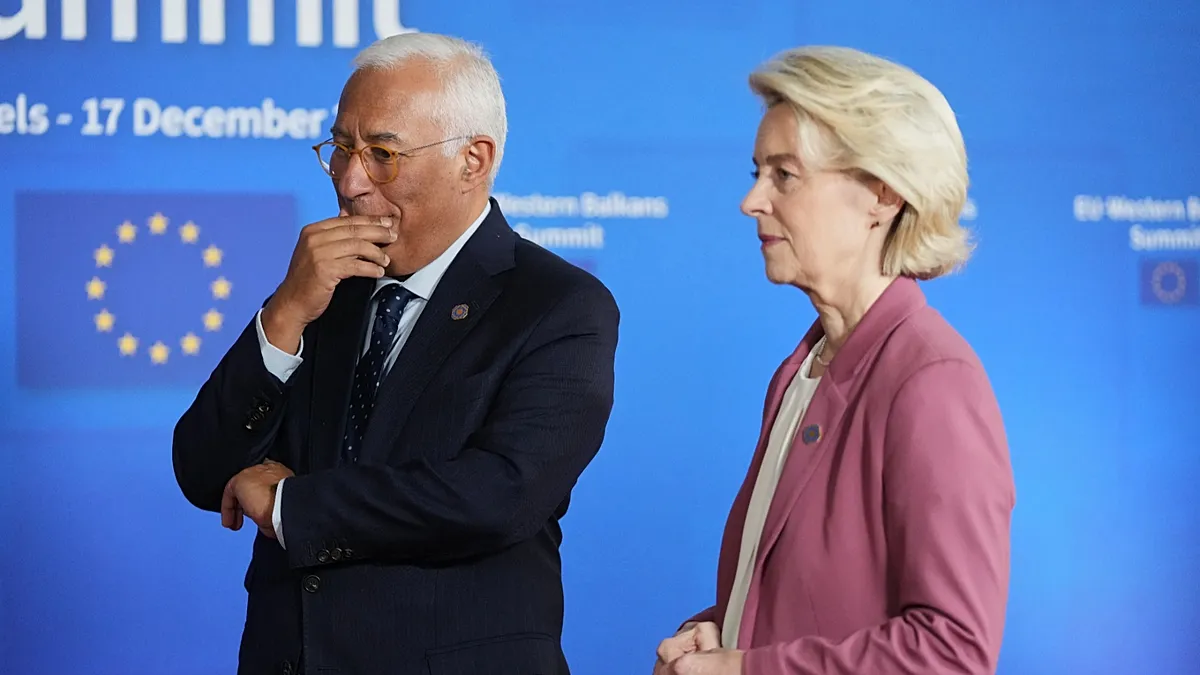
Table of Contents
Iceland Votes to Stay Outside the EU, Leaving Brussels with a Quiet Response
Poinews.com – Iceland’s electorate has delivered a narrow but decisive verdict on the country’s future relationship with Europe’s largest political bloc. In a referendum that split the nation almost evenly, 52.8 percent of voters opted against reopening accession negotiations, while 47.2 percent backed the move. The result, decided by fewer than six percentage points, effectively closes the door on formal membership talks for the foreseeable future and strips the European Union of what many in Brussels had regarded as its most straightforward enlargement prospect in years.
The European Commission’s response was characterised by restraint. A spokesperson issued a brief statement acknowledging the outcome without elaboration.
“The European Commission takes note of the outcome of Iceland’s referendum. The Commission respects the choice of the Icelandic people. Iceland remains a close partner of the European Union.”
The measured tone reflected both diplomatic protocol and the practical reality that the Commission, which oversees the accession process, had deliberately kept a low profile throughout the campaign. In the weeks before the vote, officials signalled their willingness to craft what they called “creative” solutions to the two chapters that had always proved most contentious: fisheries and agriculture. Those two policy areas remain excluded from Iceland’s existing arrangement, which grants the Nordic island broad access to the single market while carving out the Common Fisheries Policy and the Common Agricultural Policy.
A Relationship Built on Integration, Not Membership
Iceland’s position is unique among European states. Through the European Economic Area and bilateral agreements, Reykjavík already participates in most aspects of the single market. The previous round of accession talks, suspended in 2013, left the fisheries and agriculture chapters untouched, meaning that even a successful negotiation would have required Iceland to surrender significant sovereign control over its coastal waters and farming sector. For a nation whose identity is deeply intertwined with its fishing industry and rural communities, that trade-off proved difficult to sell to voters.
Prime Minister Kristrún Frostadóttir had pledged before the vote that she would set aside the membership question entirely for the remainder of her term should the proposal fail. On Sunday, following the result, she framed the outcome in terms of respecting the minority’s perspective.
“47% of the population was interested in it. I think it is important that we go into the coming months and weeks and respect that point of view.”
Costa and Frostadóttir Exchange Reassurances
European Council President António Costa spoke by message with Frostadóttir in the aftermath of the vote. According to Costa’s spokesperson, both leaders expressed their wish to deepen the bilateral relationship between the EU and Iceland.
“President Costa stressed that the EU fully respects the democratic choice of the Icelandic people in today’s referendum. Iceland remains one of the EU’s closest and most trusted partners.”
The language of “close partnership” is not merely diplomatic formula. Iceland’s economic ties to the bloc run far deeper than most non-member states enjoy, and the practical architecture of trade, labour mobility, and regulatory alignment will continue regardless of the referendum outcome. What changes is the political trajectory: the question of formal membership, at least under the current government, is shelved.
Enlargement Momentum Tested
The Icelandic result lands at a moment when the EU’s enlargement agenda has gained unusual political salience. After years of stagnation, the drive to expand the bloc jumped to the top of the political agenda following Russia’s invasion of Ukraine in 2022. Candidate countries from the Western Balkans and Eastern Europe now occupy a far more prominent place in Brussels’s strategic calculus than they did a decade ago.
Montenegro currently leads the pack, having provisionally closed 18 of the 33 accession chapters. The country aspires to become the EU’s 28th member state by 2028, an ambition that has given rise to the “28 by 28” slogan. Even if Brussels stops short of committing to fixed deadlines, officials recognise the urgency of delivering tangible benefits to candidates before patience erodes.
In the lead-up to Iceland’s vote, many diplomats and Commission officials had viewed the Nordic island as a five-star candidate whose accession would have demonstrated that enlargement could still produce quick, low-friction successes. Pairing a smooth Icelandic entry with the more complex Montenegrin process was seen as a potential strategy to keep momentum alive across the candidate spectrum. That pairing is now off the table.
The Commission is nonetheless preparing reforms designed to extend certain EU programmes and benefits to candidate countries before they achieve full membership. Whether those measures can compensate for the lost symbolic and practical value of an Icelandic accession remains an open question. What is clear is that the bloc’s enlargement narrative now rests more heavily on the Western Balkan and Eastern European files, and that the narrow Icelandic margin of defeat will be cited by sceptics as evidence that even the most integrated neighbours find the membership bargain unpalatable.
Related Reading
Frequently Asked Questions
What is A close partner?
A close partner is the main topic of this guide. The article explains the context, practical details, and next steps readers should understand.
Why does A close partner matter?
A close partner matters because readers are looking for a useful answer, not just a short summary. Good content should match search intent and help them decide what to do next.