Relief and sorrow in Iceland after EU membership talks referendum fails
Icelanders woke on Sunday to a country split almost exactly down the middle. The island nation's Saturday referendum produced one of the tightest political

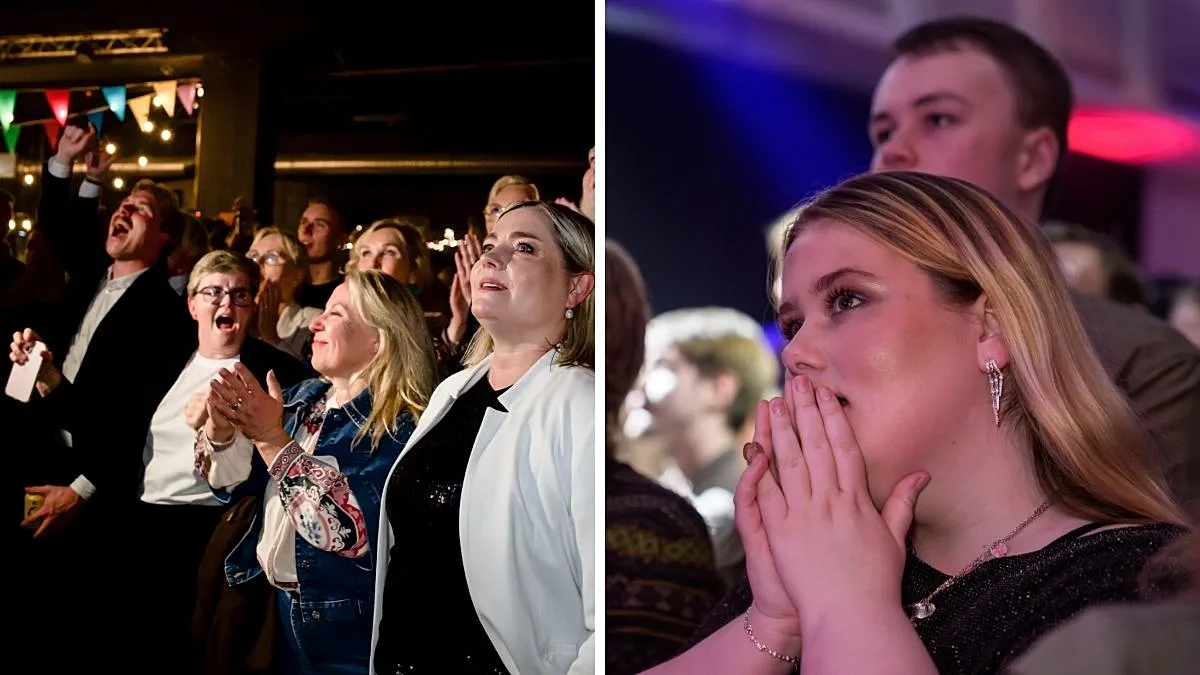
Table of Contents
Iceland Stays Outside the EU After Narrow Referendum Defeat for Accession Talks
Poinews.com – Icelanders woke on Sunday to a country split almost exactly down the middle. The island nation’s Saturday referendum produced one of the tightest political contests in its modern history, with 52.8 percent of voters rejecting the resumption of membership negotiations with the European Union and 47.2 percent backing continued talks. The margin, confirmed by public broadcaster RÚV as counts rolled in through the night, leaves Iceland firmly outside the EU’s formal accession process and preserves its singular position as a sovereign European state that has never joined the bloc.
The vote was not a surprise to those who had tracked the campaign’s intensity, but the closeness of the result underscored how deeply the question of European integration divides Icelandic society. Crowds had gathered in Reykjavík’s public squares and bars to watch the tallies unfold, and the atmosphere shifted rapidly as precincts reported in. Supporters of continued talks and opponents of accession mingled in a charged mix of celebration and quiet disappointment, each side reading the final numbers through the lens of years of heated public debate.
A Divided Nation Reacts
Among those who had campaigned against reopening negotiations, the sense of vindication was tempered by exhaustion. Skuli Olafsson Skuli, a pastor in the capital, described his reaction to the outcome in measured terms.
“It has been quite aggressive, this discussion,” he said. “But now I hope the opposing parties will find a way to make this community here in Iceland a little bit better just by using our own methods and, of course, those relations we have with Europe, America, and Asia.”
On the other side of the aisle, the emotional toll of a lost campaign was visible. Anna Maria Bogadottir, an artist who had supported the “Yes” side, struggled to process the result.
“It’s hard to grasp that it’s a no,” she said, describing herself as being “in a kind of denial.”
Government Response and the Question of Mandate
Prime Minister Kristrún Frostadóttir, who leads a centre-left government, addressed the press on Sunday morning. She pledged to honour the democratic outcome while drawing attention to the unusually high turnout that had characterised the vote.
“It’s obvious that close to half of the country wanted to continue these negotiations, but over half of the population did not. We will respect that result,” Frostadóttir stated. “The fact that we got people to the table on a matter like this is extremely important for us. It gives us a stronger mandate to make a decision on this matter.”
The prime minister’s framing was deliberate: by emphasising participation rather than victory, she sought to defuse the partisan anger that had built over months of campaigning. The high turnout itself became a point of civic pride, with commentators noting that Icelanders had turned out in numbers that exceeded expectations for a single-issue referendum.
International Reactions
The result drew immediate commentary from across the European political spectrum. Former Icelandic president Ólafur Ragnar Grímsson, who had lent his considerable public stature to the “No” campaign, posted on the social platform X that the “nation has spoken,” a terse endorsement of the outcome.
Further afield, right-wing leaders in Britain and France seized on the result as validation of their own Eurosceptic positions. Nigel Farage, leader of Reform UK and a central figure in the 2016 Brexit campaign, congratulated Iceland on what he described as “voting to keep their independence.” In France, Marine Le Pen offered a longer statement that framed the Icelandic vote within a broader critique of European federalism.
“At a time when some are pushing for greater federalism and the transfer of sovereignty to the European Commission, this vote serves as a reminder that another Europe is possible – a Europe of free, sovereign nations cooperating voluntarily on matters of common interest,” Le Pen wrote.
The European Commission, for its part, issued a brief and diplomatically neutral statement. It said it “takes note of the outcome” and that it “respects the choice of the Icelandic people,” language that acknowledged the result without contesting it or signalling any intention to pressure a future government to reverse course.
Background: A Decade-Long Relationship with the EU Question
Iceland’s entanglement with the European Union dates back to the aftermath of the 2008 global financial crisis. The island’s banking system collapsed that autumn, and the government, facing an existential economic shock, applied for EU membership in 2009 as a route to deeper institutional support and market integration. The Commission issued a favourable opinion on the application in February 2010, clearing the way for formal accession negotiations.
Those talks, however, were short-lived. A change of government brought a new administration with a Eurosceptic orientation, and in 2013 the Icelandic parliament voted to suspend negotiations indefinitely. Since then, Iceland has maintained its economic ties to Europe primarily through the European Economic Area agreement and bilateral arrangements with Norway, while retaining full sovereignty over its fisheries, energy policy, and foreign affairs.
The Saturday vote represented the first serious attempt since 2013 to re-engage the membership question through a direct public mandate. Its narrow failure suggests that, while a substantial minority of Icelanders see value in deeper EU integration, the majority still prefers the flexibility of operating outside the bloc’s legal and political architecture. For now, Reykjavík’s relationship with Brussels will continue to be shaped by trade agreements, EEA participation, and the quiet diplomacy of a small nation that has chosen, once again, to chart its own course.
Related Reading
Frequently Asked Questions
What is Relief and sorrow in Iceland after?
Relief and sorrow in Iceland after is the main topic of this guide. The article explains the context, practical details, and next steps readers should understand.
Why does Relief and sorrow in Iceland after matter?
Relief and sorrow in Iceland after matters because readers are looking for a useful answer, not just a short summary. Good content should match search intent and help them decide what to do next.