Ice up to 1 kilometre thick: Swiss meteorite sheds new light on the Ice Age
When a farmer pulled a strange iron chunk from his soil near Lake Biel on 9 May 1984, he had no idea he was holding a piece of the penultimate Ice Age. That

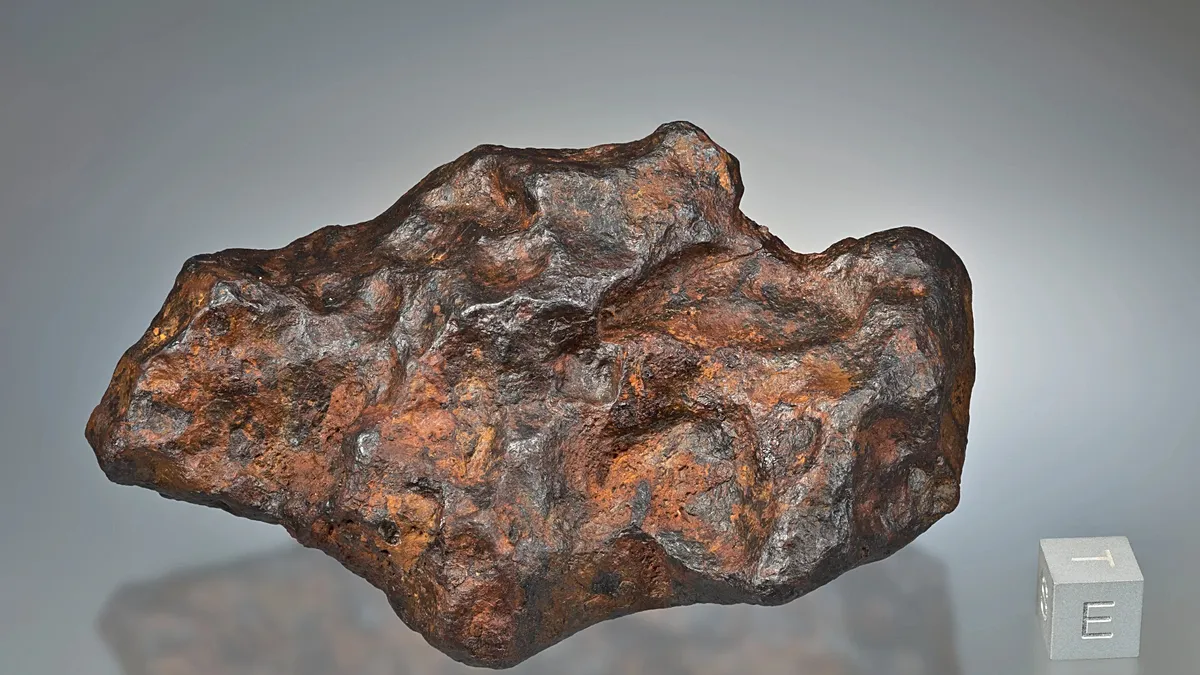
Table of Contents
A 15-Kilogram Rock in a Bernese Field Unlocked a Window Into Both Deep Space and Deep Ice
Poinews.com – When a farmer pulled a strange iron chunk from his soil near Lake Biel on 9 May 1984, he had no idea he was holding a piece of the penultimate Ice Age. That single 15-kilogram fragment, found in a working field above the canton of Bern, would eventually anchor one of the most consequential meteorite strewn fields in all of Europe — and, decades later, reveal how thick the glaciers once were over the Swiss Plateau.
From One Odd Stone to More Than 2,200 Fragments
The initial find sat unidentified for a time before laboratory analysis confirmed its extraterrestrial origin: pure iron, forged in the core of a long-vanished celestial body. What followed was a slow, then accelerating, accumulation of additional pieces across the Twannberg and Mont Sujet ridges of the Bernese Jura. Early recovery relied on chance sightings and casual curiosity. The turning point came when systematic sweeps with metal detectors were introduced, multiplying the yield of known fragments by orders of magnitude.
“Ten years ago we had 400 fragments, now there are more than 2,200,” explained geologist Beda Hofmann of the Natural History Museum in Bern to Swiss public broadcaster SRF.
That figure — over two thousand catalogued pieces — reframes the event itself. The object did not strike the ground as one intact bolide. It disintegrated in the upper atmosphere, showering debris across roughly six kilometres of forested ridge and pasture. Researchers now estimate the parent body measured somewhere between four and twenty metres across and carried a mass of at least 250 tonnes when it entered Earth’s atmosphere approximately 175,000 years ago.
An Extremely Rare Class of Iron Meteorite
Taxonomically, the Twannberg specimen belongs to the iron-meteorite family, but its chemistry places it in the IIG subgroup — a classification so uncommon that only a handful of examples are recognised worldwide. Two compositional markers set it apart: an unusually low nickel concentration and a comparatively elevated phosphorus fraction. To date, no other IIG iron meteorite has been confirmed anywhere in Europe, making the Bernese Jura collection singular on the continent.
For planetary scientists, each additional fragment sharpens the picture of how differentiated bodies formed and evolved during the solar system’s first few hundred million years. Iron meteorites like this one are essentially exposed cores of protoplanets that were shattered by ancient collisions; their internal metallographic textures record cooling histories spanning billions of years. The sheer number of available pieces from a single fall event gives researchers a statistical sample rather than a single data point, a distinction that matters enormously for modelling core differentiation.
Glacial Proxies Written in Meteorite Iron
The second, equally compelling, line of inquiry is palaeoglaciological. Several of the most recently located fragments surfaced at elevations well above those of earlier finds. Because the parent event predates the last glacial maximum by roughly 25,000 years, the only plausible mechanism for moving heavy iron pieces upslope over millennia is glacial transport. Experts therefore interpret the high-altitude placements as evidence that, around 175,000 years ago, vast ice sheets blanketed large portions of the Swiss Plateau — in places exceeding one kilometre in thickness.
In practical terms, the meteorite fragments function as double witnesses of deep time: born in the void between stars, delivered to Earth by gravity, then repositioned by continental-scale ice flows. They encode both the composition of a destroyed protoplanet and the geometry of a vanished glacier.
The Search Continues — and It Is Harder Than It Sounds
Researchers and amateur meteorite hunters still comb the Twannberg and Mont Sujet slopes with handheld detectors, but the task is far from straightforward. The Jura soils are littered with anthropogenic metal — aluminium foil, rusted nails, wire fragments — that produce signals indistinguishable from a meteorite fragment until the object is physically excavated and examined. Moreover, any systematic search requires a permit issued by the competent cantonal archaeological authority, a bureaucratic step that tempers the pace of new discoveries.
Each additional piece recovered, however small, narrows the uncertainty around the original body’s size, trajectory, and atmospheric breakup altitude. It also refines the palaeoglacial reconstruction, adding another constraint on where the ice margin sat and how far it advanced. The Bernese Jura field, in other words, remains an open archive — one that speaks simultaneously to the birth of planets and the sculpting of a landscape that no longer exists.
Related Reading
Frequently Asked Questions
What is Ice up to 1 kilometre thick?
Ice up to 1 kilometre thick is the main topic of this guide. The article explains the context, practical details, and next steps readers should understand.
Why does Ice up to 1 kilometre thick matter?
Ice up to 1 kilometre thick matters because readers are looking for a useful answer, not just a short summary. Good content should match search intent and help them decide what to do next.