South African airline Airlink defends dramatic stadium flyover
On a packed weekend in late August 2026, two commercial jets belonging to South African carrier Airlink threaded their way through the air above DHL Stadium

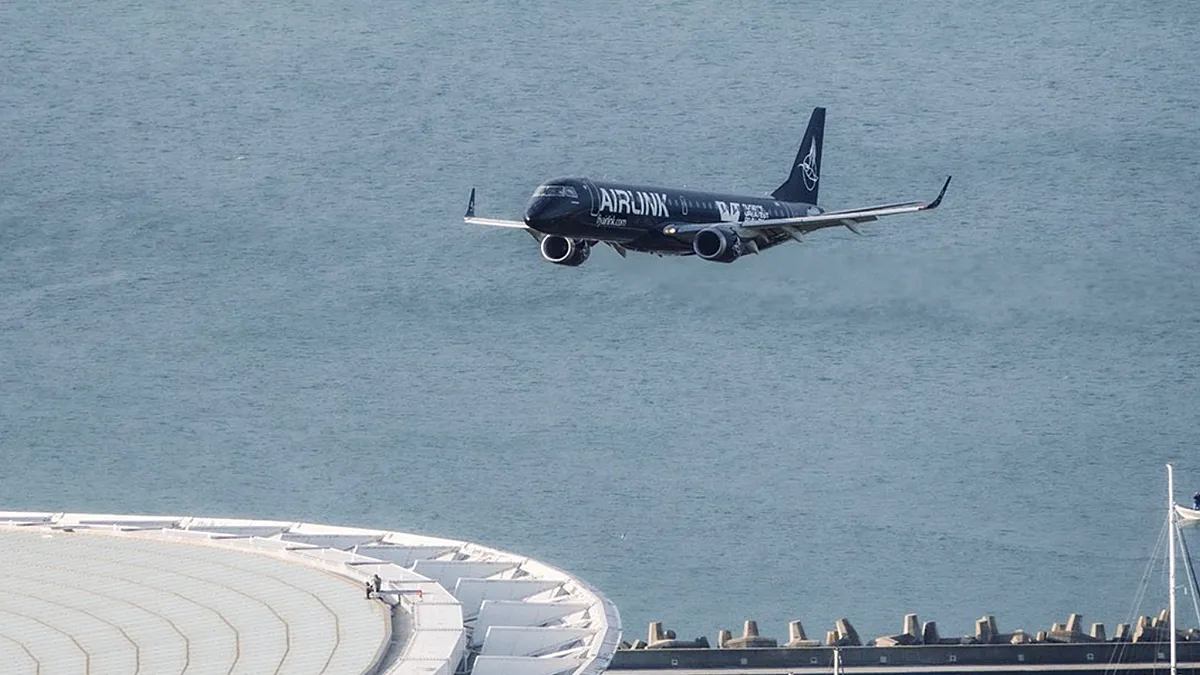
Table of Contents
Two Jets at 45 Feet: Airlink’s Cape Town Stadium Flyover Sparks Debate Over Low-Altitude Showmanship
Poinews.com – On a packed weekend in late August 2026, two commercial jets belonging to South African carrier Airlink threaded their way through the air above DHL Stadium in Cape Town, skimming the roof of the venue by a margin measured in mere metres. The manoeuvre took place ahead of a rugby test match pitting South Africa against New Zealand, and the spectacle drew roars from a crowd numbering more than 50,000 spectators. What followed was less a celebration than a split in public opinion: some viewers marveled at the audacity, while aviation professionals and safety-minded observers raised pointed questions about whether such a display belongs in the modern era of commercial flight.
The Numbers Behind the Flyover
Flight-tracking data compiled by Flightradar24 placed the lead aircraft at an altitude of roughly 41 to 46 feet above the stadium’s roofline during the pass. At that height, the jets were travelling at approximately 150 knots — a speed that translates to around 278 kilometres per hour. The margin between the fuselage and the structure below was, by any operational standard, extraordinarily thin. For context, typical commercial jet cruise altitude sits above 35,000 feet; even on approach to a runway, aircraft are generally well above 1,000 feet until the final moments of landing. A pass at 45 feet over a structure filled with tens of thousands of people sits far outside the envelope of routine airline operations.
Stadium flyovers are not without precedent in South African sporting culture. Rugby, in particular, carries a tradition of aerial displays tied to match-day spectacle, and the DHL Stadium — home of the Stormers and a regular venue for international fixtures — has hosted similar events in prior seasons. Yet the combination of a full house, a high-profile international opponent, and the proximity of the aircraft to the roofline gave this particular flyover an outsized footprint on social media within hours of the event.
Airlink’s Defence
The airline moved quickly to address the wave of commentary that followed. In a statement issued on Sunday, Airlink acknowledged the public conversation while framing the manoeuvre as a carefully engineered operation rather than an impromptu stunt.
“Airlink notes the concerns expressed in various social media and online forums regarding yesterday’s formation flyby over Cape Town’s DHL Stadium. The flight demanded careful planning and rehearsal, as it required navigating at low altitude at around 150 knots. The South African Civil Aviation Authority and Air Traffic Navigation Services provided valuable guidance, approval and support to ensure a safe flyby.”
The carrier also posted accompanying video and still imagery to its X account, captioning the material with the terse phrase: “Planning. Precision. Performance.” The messaging was clear: the airline positioned the flyover as a product of institutional oversight and professional execution, not a reckless display.
Government Applause
Gayton McKenzie, South Africa’s Minister for Sports, Arts and Culture, offered an unambiguous endorsement. Speaking publicly on the event, he praised the pilots’ skill and the overall effect on the crowd.
“It’s a well known fact that we have the best pilots in the world, that was spectacular, next time I will ask the pilots to land on the field, prepare to be amazed further.”
The minister’s remarks underscored the cultural weight such displays carry in South African rugby. For many fans, the sight of jets sweeping over the stadium before a test match is as much a ritual as the sport itself — a moment of national pride layered onto the competitive fixture. Government endorsement of that ritual, however enthusiastic, also signals institutional comfort with low-altitude operations over densely populated venues.
A Pilot’s Unease
Not every voice in the aviation community shared that comfort. Scottish pilot Scott Bateman, writing publicly on social media, described his reaction to the footage as one of being left “aghast.” He pointed to the altitude figures and noted the broader reaction among working aviators.
“The lead aircraft reportedly cleared the stadium roof by around 40–50 feet. Hundreds of professional aviators around the world have looked at those images and expressed concern. That deserves more than ‘nothing to see here’.”
Bateman went further, offering a broader philosophical point about how aviation earns its safety record. He argued that the industry’s reputation for reliability was not built by celebrating every successful outcome, but by interrogating every near-miss and every marginal decision.
“It became safe by relentlessly examining the things that nearly didn’t.”
That framing places the Airlink flyover within a longer conversation about risk tolerance in commercial aviation. When an operation succeeds, the instinct is to celebrate; when it fails, the consequences over a stadium roof filled with 50,000 people would be catastrophic. The question Bateman and others raise is not whether this particular pass was dangerous, but whether the culture surrounding such displays adequately weighs the cost of failure against the spectacle of success.
What Comes Next
No formal investigation has been announced, and the South African Civil Aviation Authority has not issued a public finding beyond its stated role in approving the flight. Airlink has not indicated whether similar flyovers are planned for upcoming fixtures or sporting events. For now, the debate continues in the space between a cheering crowd and a pilot’s quiet unease — a tension that sits at the heart of every question about how much spectacle the skies above a stadium can safely absorb.
Related Reading
Frequently Asked Questions
What is South African airline Airlink defends dramatic?
South African airline Airlink defends dramatic is the main topic of this guide. The article explains the context, practical details, and next steps readers should understand.
Why does South African airline Airlink defends dramatic matter?
South African airline Airlink defends dramatic matters because readers are looking for a useful answer, not just a short summary. Good content should match search intent and help them decide what to do next.