Hungary says it has met all conditions to unlock full €10bn EU Recovery Fund
Budapest announced on Monday that Hungary says it has met all conditions attached to the final tranche of pandemic-era recovery financing, closing out a

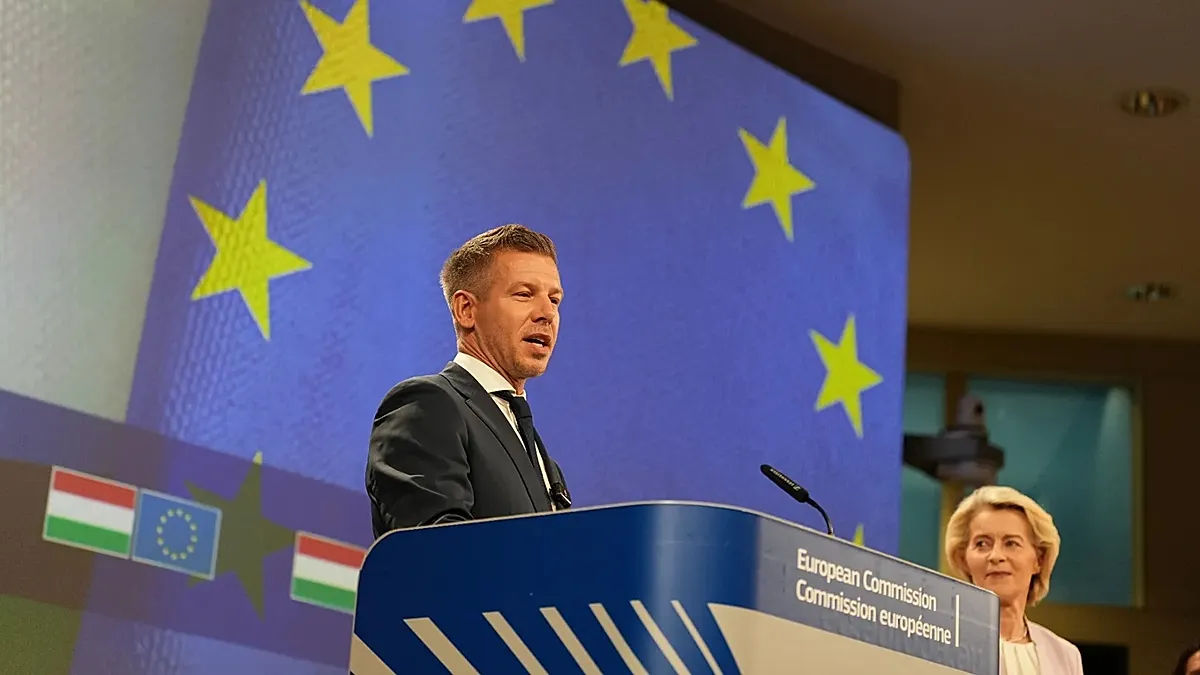
Table of Contents
Hungary Says It Has Met All EU Recovery Conditions
Poinews.com – Budapest announced on Monday that Hungary says it has met all conditions attached to the final tranche of pandemic-era recovery financing, closing out a years-long standoff with Brussels over billions of euros frozen by rule-of-law disputes. Transport and Investment Minister Dávid Vitézy posted the confirmation on social media, stating that every milestone required to access the full €10 billion earmarked under the European Union’s post-coronavirus recovery programme has now been satisfied. The compliance deadline expired on Monday, representing the last gate in a multi-year negotiation that had locked substantial portions of Hungary’s EU budget allocation.
From Election Mandate to Legislative Overhaul
The unlock follows a dramatic political reset in Hungary. Péter Magyar, who captured a landslide at the April general election, placed the recovery of frozen EU money at the centre of his campaign platform. Under Viktor Orbán’s sixteen-year government, large sums of European funding had been withheld or delayed amid persistent disagreements over judicial independence, media freedom, and anti-corruption safeguards. Magyar’s administration entered office with an explicit mandate to reverse that trajectory and repatriate the withheld resources.
In May, Magyar and European Commission President Ursula von der Leyen struck a political agreement to release a combined €16.4 billion in previously frozen EU funding. That figure spans two distinct streams: €10 billion drawn from the Recovery and Resilience Facility — the bloc’s joint-borrowing instrument designed to jump-start economies after the coronavirus pandemic — and a further €6.4 billion allocated through the Cohesion Funds, which carry no near-term repayment deadline and will be disbursed over a longer horizon.
Satisfying the conditionality demanded far more than a political handshake. Hungary was obligated to deliver on 27 so-called “super milestones” alongside more than 100 additional milestones spanning governance, justice, and public procurement. To meet those requirements, the Hungarian Parliament amended over 100 statutes during the summer months, with the bulk of the changes targeting the judicial architecture and the institutional framework for combating corruption. Budapest also revised its National Recovery Plan — the country-specific roadmap governing how recovery money is spent — incorporating measures aimed at modernising the national energy grid, upgrading railway infrastructure, and expanding the rental housing stock.
“The prime minister instructed us not to leave a single euro cent behind and to bring all the resources home,” Vitézy said. “I can report: we have succeeded.”
What Happens Next and Why Timing Mattered
Clearing the milestones does not mean cash lands in Hungarian accounts immediately. Recipient countries, Hungary included, must formally submit their payment requests in September. Following a technical evaluation by the Commission, the funds are expected to be released later this year. The Recovery and Resilience Facility itself expires at the end of the current calendar year, making the timing of Monday’s deadline particularly consequential: had Hungary missed the window, the €10 billion tranche would have lapsed without recourse.
“By using EU funds, Hungary can return to the path of development after years of lagging behind, and catch up with countries in the region,” Vitézy added, framing the disbursement as a corrective to a period of relative economic stagnation.
The Recovery and Resilience Facility sits at the heart of NextGenerationEU, the €750 billion joint-borrowing package the Commission launched in 2020 to cushion the economic shock of the pandemic and steer member states toward cleaner, more digital economies. Monday’s deadline represents the final phase of disbursements under that instrument. For Hungary, the unlock is symbolic as much as financial: it signals that the country has, at least formally, brought its governance framework into alignment with the conditionality Brussels attached to the money.
“NextGenerationEU helped protect our citizens and economies at a time of great uncertainty,” von der Leyen said in a statement marking the legal deadline. “It accelerated the clean and digital transitions, cutting Europe’s reliance on imported energy. The reforms and the resilience will benefit Europe.”
Frequently Asked Questions
When will Hungary actually receive the €10 billion? Payment requests are due in September. After a technical evaluation by the European Commission, disbursement is expected later this year. The exact date depends on the Commission’s review timeline.
What happened if Hungary had missed the Monday deadline? The Recovery and Resilience Facility expires at the end of the current calendar year. Missing the window would have caused the €10 billion tranche to lapse permanently, with no mechanism to recover it.
How much total EU funding is now unlocked for Hungary? The May political agreement covers €16.4 billion in aggregate: €10 billion from the Recovery and Resilience Facility plus €6.4 billion from the Cohesion Funds. The latter stream has no near-term repayment deadline and will be disbursed over a longer horizon.
What legislative changes did Hungary make to qualify? The Hungarian Parliament amended over 100 statutes during the summer, primarily targeting the judicial architecture and anti-corruption institutional framework. Budapest also revised its National Recovery Plan to incorporate energy-grid modernisation, railway upgrades, and rental-housing expansion.