Europol museum theft alert reaches Spain’s Villena a day after historic heist
The Europol museum theft alert reaches its intended audience eleven hours after the damage is done. That is the uncomfortable arithmetic at the heart of

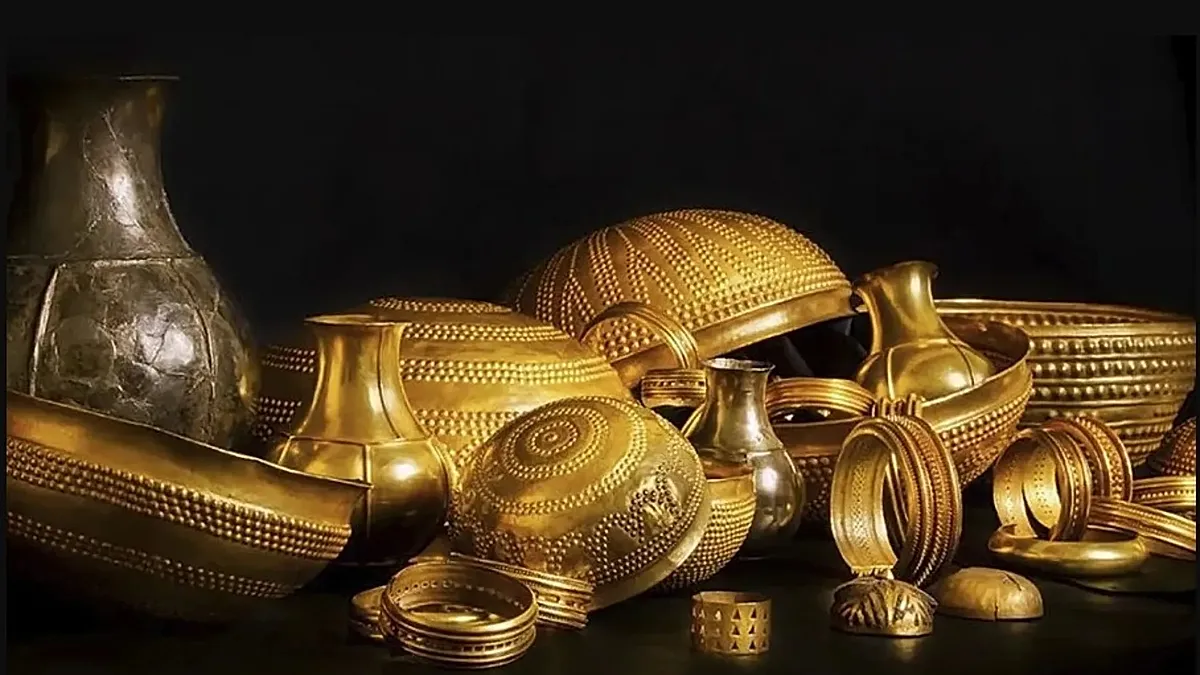
Table of Contents
Europol Museum Theft Alert Reaches Villena Too Late
Poinews.com – The Europol museum theft alert reaches its intended audience eleven hours after the damage is done. That is the uncomfortable arithmetic at the heart of Spain’s latest cultural-crisis story: a formal warning about escalating museum robberies across Europe arrived at the Villena Museum (MUVI) in Alicante province on Friday afternoon, 28 August, roughly eleven hours after masked thieves had already emptied the display cases housing the Treasure of Villena — one of Europe’s most important Bronze Age gold hoards. The sequence of timestamps, now visible in a chain of forwarded emails, has triggered a sharp political dispute over which ministry or regional office failed to relay the message sooner.
The Break-in and What Was Taken
Thieves forced entry into the museum building in the small hours of Saturday, 27 August. The alarm registered at 5:16, but by then the intruders had already selected their targets and departed with the bulk of the Treasure. The collection, assembled over centuries of archaeological work in the Villena area, comprises gold ornaments, weapons, and ritual objects dating to approximately the 13th century BCE. Its density of precious metal and its public visibility make it exactly the kind of target that organized theft networks prioritize — the very profile Europol had been tracking in its continental survey.
Investigators remain working to recover the missing pieces and identify those responsible. The Europol report itself notes that once gold is melted down, tracing individual artifacts becomes extraordinarily difficult. That detail lends the inquiry an urgency beyond simple recovery: every additional hour raises the probability that the pieces are already being recast into unrecognizable bullion.
What the Report Warned and Who It Was Meant For
Three days before the break-in, on 24 August, Europol — the European Union’s dedicated law-enforcement coordination agency — published a report documenting a shift in how criminals approach European museums. The document warned that thefts were growing “more aggressive, with a shift towards violent and forceful methods,” and identified several factors that make museum collections attractive: their public visibility, their physical accessibility, and the widespread perception that museum security protocols are less rigorous than those guarding jewellery shops or private vaults. Precious metals, the report stressed, hold special appeal because they can be melted and recast, effectively erasing provenance.
The report was designed to reach regional and local authorities so that museums could review their own protective measures. In practice, the communication did not reach MUVI until Friday, 28 August, between 14:00 and 14:05 — after the alarm had already sounded and the Treasure was gone.
The Blame Game Between Madrid and Valencia
The gap between the report’s publication and its arrival at the museum has produced a pointed exchange between the Spanish capital and the Valencian regional government. The Generalitat maintains that it was physically unable to relay the warning earlier because the Spanish Ministry of Culture had not forwarded the document to the autonomous communities until after the theft had already occurred. Officials at the Department of Education, Culture and Universities stated that the ministry dispatched the alert to all autonomous communities on Friday, 28 August, at 13:18, with instructions that each region distribute it among its museums. The Generalitat’s own museums service then passed the communication to MUVI less than an hour later.
On the parliamentary floor of Les Corts, Nando Pastor, the Popular Party’s spokesperson, sided with the Valencian administration. He argued that the regional government could not have acted on information that had never reached its desks.
“The Generalitat could not have passed on information it simply had not received.”
In Villena itself, the reaction was less defensive and more rueful. Mayor Fulgencio Cerdán expressed regret that the warning had not arrived before the weekend, when the museum would have had the opportunity to reinforce its perimeter, adjust staffing, or temporarily restrict access to the Treasure display cases.
“I’m sure we could have done more,”
he told La Vanguardia, a remark since cited in local council meetings and regional press coverage as evidence that the delay was not merely bureaucratic but consequential.
FAQ
When did the Europol museum theft alert reaches its final destination? The alert reached MUVI between 14:00 and 14:05 on Friday, 28 August 2026, approximately eleven hours after the alarm triggered at 5:16 on Saturday morning.
What was stolen from the Villena Museum? Thieves took the bulk of the Treasure of Villena, a Bronze Age gold hoard comprising ornaments, weapons, and ritual objects dating to roughly the 13th century BCE.
Who is responsible for distributing Europol reports to Spanish museums? The Spanish Ministry of Culture forwards the documents to the autonomous communities, which then relay them to individual museums within their jurisdictions.
Is the investigation still open? Yes. Authorities have confirmed the inquiry remains active, though the Europol report cautions that melted gold is extremely difficult to trace back to specific artifacts.