Italy rail strike: Here’s what passengers need to know
Millions of commuters, tourists, and intercity travellers across Italy will find their journeys disrupted when railway workers stage a full-day walkout

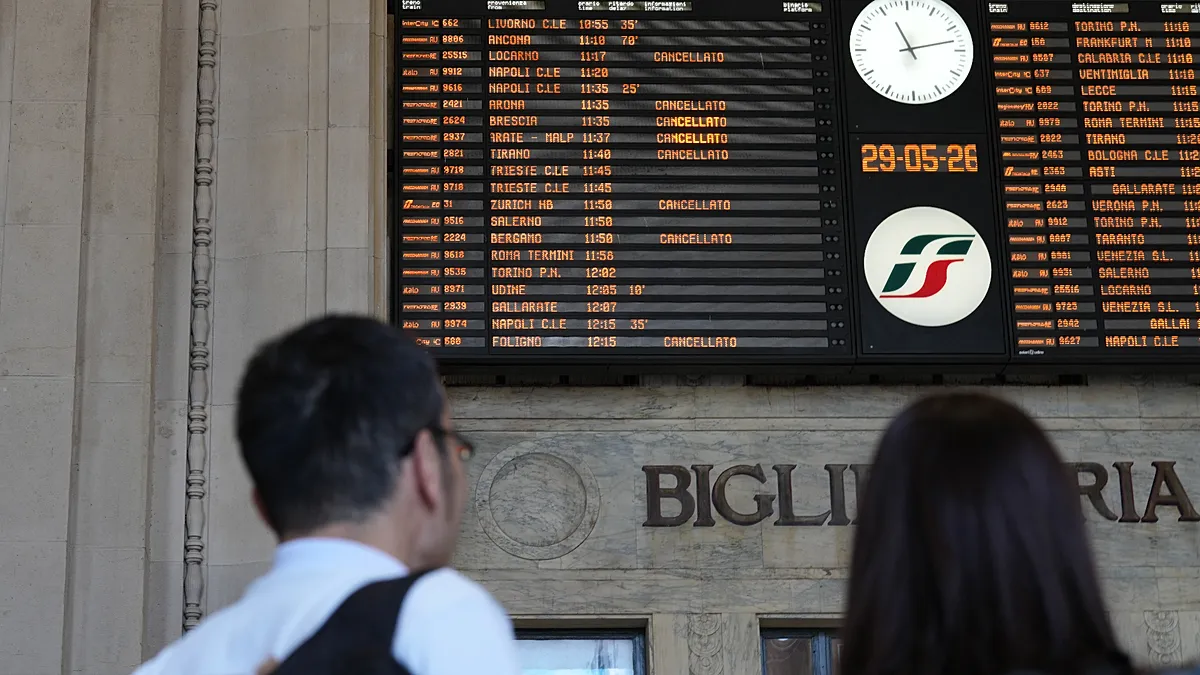
Table of Contents
Italian Rail Network Faces 24-Hour Work Stoppage: What Travellers Should Know Before Boarding
Poinews.com – Millions of commuters, tourists, and intercity travellers across Italy will find their journeys disrupted when railway workers stage a full-day walkout beginning at 9 pm on Monday, 7 September and continuing until 9 pm on Tuesday, 8 September. The action, organised by sector unions, targets working conditions, safety protocols, and shift scheduling within the national railway system. Because Italy’s rail network forms the backbone of daily commuting in major cities and the primary long-distance option between regions, even a single day of disruption ripples through schedules, connections, and passenger expectations across the country.
Scope of the Walkout
The stoppage covers the entire Italian rail network, meaning no category of service is fully exempted. Regional commuter lines, medium-distance Intercity connections, and the high-speed Frecce fleet all fall within the strike’s reach. However, the degree of protection afforded to passengers differs sharply between these categories, and understanding that distinction is essential for anyone planning to travel during the affected window.
Regional and suburban trains — the services that carry office workers, students, and daily commuters in cities such as Milan, Rome, Naples, and Turin — benefit from guaranteed service periods. On weekdays, operators must maintain scheduled departures between 6 am and 9 am and again between 6 pm and 9 pm. Outside those two windows, cancellations, delays, and route modifications become possible, and passengers should assume that any regional departure falling between 9 am and 6 pm on the strike day may not run as published.
High-speed Frecce trains and Intercity services do not carry the same guaranteed-service obligation. For these longer-haul journeys, there is no protected time slot; every departure during the 24-hour strike window is subject to cancellation or alteration. Travellers booking or holding tickets on these services should treat the entire period as uncertain until operators confirm individual train statuses.
Practical Steps for Affected Passengers
Trenitalia, Italy’s principal state-owned rail operator, has urged all passengers to verify the operational status of their specific service before leaving home or heading to a station. The company’s mobile application and official website provide real-time updates on which trains are running, which have been cancelled, and where timetable adjustments have been made. Checking shortly before departure — rather than relying on information gathered days earlier — is strongly recommended, as final operational decisions are often made in the hours immediately preceding the walkout.
Passengers who find their service cancelled or significantly altered have two primary remedies: a full fare refund or a rebooking onto an alternative departure under the same fare conditions, provided seats remain available. The procedural deadlines differ by service type:
For Frecce and Intercity tickets, refund applications may be submitted from the moment the strike is officially announced through to the scheduled departure time of the affected train. Regional-train passengers face a tighter window: refund requests must be lodged by midnight on the evening preceding the strike day. Missing that deadline can forfeit the right to a full refund, so regional commuters should act promptly once the walkout is confirmed.
Those who prefer to keep their travel plans intact rather than receive money back can instead request a transfer to another service operating under identical fare conditions. Seat availability on the alternative departure is the limiting factor; popular intercity corridors may fill quickly once cancellations are announced, so early rebooking is advisable.
Why the Unions Are Walking Out
The strike demands centre on three interrelated grievances: deteriorating working conditions on the shop floor, perceived gaps in safety infrastructure and staffing levels, and the organisation of shift patterns that unions describe as unsustainable for drivers, conductors, and maintenance crews. Italian railway workers have staged periodic actions in recent years over similar issues, and the sector’s reliance on a small number of large operators concentrates the impact of any work stoppage onto a large passenger base within a short timeframe.
For the travelling public, the practical implication is straightforward: a single day of industrial action in Italy’s rail sector can erase hundreds of scheduled departures, strand connecting itineraries, and compress alternative transport options into already-congested road and air networks. Passengers with tight schedules — airport connections, business meetings, medical appointments — should build in contingency time or consider alternative routing where feasible.
Broader Context
Italy’s rail system, operated predominantly by Trenitalia under the Ferrovie dello Stato umbrella, carries tens of millions of passenger journeys annually. The network’s density in the north and the absence of comparable alternatives in many mid-size cities make rail the default choice for daily mobility. When that default is interrupted, the knock-on effects extend beyond the strike window itself: timetable recalibrations, crew repositioning, and rolling-stock redistribution can introduce residual disruptions into the hours following the walkout’s conclusion at 9 pm on Tuesday, 8 September. Travellers with connections scheduled in the early hours of Wednesday should allow extra margin or confirm their onward service independently.
The unions’ stated aim is not to dismantle service but to renegotiate the terms under which it is delivered. Whether the walkout produces a negotiated settlement or extends into further action will shape the travel landscape for the coming weeks. Until then, the safest course for any passenger is to check, re-check, and plan around the possibility that the train they intended to catch simply will not depart.
Related Reading
Frequently Asked Questions
What is Italy rail strike?
Italy rail strike is the main topic of this guide. The article explains the context, practical details, and next steps readers should understand.
Why does Italy rail strike matter?
Italy rail strike matters because readers are looking for a useful answer, not just a short summary. Good content should match search intent and help them decide what to do next.